Optimising E-commerce Cloud Costs: Reduce Hosting Expenses by 20% in USA
Optimising Your E-commerce Stack: Insider Tips for Reducing Cloud Hosting Costs by 20% in the USA Market (FINANCIAL IMPACT)
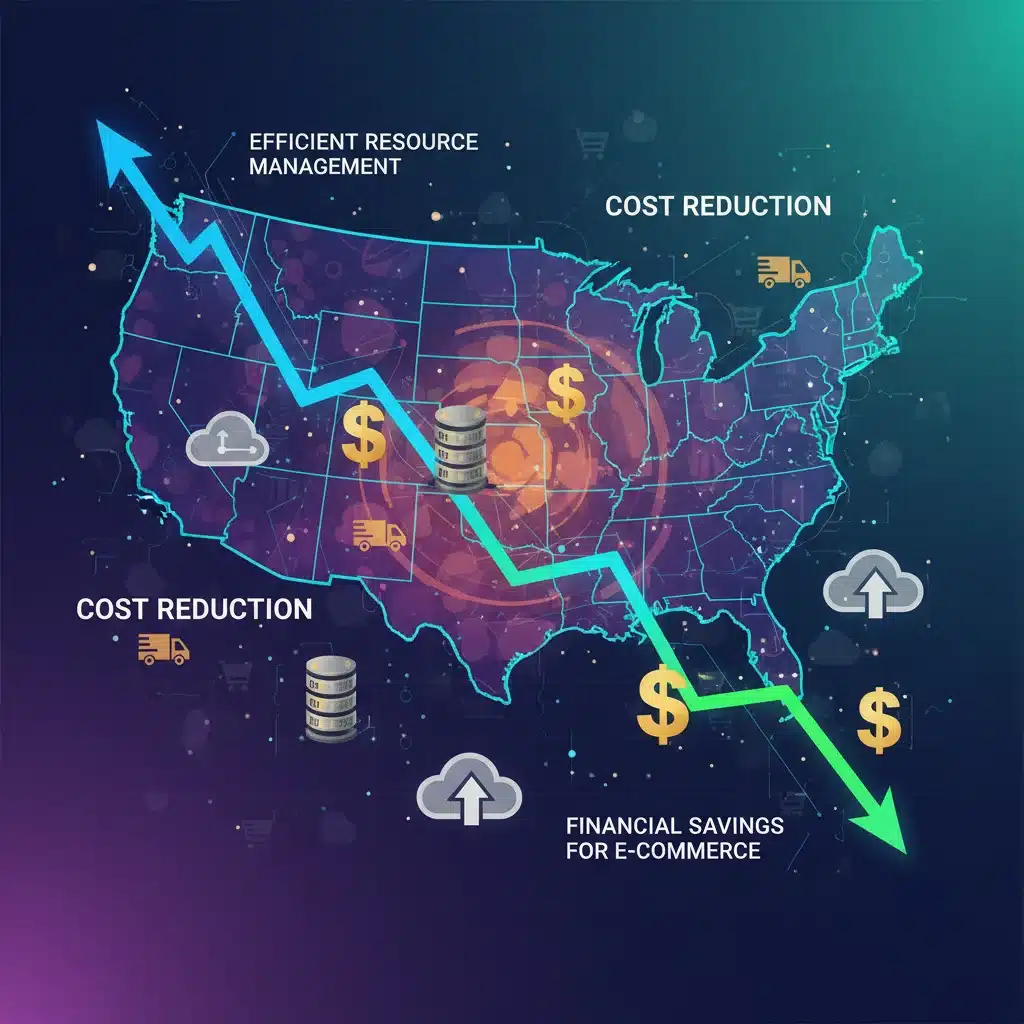
In the fiercely competitive landscape of e-commerce, every dollar saved directly impacts your bottom line. For businesses operating in the USA market, cloud hosting expenses can represent a significant portion of operational costs. While the flexibility and scalability of cloud services are invaluable, unchecked spending can quickly erode profit margins. The good news? With strategic planning and a deep understanding of your cloud infrastructure, it’s entirely possible to reduce cloud hosting costs by 20% or more, without compromising performance or reliability.
This comprehensive guide delves into insider tips and actionable strategies specifically tailored for e-commerce businesses in the USA. We’ll explore how to identify waste, negotiate effectively, and leverage advanced cloud features to achieve substantial financial savings. Our goal is to empower you with the knowledge to make informed decisions that translate into a healthier balance sheet.
Understanding Your Current Cloud Spending: The First Step to Reducing Costs
Before you can effectively reduce cloud hosting costs, you need to thoroughly understand where your money is currently going. Many e-commerce businesses adopt cloud services without a clear cost allocation strategy, leading to ‘cloud sprawl’ and unexpected bills. This foundational step involves comprehensive auditing and analysis.
Detailed Cloud Bill Analysis
Your cloud provider’s billing dashboard is your best friend. Dive deep into the monthly statements from AWS, Azure, Google Cloud, or whichever provider you use. Look beyond the total sum and break down costs by service, resource, and even specific projects or departments. Identify the biggest cost drivers. Are you spending heavily on compute instances, storage, network egress, or managed services?
- Resource Tagging: Implement a robust tagging strategy. Tagging allows you to categorise resources by environment (production, staging, dev), project, owner, and cost centre. This granular visibility is crucial for accurate cost allocation and identifying areas for optimisation. Without proper tagging, it’s like trying to manage a budget without knowing where each expense originated.
- Cost Explorer Tools: Utilise native cost explorer tools provided by your cloud vendor (e.g., AWS Cost Explorer, Azure Cost Management, Google Cloud Cost Management). These tools offer visualisations, forecasting, and anomaly detection, helping you pinpoint unusual spending patterns and potential waste.
- Anomaly Detection: Set up alerts for unexpected spikes in spending. Early detection of anomalies can prevent minor issues from escalating into major financial burdens.
Inventory and Utilisation Review
Once you understand your spending patterns, the next step is to correlate those costs with actual resource utilisation. Are you paying for resources you don’t need or aren’t fully utilising?
- Identify Idle Resources: Many e-commerce operations accumulate idle resources over time – old development servers, unused databases, unattached storage volumes. These ‘zombie resources’ are a pure drain on your budget. Regularly audit your environment to identify and terminate or deallocate them.
- Right-Sizing Instances: Are your compute instances (VMs) appropriately sized for their workloads? Often, businesses provision instances based on peak demand or worst-case scenarios, leading to over-provisioning. Use monitoring tools to track CPU, memory, and network utilisation. Downgrade instances that consistently run below 50% utilisation. For example, if your e-commerce site experiences predictable traffic patterns, you might not need your largest instance type running 24/7.
- Storage Optimisation: Review your storage tiers. Are you using expensive block storage for archival data that could be moved to cheaper object storage or cold storage tiers? Implement lifecycle policies to automatically transition data to less expensive storage classes as it ages.
Strategic Optimisation Techniques to Reduce Cloud Hosting Costs
With a clear picture of your current spending and resource utilisation, you can now implement targeted strategies to reduce cloud hosting costs significantly. These techniques span from architectural adjustments to leveraging specific cloud pricing models.
Leveraging Reserved Instances and Savings Plans
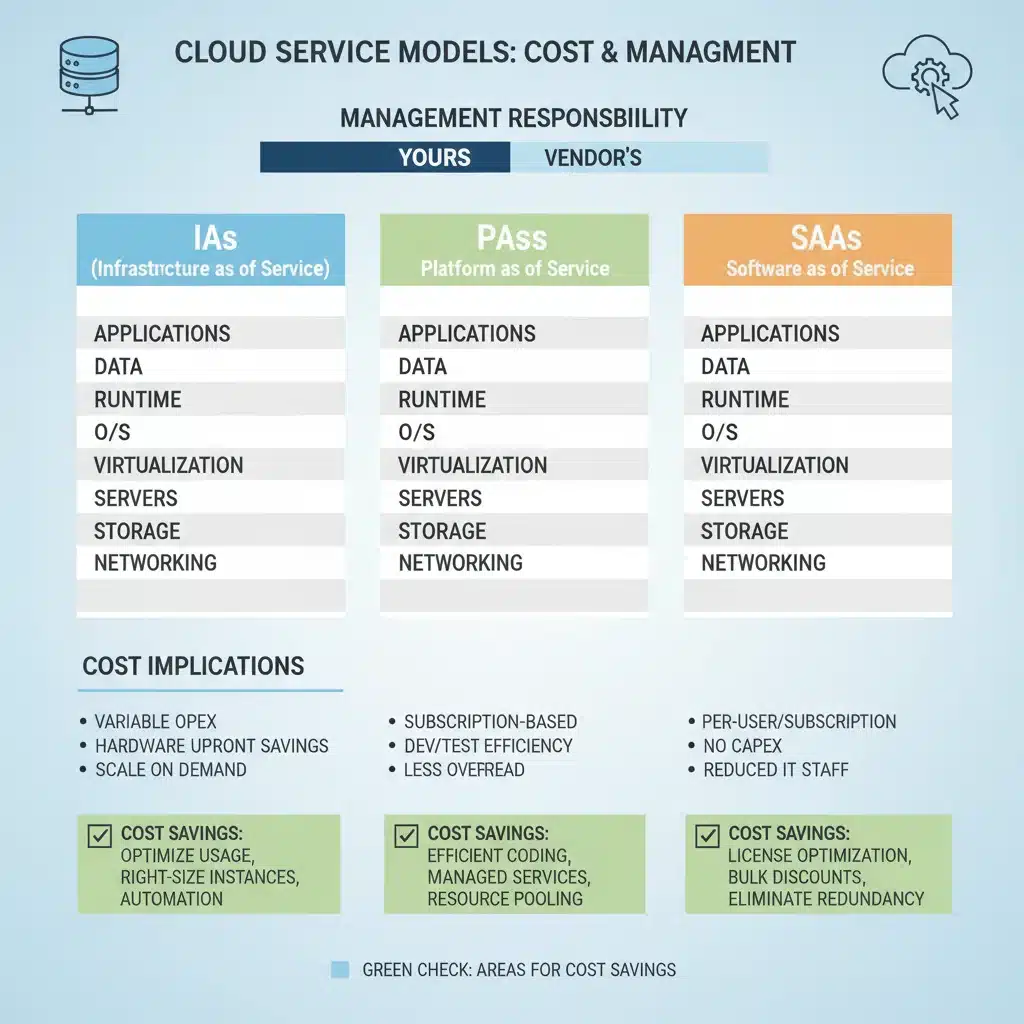
One of the most impactful ways to reduce costs for predictable workloads is through commitment-based discounts. Cloud providers offer substantial savings for customers who commit to using a certain amount of compute capacity for a one-year or three-year term.
- Reserved Instances (RIs): Ideal for stable workloads with predictable usage. RIs can offer discounts of up to 75% compared to on-demand pricing. Analyze your historical usage data to determine the baseline capacity you consistently need.
- Savings Plans: More flexible than RIs, Savings Plans offer a commitment to spend a certain amount per hour for a one-year or three-year term, regardless of the instance family, region, or operating system. They can apply to various compute services, making them excellent for dynamic workloads that might still have a predictable baseline spend.
- Spot Instances: For fault-tolerant or non-critical workloads (e.g., batch processing, analytics, testing), Spot Instances can provide up to 90% savings over on-demand prices. These instances can be interrupted by the cloud provider with short notice, so they require careful architectural consideration. However, for the right use case, they offer immense cost benefits.
Serverless Architectures and Containerisation
Modern e-commerce platforms can greatly benefit from adopting serverless and containerisation technologies, which inherently promote cost efficiency.
- Serverless Computing (e.g., AWS Lambda, Azure Functions, Google Cloud Functions): With serverless, you only pay for the compute time your code actually runs. There are no idle servers to manage or pay for. For event-driven e-commerce functionalities like order processing, image resizing, or API endpoints, serverless can drastically reduce cloud hosting costs.
- Containerisation (e.g., Docker, Kubernetes): Containers enable higher resource utilisation by packaging applications and their dependencies into lightweight, portable units. Orchestration platforms like Kubernetes can efficiently schedule these containers across underlying compute resources, ensuring optimal usage and reducing the number of instances required. This leads to fewer wasted resources and lower costs.
Optimising Data Transfer and Network Costs
Data transfer (egress) costs can be a silent killer of cloud budgets, especially for e-commerce sites with high traffic and multimedia content.
- Content Delivery Networks (CDNs): Utilise a CDN (e.g., CloudFront, Cloudflare) to cache static content closer to your users. This reduces the load on your origin servers and significantly cuts down on egress costs from your main cloud provider, as data is served from the CDN’s edge locations.
- Data Locality: Keep data and compute resources in the same region whenever possible to avoid inter-region data transfer fees. If you operate globally, consider multi-region deployments to serve customers from the nearest data center, minimising latency and egress costs.
- Compress Data: Implement data compression for both data at rest and data in transit. Smaller data means less storage space and faster, cheaper data transfers.
Advanced Strategies and Vendor Management for Cost Reduction
Beyond technical optimisations, strategic vendor management and a proactive approach to your cloud environment are critical for achieving and maintaining significant cost reductions.
Automated Cost Governance and FinOps
Manual cost management is unsustainable. Implement automation and adopt FinOps principles to embed cost accountability across your organisation.
- Automated Shutdowns: For non-production environments (dev, staging, QA), automate the shutdown of resources during off-hours (evenings, weekends). Tools can automatically stop instances and restart them when needed, saving considerable compute costs.
- Cost Optimisation Tools: Invest in third-party FinOps tools (e.g., CloudHealth, Cloudability, Spot by NetApp) that offer advanced analytics, recommendations, and automation capabilities to continuously monitor and optimise your cloud spend. These tools can identify inefficiencies that native cloud provider tools might miss.
- Implement FinOps Culture: Foster a culture where financial accountability for cloud usage is shared across engineering, finance, and operations teams. This ensures that cost considerations are integrated into every stage of the application lifecycle, from design to deployment.
Vendor Negotiation and Multi-Cloud Strategy
Don’t be afraid to negotiate with your cloud provider, especially as your usage grows. Also, consider the benefits and challenges of a multi-cloud approach.
- Negotiate Enterprise Discounts: If your e-commerce business has substantial cloud spend, engage with your cloud provider’s account team. They often have discretion to offer custom pricing agreements or additional discounts beyond standard rates, especially for long-term commitments or significant planned growth.
- Leverage Competitors: While not always practical for core infrastructure, having a multi-cloud strategy for specific services can give you leverage. The ability to move certain workloads or data to another provider can strengthen your negotiating position.
- Evaluate Managed Services vs. Self-Managed: While managed services offer convenience and reduce operational overhead, they often come at a premium. Evaluate whether the cost savings from self-managing certain components (e.g., your own database instances instead of a fully managed DBaaS) outweigh the increased operational burden. This balance is key to finding your sweet spot for how to reduce cloud hosting costs.
Optimising Databases and Caching
Databases are often critical components of e-commerce platforms and can be significant cost drivers. Efficient management is paramount.
- Database Right-Sizing: Just like compute instances, databases can be over-provisioned. Monitor your database resource utilisation (CPU, RAM, I/O) and scale instances up or down as needed. Consider read replicas for high-read workloads to offload the primary database and allow for smaller primary instances.
- Caching Strategies: Implement robust caching mechanisms (e.g., Redis, Memcached) for frequently accessed data. This reduces the load on your databases, allowing them to run on smaller, less expensive instances, and improves application performance.
- Serverless Databases: Explore serverless database options (e.g., AWS Aurora Serverless, Azure SQL Database Serverless) which automatically scale capacity and only charge for the resources consumed, eliminating the need to provision and manage database servers. This can be a game-changer for variable e-commerce workloads.
The Financial Impact: Achieving a 20% Reduction in Cloud Hosting Costs
Achieving a 20% reduction in cloud hosting costs is not merely an aspirational goal; it’s a tangible outcome achievable through diligent application of the strategies outlined above. For an e-commerce business in the USA market, this can translate into substantial financial benefits. Consider a business spending $10,000 per month on cloud hosting. A 20% reduction means saving $2,000 monthly, or $24,000 annually. This capital can be reinvested into marketing, product development, or customer acquisition, directly fueling growth and competitive advantage.
The journey to reduce cloud hosting costs is continuous. The cloud environment is dynamic, with new services and pricing models emerging regularly. Therefore, ongoing monitoring, analysis, and adaptation are crucial. Establish regular reviews of your cloud spend, perhaps quarterly or bi-annually, to ensure you are consistently optimising and taking advantage of new cost-saving opportunities.
Case Study Snippet: E-commerce Retailer’s Success
A mid-sized e-commerce retailer based in New York, facing escalating AWS bills, implemented a multi-pronged cost optimisation strategy. They began by tagging all resources, identifying unused EC2 instances, and moving cold data from S3 Standard to S3 Glacier Deep Archive. They then committed to a 3-year Savings Plan for their baseline compute needs and re-architected their product image processing pipeline to use AWS Lambda. Within six months, their monthly cloud spend dropped from $15,000 to $11,500 – a 23% reduction. This saving allowed them to invest in a new AI-powered recommendation engine, further enhancing customer experience and sales.
Key Takeaways for E-commerce Businesses in the USA
To summarise, effectively managing and reducing your cloud hosting costs requires a holistic approach:
- Visibility is King: You cannot optimise what you cannot see. Implement robust tagging and utilise cost management tools to gain granular insight into your spending.
- Right-Size Everything: Continuously monitor and adjust the size of your compute instances, databases, and storage to match actual demand. Eliminate idle resources.
- Leverage Commitment Discounts: For stable workloads, Reserved Instances and Savings Plans offer significant savings. Explore Spot Instances for fault-tolerant tasks.
- Embrace Modern Architectures: Serverless and containerisation can dramatically improve resource utilisation and reduce operational overhead, directly impacting costs.
- Optimise Data Transfer: Use CDNs, ensure data locality, and compress data to minimise expensive egress charges.
- Automate and Govern: Implement automated shutdowns and invest in FinOps tools to maintain continuous cost efficiency. Foster a culture of cost awareness.
- Negotiate and Diversify: Don’t hesitate to negotiate with your cloud provider. Consider a multi-cloud strategy where it makes sense to gain leverage and flexibility.
By diligently applying these insider tips, e-commerce businesses in the USA market can confidently expect to reduce cloud hosting costs by 20% or more, freeing up valuable capital to drive innovation, enhance customer experience, and ultimately, grow their market share. The effort invested in cloud cost optimisation today will yield substantial financial returns for years to come.
Future-Proofing Your Cloud Spend
The cloud landscape is constantly evolving, and so too should your cost optimisation strategies. Regularly review your architecture, stay informed about new services and pricing models from your cloud provider, and continuously seek opportunities for improvement. Consider incorporating AI and machine learning into your cost management toolkit, as these technologies can offer predictive insights and automate optimisation tasks, keeping you ahead of the curve.
Ultimately, a proactive and informed approach to cloud cost management is not just about saving money; it’s about building a more resilient, agile, and profitable e-commerce operation. By mastering the art of how to reduce cloud hosting costs, you are not just cutting expenses, but intelligently investing in the longevity and success of your business in the dynamic USA market.