US Consumer Behaviour Shifts: 2026 Marketplace Conversion Strategies

The landscape of e-commerce is in a constant state of flux, driven by technological advancements, societal changes, and evolving consumer expectations. As we look towards 2026, understanding the nuances of US consumer shifts on marketplaces becomes paramount for any business aiming to thrive in the digital economy. This comprehensive report delves into the anticipated changes in buying habits, preferences, and decision-making processes of US consumers, offering strategic insights designed to help businesses achieve an impressive 18% higher conversion rate.
The digital marketplace is no longer just a convenient alternative; it’s the primary battleground for consumer attention and loyalty. Businesses that fail to adapt to these dynamic shifts risk being left behind. By proactively analyzing and responding to these trends, companies can not only meet but exceed consumer expectations, fostering stronger customer relationships and significantly boosting their bottom line.
The Macro Trends Shaping US Consumer Shifts
Several overarching trends are set to redefine US consumer shifts on marketplaces by 2026. These macro forces act as catalysts, accelerating some behaviours and diminishing others. A deep understanding of these foundational shifts is crucial for developing robust and future-proof e-commerce strategies.
1. The Continued Dominance of Mobile Shopping
Mobile devices have long transcended their role as mere communication tools. For US consumers, smartphones are increasingly becoming the primary portal to online marketplaces. By 2026, we anticipate an even greater reliance on mobile for browsing, comparing, and purchasing. This isn’t just about responsive design; it’s about optimizing the entire mobile experience, from intuitive navigation and fast loading times to seamless checkout processes and integrated payment solutions. Businesses must prioritize mobile-first strategies, recognizing that a clunky mobile experience can be a significant conversion killer. The convenience offered by mobile shopping, allowing purchases anytime, anywhere, is a powerful driver of US consumer shifts.
2. The Rise of Social Commerce and Influencer Marketing
Social media platforms are rapidly evolving beyond mere networking sites to become powerful commerce channels. Social commerce, where consumers can discover, research, and purchase products directly within their social feeds, is set for explosive growth. This trend is inextricably linked to the increasing influence of content creators and influencers. US consumers, particularly younger demographics, trust recommendations from individuals they follow more than traditional advertising. Brands that effectively integrate social commerce strategies and leverage authentic influencer partnerships will be well-positioned to capture a significant share of the market. Understanding how these social dynamics impact US consumer shifts is key to unlocking new avenues for engagement and sales.
3. The Imperative of Personalization and Hyper-Targeting
In an era of information overload, generic marketing messages are increasingly ignored. US consumers in 2026 will demand highly personalized experiences across all touchpoints. This means leveraging data analytics to understand individual preferences, purchase history, and browsing behavior to deliver tailored product recommendations, customized offers, and relevant content. Hyper-targeting goes beyond basic demographics, aiming to understand the individual consumer’s journey and anticipate their needs before they even articulate them. The ability to deliver a unique and relevant shopping experience will be a significant differentiator and a powerful driver for positive US consumer shifts towards brands that excel in this area.
4. The Growing Importance of Ethical Consumption and Sustainability
A significant segment of US consumers is becoming more conscious of the environmental and social impact of their purchasing decisions. By 2026, this trend will be even more pronounced, with consumers actively seeking out brands that demonstrate a commitment to sustainability, ethical sourcing, and fair labor practices. Transparency regarding supply chains and corporate social responsibility will no longer be a niche concern but a mainstream expectation. Businesses that can authentically communicate their ethical credentials will build trust and loyalty, appealing to a growing segment of environmentally and socially aware US consumers. This ethical dimension is a crucial aspect of understanding modern US consumer shifts.
5. The Demand for Seamless and Frictionless Experiences
Patience is a dwindling commodity in the digital age. US consumers expect seamless and frictionless experiences from discovery to post-purchase support. This includes fast website loading times, intuitive user interfaces, diverse and secure payment options, efficient shipping, and hassle-free returns. Any point of friction in the customer journey can lead to abandonment and lost conversions. Investing in robust e-commerce platforms, optimizing logistics, and streamlining customer service processes will be critical for meeting these elevated expectations and capitalizing on positive US consumer shifts.
Deep Dive into Specific US Consumer Behaviour Shifts
Beyond the macro trends, several specific behavioural shifts are set to impact how US consumers interact with marketplaces.
1. The Subscription Economy’s Expansion
The convenience and perceived value of subscription services are driving their continued growth. From recurring deliveries of everyday essentials to curated boxes of niche products, US consumers are increasingly opting for subscription models. Marketplaces that can integrate subscription options or partner with subscription-based businesses will tap into a lucrative revenue stream and foster long-term customer relationships. This shift reflects a desire for predictability and convenience, influencing how US consumer shifts their purchasing patterns towards ongoing services rather than one-off transactions.
2. The Blurring Lines Between Online and Offline Shopping (Omnichannel)
The distinction between online and offline shopping is becoming increasingly blurred. US consumers expect a cohesive and integrated experience across all channels. This might involve researching products online before purchasing in-store, or conversely, browsing in-store before completing a purchase online. Click-and-collect, in-store returns for online purchases, and augmented reality (AR) experiences that bridge the digital and physical worlds will become more commonplace. Businesses must adopt an omnichannel strategy that provides a consistent brand experience, regardless of how the consumer chooses to interact. Understanding this evolving relationship between physical and digital spaces is vital for comprehending US consumer shifts.
3. The Quest for Value Beyond Price
While price remains a factor, US consumers are increasingly looking for value that extends beyond the lowest cost. This includes factors like product quality, brand reputation, customer service excellence, and the overall shopping experience. Consumers are often willing to pay a premium for brands that align with their values or offer superior convenience and reliability. Marketplaces need to highlight these value propositions effectively, moving beyond price-centric competition to differentiate themselves. This search for holistic value is a key driver behind subtle yet significant US consumer shifts.
4. The Influence of User-Generated Content and Reviews
Peer recommendations and reviews hold immense power in shaping purchasing decisions. US consumers actively seek out and trust user-generated content (UGC), such as product reviews, ratings, and social media posts from other consumers. Marketplaces must facilitate and prominently display UGC, encouraging customers to share their experiences. Authenticity is key here; businesses should focus on fostering genuine reviews rather than manipulating feedback. The collective wisdom of the crowd significantly impacts US consumer shifts and brand perception.
5. The Demand for Transparency and Data Privacy
With increasing awareness of data breaches and privacy concerns, US consumers are becoming more cautious about sharing their personal information. They demand transparency from businesses about how their data is collected, used, and protected. Marketplaces that prioritize data privacy, clearly communicate their policies, and offer consumers control over their data will build trust and enhance their reputation. A lack of transparency can erode confidence and negatively impact US consumer shifts towards a particular platform or brand.
Strategies to Drive 18% Higher Conversion Rates by 2026
Leveraging the insights from these anticipated US consumer shifts, here are actionable strategies to significantly boost your conversion rates on marketplaces by 2026:
1. Optimize for a Superior Mobile Experience
- Progressive Web Apps (PWAs): Invest in PWAs for app-like experiences without the need for app store downloads.
- One-Click Buy Options: Streamline the checkout process with saved payment details and express checkout.
- Visual Search and Voice Search Optimization: Adapt to new mobile search paradigms by optimizing product listings for visual and voice queries.
- Mobile-First Content: Create content specifically designed for smaller screens, with concise text and engaging visuals.
2. Embrace and Integrate Social Commerce
- Shoppable Posts and Live Streams: Utilize features on platforms like Instagram, TikTok, and Facebook to allow direct purchases.
- Influencer Collaborations: Partner with micro- and macro-influencers whose audience aligns with your target demographic.
- Community Building: Foster online communities around your brand where users can share experiences and recommendations.
- User-Generated Content Campaigns: Encourage customers to share their product experiences on social media using specific hashtags.
3. Implement Advanced Personalization Techniques
- AI-Powered Recommendation Engines: Leverage artificial intelligence to deliver highly accurate product suggestions based on browsing and purchase history.
- Dynamic Content: Customize website content, emails, and ads based on individual user behavior and preferences.
- Segmented Marketing Campaigns: Group customers based on shared characteristics and tailor marketing messages accordingly.
- Personalized Offers and Promotions: Provide discounts and bundles that are uniquely relevant to each customer.
4. Champion Sustainability and Ethical Practices
- Transparent Supply Chains: Clearly communicate the origin of your products and your ethical sourcing practices.
- Eco-Friendly Packaging: Adopt sustainable packaging solutions and promote your efforts.
- Certifications and Labels: Obtain and display relevant certifications (e.g., Fair Trade, Organic) to build consumer trust.
- Support for Social Causes: Align your brand with social or environmental causes that resonate with your target audience.
5. Streamline the Customer Journey for Frictionless Experiences
- Optimized Site Speed: Ensure your website and marketplace listings load quickly across all devices.
- Intuitive Navigation: Design clear and easy-to-use navigation menus and search functions.
- Multiple Payment Options: Offer a variety of secure payment methods, including digital wallets and ‘buy now, pay later’ services.
- Proactive Customer Support: Implement chatbots for instant answers and offer multiple channels for customer service (email, chat, phone).
- Hassle-Free Returns: Simplify the return process to build consumer confidence and loyalty.
6. Leverage Data Analytics for Continuous Improvement
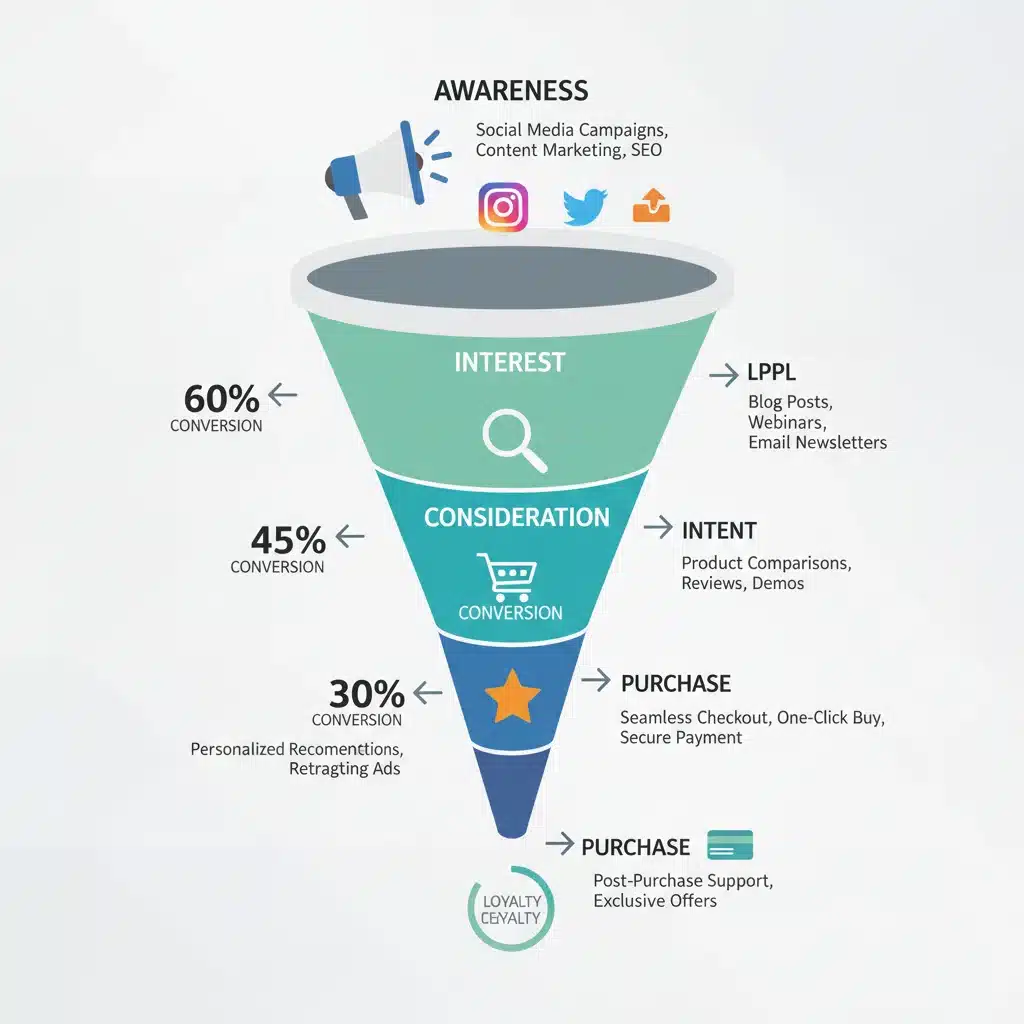
Data is the lifeblood of modern e-commerce. To effectively respond to US consumer shifts and optimize conversion rates, businesses must:
- Track Key Performance Indicators (KPIs): Monitor metrics like conversion rates, bounce rates, average order value, and customer lifetime value.
- A/B Testing: Continuously test different elements of your marketplace listings, website, and marketing campaigns to identify what resonates best with consumers.
- Customer Feedback Analysis: Regularly collect and analyze customer reviews, surveys, and support interactions to identify pain points and areas for improvement.
- Predictive Analytics: Use advanced analytics to forecast future trends and anticipate consumer needs, allowing for proactive strategy adjustments.
7. Enhance Product Discovery and Merchandising
With an abundance of choices on marketplaces, making your products easily discoverable and appealing is critical. This involves:
- High-Quality Product Imagery and Videos: Invest in professional visuals that showcase your products from multiple angles and in use.
- Detailed and SEO-Optimized Product Descriptions: Provide comprehensive information, highlighting benefits and unique selling propositions, while integrating relevant keywords.
- Cross-Selling and Up-Selling Strategies: Suggest complementary products or higher-value alternatives to increase average order value.
- Curated Collections and Bundles: Group products into thematic collections or offer bundles at a slight discount to encourage larger purchases.
- Virtual Try-On and Augmented Reality (AR): For certain product categories (e.g., apparel, furniture), AR experiences can significantly boost confidence and reduce returns, directly addressing aspects of US consumer shifts towards immersive shopping.
The Path Forward: Adapting to the Evolving US Consumer
The US consumer of 2026 will be more discerning, digitally savvy, and ethically conscious than ever before. Marketplaces that successfully navigate these US consumer shifts will be those that prioritize customer experience, embrace technological innovation, and authentically align with consumer values. Achieving an 18% higher conversion rate isn’t merely an ambitious goal; it’s an attainable outcome for businesses willing to invest in understanding and adapting to the evolving marketplace dynamics.
By focusing on mobile optimization, leveraging social commerce, personalizing experiences, championing sustainability, and ensuring a frictionless customer journey, businesses can build stronger relationships with their audience. The continuous analysis of data and a commitment to iterative improvement will be the cornerstones of sustained success. The future of e-commerce on marketplaces belongs to those who are agile, insightful, and relentlessly customer-centric.
Conclusion: Seizing the Opportunity in 2026
The insights presented in this report underscore a critical truth: the digital marketplace is a dynamic ecosystem. The US consumer shifts we anticipate by 2026 represent not just challenges, but immense opportunities for growth and innovation. Businesses that proactively embrace these changes, rather than react to them, will be the ones that capture market share, build lasting brand loyalty, and ultimately achieve superior conversion rates. The 18% higher conversion rate target is a testament to the power of strategic adaptation and a deep understanding of the modern consumer’s journey. Prepare now, and thrive in the marketplace of tomorrow.