Voice Commerce 2026: Preparing for a 12% US E-commerce Market Share

Voice Commerce in 2026: Predicting a 12% Market Share for US E-commerce and How to Prepare
The landscape of e-commerce is in constant flux, shaped by technological advancements and evolving consumer behaviours. Among the most significant shifts on the horizon is the meteoric rise of voice commerce. Industry experts and market analysts project that by 2026, voice commerce will command a substantial 12% share of the entire US e-commerce market. This isn’t just a fleeting trend; it’s a fundamental change in how consumers will discover, research, and purchase products. For businesses, this prediction serves as a critical call to action: the time to prepare for voice commerce is now.
This comprehensive guide will delve into the intricacies of this burgeoning market, exploring the factors driving its growth, the challenges it presents, and, most importantly, the actionable strategies businesses can implement to not only adapt but thrive in the voice-first economy. Understanding the nuances of voice commerce preparation is paramount for securing a competitive edge in the coming years.
The Irresistible Ascent of Voice Commerce
The concept of voice-activated shopping, once confined to science fiction, is rapidly becoming a daily reality for millions. Devices like Amazon Echo, Google Home, and Apple HomePod have moved beyond simple queries to facilitate complex transactions. The convenience factor is undeniable: hands-free shopping, instant gratification, and the ability to multitask while making purchases are powerful drivers. As smart speaker adoption continues to climb and AI voice recognition technology becomes even more sophisticated, the barriers to entry for voice commerce diminish significantly.
The projected 12% market share for US e-commerce by 2026 represents billions of dollars in potential revenue. This growth isn’t uniform across all product categories. Initially, low-consideration, frequently purchased items like groceries, household supplies, and re-orders are leading the charge. However, as trust in voice assistants grows and user interfaces become more intuitive, higher-value and more complex purchases are expected to follow. Businesses that understand these dynamics and strategically position themselves will be the ones to reap the rewards of this transformative shift.
The underlying technology, primarily natural language processing (NLP) and machine learning, is advancing at an unprecedented pace. Voice assistants are becoming better at understanding context, discerning intent, and even recognizing individual voices, leading to more personalized and efficient shopping experiences. This continuous improvement fuels consumer confidence and encourages wider adoption, making voice commerce preparation an urgent priority for any forward-thinking enterprise.
Understanding the Voice-First Consumer Journey
The traditional e-commerce journey, characterized by visual browsing and textual search, is fundamentally different from the voice-first experience. Voice commerce preparation demands a deep understanding of how consumers interact with voice assistants. The journey is often more conversational, less visual, and highly dependent on clear, concise information. Consumers typically ask specific questions or give direct commands, expecting immediate and relevant responses.
Consider a typical voice shopping scenario: instead of typing ‘best running shoes for flat feet’ into a search bar and sifting through pages of results, a consumer might ask, ‘Alexa, what are good running shoes for flat feet under $100?’ The voice assistant then needs to quickly process this request, access relevant product data, and present a curated, often limited, set of options. This highlights the critical importance of being the ‘default’ or ‘preferred’ option presented by the voice assistant, underscoring the need for meticulous voice commerce preparation.
Furthermore, brand loyalty and established purchasing habits play a significant role. If a consumer consistently re-orders a specific brand of coffee via voice, they are less likely to be swayed by alternatives unless explicitly prompted or if their preferred option is unavailable. This creates both opportunities for entrenched brands and challenges for newcomers. Businesses must focus on building strong brand recognition and ensuring their products are easily discoverable and selectable through voice channels.
Key Differences in the Voice Shopping Experience:
- Lack of Visual Cues: Product descriptions must be exceptionally clear and persuasive, compensating for the absence of images and videos.
- Concise Information: Voice assistants typically offer a limited number of options. Being at the top of these results is crucial.
- Natural Language Queries: Consumers use conversational language, not keywords, requiring sophisticated NLP optimization.
- Impulse Buying: The frictionless nature of voice shopping can lead to more impulse purchases, especially for low-cost items.
- Personalization: Voice assistants leverage past purchase history and preferences to offer tailored recommendations.
Addressing these differences is a core component of effective voice commerce preparation, ensuring that your brand is not just present but also performs optimally in this new environment.
Pillars of Voice Commerce Preparation: Strategies for Success
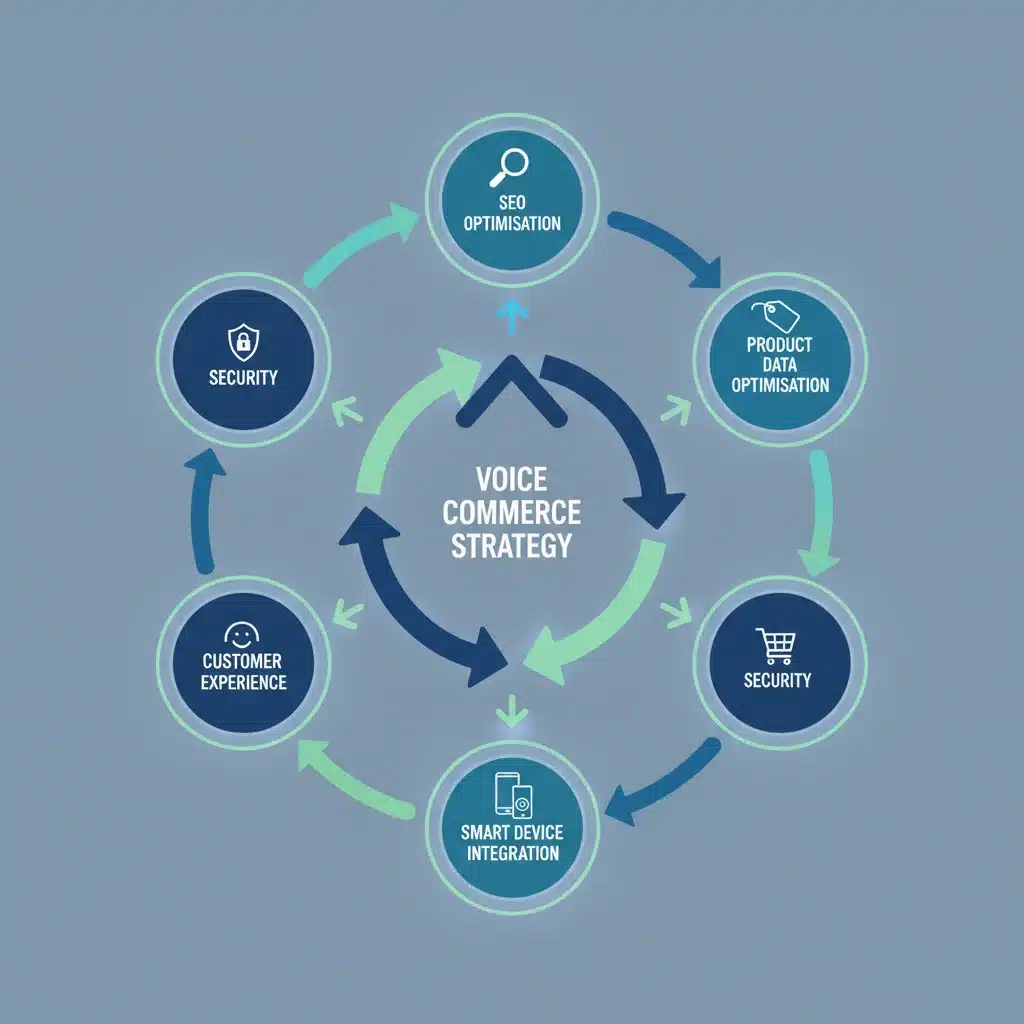
To capture a slice of that 12% market share, businesses need a multi-faceted approach to voice commerce preparation. This involves technical adjustments, content optimization, and a strategic rethink of the customer experience. Ignoring these areas could mean being left behind as competitors embrace the voice revolution.
1. Optimise for Voice Search SEO (VSEO)
Traditional SEO focuses on keywords; VSEO focuses on natural language. Think about how people speak versus how they type. Voice queries are often longer, more conversational, and phrased as questions. This demands a shift in your SEO strategy.
- Long-Tail Keywords and Conversational Phrases: Identify the questions your customers are asking about your products or services. Use tools to find common voice queries.
- Schema Markup: Implement structured data (Schema.org) to help search engines and voice assistants understand your content better. This includes product details, pricing, availability, and reviews.
- Featured Snippets & ‘Position Zero’: Voice assistants often pull answers directly from featured snippets. Optimise your content to rank for these.
- Local SEO: Many voice searches have local intent (e.g., ‘find a coffee shop near me’). Ensure your Google My Business profile is up-to-date and accurate.
- FAQs: Create comprehensive FAQ sections that provide direct answers to common questions about your products and services.
Mastering VSEO is fundamental to voice commerce preparation, as it dictates whether your products even appear in voice search results.
2. Enhance Product Data and Descriptions
In a visual-less environment, your product descriptions become your storefront. They need to be rich, descriptive, and easily digestible by AI. This is a critical area for voice commerce preparation.
- Detailed and Concise: Provide all necessary information – size, colour, material, benefits, use cases – in a way that can be read aloud effectively by a voice assistant without overwhelming the user.
- Natural Language Descriptions: Avoid jargon. Write as if you’re describing the product to a friend.
- Keyword Rich (but Natural): While focusing on conversational language, strategically embed relevant product keywords to aid discovery.
- Availability & Pricing: Ensure this information is always accurate and easily accessible to voice assistants. Out-of-stock items or incorrect pricing can lead to frustration and lost sales.
- Reviews and Ratings: Voice assistants often use customer reviews to help users make purchasing decisions. Encourage and highlight positive reviews.
High-quality, voice-optimised product data is the backbone of a successful voice commerce strategy.

3. Develop a Conversational AI Strategy
Beyond simple product lookups, true voice commerce involves engaging in a natural conversation. This is where advanced voice commerce preparation comes into play.
- Chatbot Integration: Integrate AI-powered chatbots with your e-commerce platform that can handle voice queries. These should be able to answer product questions, check order status, and even guide users through the purchase process.
- Personalization: Leverage customer data to offer personalized recommendations and anticipate needs. A voice assistant that remembers past purchases and preferences offers a superior experience.
- Seamless Handoff: If the voice assistant can’t resolve a query, ensure a smooth transition to a human agent or a visual interface (e.g., sending a link to the product page on the user’s phone).
- Natural Language Understanding (NLU): Invest in NLU capabilities that allow your AI to understand intent, even with variations in speech patterns, accents, and phrasing.
- Voice User Interface (VUI) Design: Design interactions specifically for voice. This means anticipating user questions, providing clear prompts, and offering concise responses.
A well-designed conversational AI strategy can significantly enhance the customer experience and drive conversions in the voice commerce realm.
4. Prioritise Security and Trust
Concerns about security and privacy are significant barriers to widespread voice commerce adoption. Addressing these anxieties is a non-negotiable part of voice commerce preparation.
- Voice Biometrics: Implement voice recognition for authentication to ensure only authorized users can make purchases.
- Clear Confirmation: Always require explicit verbal confirmation for purchases, especially for higher-value items.
- Payment Integration: Ensure secure and streamlined payment methods are integrated with voice assistants, such as pre-registered payment options with strong encryption.
- Privacy Policies: Be transparent about how customer data is collected, stored, and used in voice interactions.
- Fraud Prevention: Implement robust fraud detection systems tailored for voice transactions.
Building and maintaining user trust through stringent security measures will be crucial for the long-term success of voice commerce.
5. Optimise for Re-ordering and Subscriptions
As mentioned, frequently purchased, low-consideration items are prime candidates for voice commerce. Businesses should capitalise on this by making re-ordering and subscriptions effortless.
- One-Click/Voice Re-order: Allow customers to simply say, ‘Re-order my last coffee’ or ‘Add more detergent to my cart.’
- Subscription Management: Enable users to manage their subscriptions (pause, skip, modify) through voice commands.
- Personalized Reminders: Use voice assistants to remind customers when they might be running low on a product based on past purchase patterns.
- Bundling: Offer smart bundles that can be easily re-ordered via voice.
Streamlining these processes is a powerful aspect of voice commerce preparation, fostering customer loyalty and recurring revenue.
6. Integrate with Smart Home Ecosystems
Voice commerce doesn’t exist in isolation; it’s part of a broader smart home ecosystem. Ensuring your products and services are integrated into these environments is vital.
- Smart Home Device Compatibility: Ensure your e-commerce platform and product data are compatible with major smart home devices (Amazon Echo, Google Home, Apple HomePod).
- Contextual Shopping: Imagine a smart fridge notifying you that you’re low on milk and offering to add it to your cart via voice. Businesses need to explore these contextual shopping opportunities.
- IoT Integration: For brands selling smart devices, consider how your products can facilitate voice commerce directly (e.g., a smart washing machine re-ordering detergent).
Thinking beyond the direct voice command and into the integrated smart home experience is a forward-thinking element of voice commerce preparation.
Challenges and Considerations for Voice Commerce Preparation
While the opportunities are vast, voice commerce also presents its share of challenges that businesses must address during their preparation phase.
- Discovery and Brand Awareness: Without visual browsing, how do new products or lesser-known brands get discovered? Strong VSEO and strategic partnerships with voice assistant providers will be key.
- Complex Purchases: High-consideration items often require visual inspection, comparisons, and detailed research. Voice commerce will need to evolve to support these more complex buying decisions, perhaps through hybrid voice-and-screen interfaces.
- Returns and Customer Service: Handling returns, exchanges, and complex customer service issues via voice can be challenging. Businesses need robust systems for seamless transitions to human support or visual interfaces.
- Monetization Models: As voice assistants become gatekeepers to products, new monetization models (e.g., preferred placement fees) could emerge, impacting businesses.
- Data Privacy: The collection of voice data raises significant privacy concerns. Businesses must be diligent in their data handling practices and transparent with consumers.
Addressing these challenges proactively is an integral part of comprehensive voice commerce preparation, ensuring a resilient and ethical approach to this new market.
The Future is Conversational: Beyond 2026
The 12% market share prediction for 2026 is just the beginning. As voice technology continues to mature, we can expect even more sophisticated interactions. Imagine voice assistants anticipating your needs before you even articulate them, offering proactive suggestions based on your calendar, health data, or even the contents of your smart fridge.
The integration of voice with augmented reality (AR) and virtual reality (VR) could create truly immersive shopping experiences where you can verbally interact with virtual product displays. The lines between physical and digital retail will blur further, with voice acting as a seamless bridge.
For businesses, continuous innovation and adaptation will be key. Remaining agile, experimenting with new voice technologies, and consistently refining your voice commerce preparation strategies will be crucial for long-term success. The companies that embrace this conversational future will be the ones that redefine the retail experience.
Conclusion: Act Now for Voice Commerce Success
The prediction of voice commerce capturing a 12% share of US e-commerce by 2026 is not merely a statistic; it’s a powerful indicator of an impending paradigm shift. The opportunity for businesses to innovate, connect with customers in new ways, and unlock significant revenue streams is immense. However, this opportunity comes with the imperative of proactive voice commerce preparation.
From optimising for voice search SEO and enriching product data to developing sophisticated conversational AI strategies and prioritising security, the roadmap to success in the voice-first economy is clear. Businesses that act decisively now, investing in the necessary technologies and strategic adjustments, will be well-positioned to not only meet but exceed consumer expectations in the coming years. Don’t wait for 2026 to arrive; begin your voice commerce preparation today and secure your brand’s place at the forefront of this exciting retail revolution.