US Seller Alert: Marketplace Policy Changes 2026 – Adapt Now!

The landscape of e-commerce is perpetually evolving, and for US sellers, a significant shift is on the horizon. Effective May 2026, major marketplace policy changes will redefine how businesses operate, from product listings and customer service to fulfillment and data privacy. Ignoring these updates is not an option; proactive adaptation is crucial for maintaining compliance, avoiding penalties, and ensuring continued growth in a competitive online environment. This comprehensive guide will delve into the specifics of these upcoming marketplace policy changes, illuminate their potential impact on your business, and provide a strategic 30-day action plan to help you navigate this transition smoothly.
Understanding the Impending Marketplace Policy Changes for 2026
The term "marketplace policy changes" might sound abstract, but their implications are very real for every US seller. While specific details can vary between platforms (e.g., Amazon, eBay, Etsy, Walmart Marketplace), a general trend towards enhanced consumer protection, increased accountability for sellers, and streamlined operational efficiency is evident. These changes are often driven by regulatory pressures, technological advancements, and evolving consumer expectations.
Key Areas of Focus for the 2026 Updates:
- Product Authenticity and Safety: Marketplaces are tightening their grip on counterfeit goods and unsafe products. New policies will likely demand more rigorous proof of authenticity, clearer safety certifications, and potentially more stringent supplier vetting processes. Sellers will need to ensure their supply chains are transparent and verifiable.
- Data Privacy and Security: With increasing concerns over data breaches and misuse, updated policies will likely strengthen requirements around how seller collect, store, and use customer data. Compliance with evolving privacy regulations (like state-level privacy laws) will become even more critical.
- Listing Accuracy and Transparency: Misleading product descriptions, inaccurate images, and hidden fees are increasingly under scrutiny. New rules will probably push for greater clarity, more comprehensive product information, and stricter adherence to advertising guidelines. This includes detailed specifications, material composition, and origin information.
- Fulfillment and Shipping Standards: To enhance customer satisfaction, marketplaces are continuously refining their shipping and delivery expectations. This could involve stricter deadlines, new requirements for tracking information, and potentially penalties for consistent delays or poor delivery performance.
- Customer Service Expectations: The bar for customer service is constantly rising. Policies may introduce new metrics for response times, resolution rates, and overall buyer satisfaction, holding sellers more accountable for their post-purchase support.
- Environmental, Social, and Governance (ESG) Compliance: A growing number of marketplaces are incorporating ESG considerations into their policies. This could mean requirements for sustainable sourcing, ethical labor practices, or transparent reporting on environmental impact. While perhaps not universal, it’s a trend to watch.
- Payment Processing and Financial Regulations: Changes in financial regulations or payment gateway policies could affect how transactions are processed, how funds are disbursed, and the fees associated with these services.
- Seller Performance Metrics: Expect adjustments to how seller performance is measured. This might include new metrics or increased weighting for existing ones, impacting everything from search visibility to eligibility for certain programs.
Understanding these broad categories is the first step. The next is to actively seek out and meticulously review the specific policy updates released by each marketplace you operate on. Do not rely on summaries; read the full documentation to grasp every nuance.
The Potential Impact on Your US Seller Business
These impending marketplace policy changes are not merely administrative hurdles; they can profoundly affect various aspects of your business. The impact can range from operational adjustments to significant financial implications.
Operational Challenges:
- Increased Administrative Burden: Complying with new requirements often means more paperwork, stricter record-keeping, and additional verification processes.
- Supply Chain Revisions: If new policies demand specific certifications or ethical sourcing, you might need to re-evaluate or even change suppliers, which can be time-consuming and costly.
- Inventory Management Adjustments: Stricter rules on product safety or authenticity might affect how certain products can be stored or handled, potentially requiring new inventory management protocols.
- Customer Service Overhaul: If your current customer service falls short of new standards, you’ll need to invest in training, new tools, or additional staff.
Financial Implications:
- Compliance Costs: Investing in new software, certifications, legal advice, or staff training to meet the new policies will incur costs.
- Potential Penalties: Non-compliance can lead to account suspension, listing removal, or significant financial penalties, directly impacting your revenue.
- Increased Operational Costs: Changes in fulfillment, packaging, or customer service might lead to higher operational expenses.
- Impact on Sales and Visibility: Poor compliance or lower seller ratings due to new metrics could reduce your product visibility and sales volume.
Brand and Reputation Risks:
- Damage to Trust: Failing to meet authenticity or safety standards can severely damage your brand’s reputation and erode customer trust.
- Negative Reviews: Non-compliance leading to issues like delayed shipping or inaccurate listings can result in a surge of negative reviews, which are hard to recover from.
It’s vital to conduct a thorough internal audit to assess how each of these potential impacts might specifically affect your business. This foresight will enable you to allocate resources effectively and formulate a robust adaptation strategy.
Your 30-Day Action Plan for Adapting to 2026 Marketplace Policy Changes
With May 2026 approaching, a strategic and swift response is paramount. This 30-day action plan provides a framework for US sellers to systematically address the upcoming marketplace policy changes and ensure a smooth transition.
Days 1-7: Policy Deep Dive and Impact Assessment
The first week is dedicated to understanding the changes and their direct implications.
- Identify All Relevant Marketplaces: List every online marketplace where you sell (e.g., Amazon, eBay, Etsy, Walmart, etc.).
- Access Official Policy Documents: For each marketplace, locate and download the official announcements and detailed policy documents regarding the May 2026 changes. Do not rely on third-party summaries alone.
- Read and Annotate Thoroughly: Assign a dedicated team member (or yourself) to read each document carefully, highlighting key changes, new requirements, and specific deadlines.
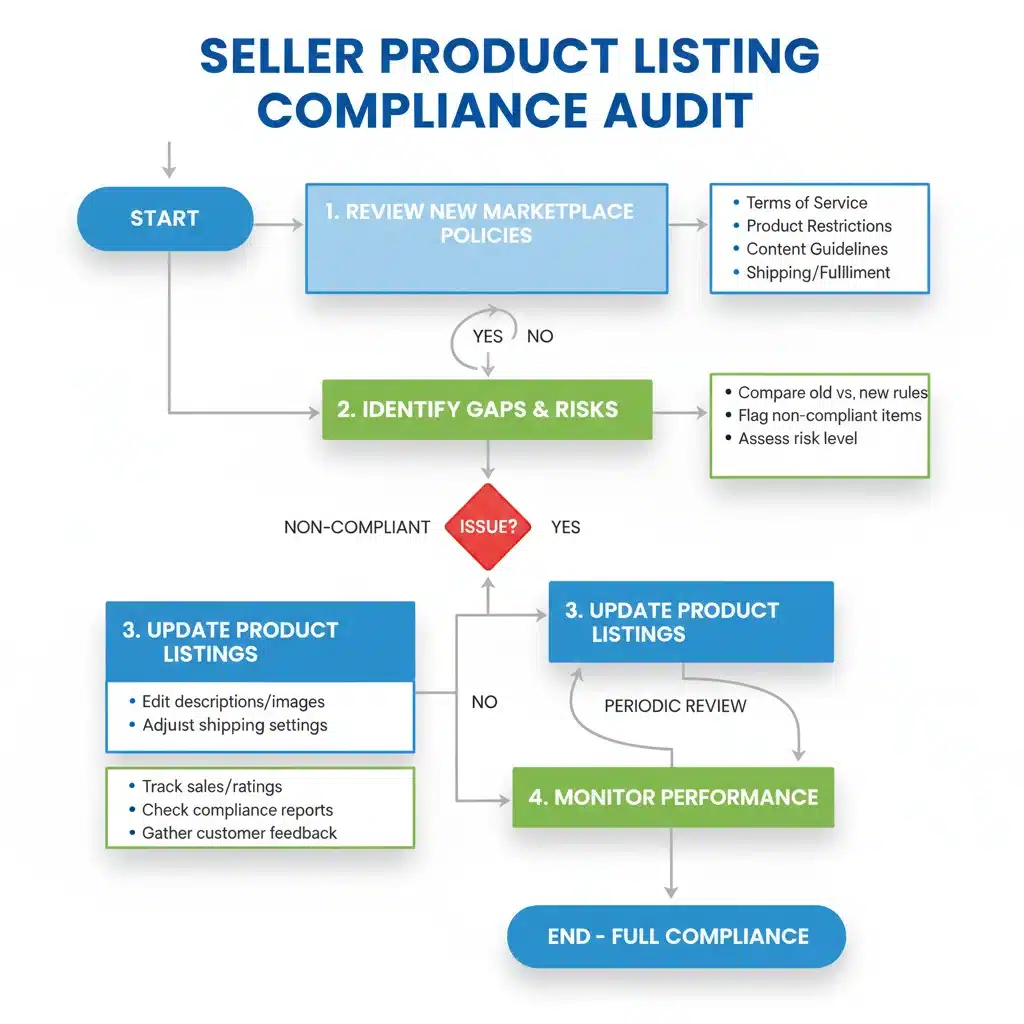
- Conduct a Gap Analysis: Compare the new policies against your current business practices in areas like product sourcing, listing creation, fulfillment, customer service, and data handling. Identify all areas where your current operations fall short.
- Prioritize Risks: Based on your gap analysis, identify which policy changes pose the greatest risk to your business (e.g., potential for account suspension, significant financial penalties, major operational overhaul).
Days 8-14: Strategic Planning and Resource Allocation
Once you understand the changes, it’s time to strategize and prepare your resources.
- Formulate an Adaptation Strategy: For each identified gap, brainstorm specific actions needed to achieve compliance. This might include updating software, revising supply chain agreements, retraining staff, or modifying product descriptions.
- Allocate Budget and Resources: Determine the financial, human, and technological resources required for each adaptation task. Secure necessary approvals and allocate funds.
- Assign Responsibilities and Deadlines: Delegate specific tasks to team members with clear deadlines. Use project management tools to track progress.
- Consult Legal or Compliance Experts (If Necessary): For complex legal or data privacy changes, consider consulting with legal professionals specializing in e-commerce or data protection.
- Review Supply Chain Contracts: If product authenticity or ethical sourcing is a new focus, begin reviewing your supplier contracts and communication with suppliers to ensure they can meet new demands.
Days 15-21: Implementation Kick-off and System Updates
This week focuses on initiating the practical changes.
- Update Product Listings: This is often the most time-consuming task. Begin systematically reviewing and updating all product listings to ensure they comply with new accuracy, transparency, authenticity, and safety requirements. This includes descriptions, images, specifications, and any required certifications.
- Revise Internal Procedures: Update your standard operating procedures (SOPs) for areas affected by the new policies, such as order fulfillment, returns processing, and customer support.
- Implement Technology Solutions: If new policies require specific software for data management, security, or inventory tracking, begin implementation and integration.
- Strengthen Data Security Measures: Review and enhance your data privacy protocols, ensuring compliance with any new marketplace or regulatory requirements. Update your privacy policy if necessary.
- Begin Staff Training: Initiate training sessions for your team on the new policies and revised procedures. Ensure everyone understands their role in maintaining compliance.
Days 22-30: Testing, Monitoring, and Communication
The final week is about validation, ongoing vigilance, and clear communication.
- Conduct Internal Audits: Perform mock audits of your listings, fulfillment process, and customer service interactions to identify any remaining non-compliance issues before the official date.
- Test New Systems: Thoroughly test any new software or integrated systems to ensure they function correctly and meet compliance needs.
- Monitor Marketplace Announcements: Continue to regularly check for any further updates or clarifications from the marketplaces, as policies can sometimes be adjusted in the lead-up to implementation.
- Prepare Customer Communications (If Applicable): If any policy changes directly affect customers (e.g., changes in return policy, shipping times), prepare clear and concise communications to inform them.
- Establish a Compliance Review Schedule: Implement a regular review schedule (e.g., quarterly) to ensure ongoing compliance with all marketplace policies, not just the new ones. E-commerce is dynamic, and continuous monitoring is key.
Navigating Specific Challenges Posed by Marketplace Policy Changes
While the 30-day plan provides a general roadmap, certain aspects of these marketplace policy changes might present unique challenges. Addressing these proactively can save significant headaches down the line.
Challenge 1: Product Authenticity and IP Infringement
Marketplaces are increasingly aggressive in combating counterfeit goods and intellectual property (IP) infringement. New policies often involve:
- Stricter Documentation: Demanding invoices, authorization letters from brands, or certificates of authenticity.
- Enhanced Vetting: Marketplaces might increase their own vetting processes for new and existing sellers in certain categories.
- Faster Takedowns: Quicker action against suspected infringers, often with limited recourse for sellers initially.
Adaptation Strategy:
- Source Directly or from Authorized Distributors: Ensure a verifiable chain of custody for all your products.
- Maintain Meticulous Records: Keep all purchase invoices, supplier agreements, and brand authorizations readily accessible.
- Understand IP Law: Educate yourself on trademarks, copyrights, and patents relevant to your products to avoid accidental infringement.
- Proactive Brand Protection: If you own a brand, register your trademarks and participate in marketplace brand protection programs.
Challenge 2: Data Privacy and GDPR/CCPA-like Requirements
Even if marketplaces handle the bulk of data processing, new policies might impose obligations on sellers regarding customer data. This could mirror aspects of GDPR (General Data Protection Regulation) or CCPA (California Consumer Privacy Act).
Adaptation Strategy:
- Minimize Data Collection: Only collect data that is strictly necessary for your business operations.
- Secure Data Storage: Ensure any customer data you store is encrypted and protected against breaches.
- Understand Data Retention Policies: Know how long you are permitted to keep customer data.
- Update Privacy Policies: If you have your own website or collect data directly, ensure your privacy policy is up-to-date and transparent.
- Consent Management: Understand and implement mechanisms for obtaining and managing customer consent for data usage, especially for marketing.
Challenge 3: Evolving Fulfillment and Logistics Expectations
Customer expectations for fast, reliable, and affordable shipping continue to grow. Marketplaces respond by tightening their fulfillment standards, which can include:
- Faster Shipping Timeframes: Reduced promised delivery windows.
- Higher Tracking Compliance: Stricter requirements for providing valid tracking numbers and on-time updates.
- Reduced Order Defect Rates: Lower tolerance for issues like late shipments, cancellations, or incorrect items.
- Sustainable Packaging Requirements: A potential future trend towards mandating eco-friendly packaging materials.
Adaptation Strategy:
- Optimize Your Shipping Strategy: Evaluate your current carriers, shipping methods, and warehouse efficiency. Consider using marketplace fulfillment services (e.g., FBA) or third-party logistics (3PL) providers if they offer better compliance and cost-efficiency.
- Automate Tracking: Implement systems that automatically upload tracking information to marketplaces.
- Improve Inventory Accuracy: Reduce out-of-stock cancellations by maintaining accurate inventory counts.
- Invest in Quality Control: Minimize incorrect shipments or damaged goods through robust quality checks.
- Explore Eco-Friendly Options: Start researching and integrating sustainable packaging solutions where feasible.

Beyond Compliance: Leveraging Changes for Competitive Advantage
While the immediate goal is compliance, smart US sellers can turn these marketplace policy changes into opportunities for growth and competitive advantage.
Enhanced Customer Trust and Loyalty:
By proactively adhering to higher standards of product quality, safety, and customer service, you build a stronger reputation. Customers are more likely to trust and repeatedly purchase from sellers who demonstrate reliability and integrity. This can lead to higher conversion rates and increased customer lifetime value.
Improved Operational Efficiency:
The process of auditing your operations and implementing new procedures to meet policy changes can reveal inefficiencies. Streamlining processes, automating tasks, and optimizing your supply chain for compliance can lead to long-term cost savings and improved operational flow.
Better Marketplace Relationships:
Sellers who consistently meet or exceed marketplace expectations often benefit from better visibility, eligibility for special programs (like expedited shipping badges or premium seller status), and potentially more lenient treatment during disputes. Being a "good citizen" on a marketplace can open doors.
Reduced Risk and Greater Stability:
Proactive adaptation significantly reduces the risk of penalties, account suspensions, or legal issues. This stability allows you to focus on growth and innovation rather than constantly reacting to compliance crises.
Differentiation from Competitors:
Not all sellers will adapt equally well or quickly. Those who embrace the changes and exceed the minimum requirements can differentiate themselves. For example, if sustainable sourcing becomes a soft requirement, being an early adopter makes you stand out.
The Long-Term View: Preparing for Continuous Change
The May 2026 marketplace policy changes are not an isolated event. The e-commerce world is in a constant state of flux. Successful sellers cultivate a mindset of continuous adaptation.
- Stay Informed: Regularly subscribe to marketplace seller newsletters, blogs, and forums. Attend webinars and industry conferences.
- Build a Flexible Business Model: Design your operations to be agile and responsive to change. Avoid rigid systems that are difficult to modify.
- Invest in Technology: Utilize software and tools that can help automate compliance tasks, track performance metrics, and adapt to new reporting requirements.
- Foster a Culture of Compliance: Ensure that every member of your team understands the importance of compliance and is empowered to flag potential issues.
- Network with Other Sellers: Share insights and best practices with other sellers. Collective knowledge can be invaluable in navigating complex changes.
Conclusion
The upcoming marketplace policy changes effective May 2026 represent a critical juncture for US sellers. While the prospect of adapting to new rules can be daunting, viewing these changes as an opportunity for improvement and strategic growth is key. By diligently following a structured action plan, such as the 30-day roadmap outlined above, you can ensure your business remains compliant, competitive, and poised for future success. Proactivity, thoroughness, and a commitment to continuous improvement will not only help you navigate these immediate changes but also build a more resilient and reputable e-commerce business for the long haul. Start your preparation today to secure your future in the dynamic world of online selling.