Mastering US Marketplace Fees: Boost Profits 10% by 2026
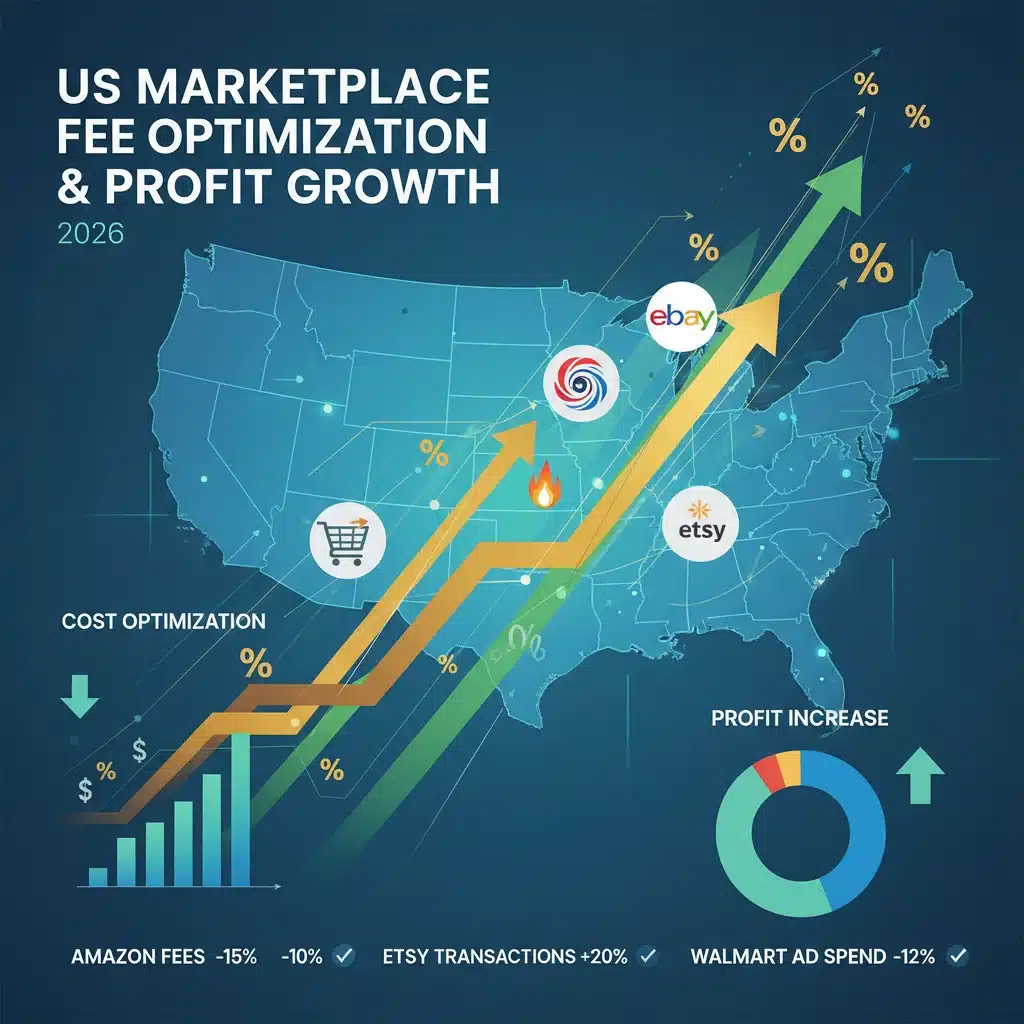
In the dynamic and fiercely competitive landscape of US e-commerce, every percentage point of profit matters. For businesses operating on major platforms like Amazon, eBay, Walmart, and Etsy, understanding and strategically managing US marketplace fees is not just an advantage; it’s a necessity for survival and growth. As we approach 2026, the fee structures continue to evolve, presenting both challenges and opportunities for sellers to optimize their operations and significantly reduce costs. This comprehensive guide delves deep into the intricacies of these fees, offering actionable strategies designed to help you save between 5-10% on your overall costs by optimizing listing and fulfillment strategies.
The digital marketplace has become the primary battleground for consumer attention and sales. While these platforms offer unparalleled access to vast customer bases, they also come with a complex array of fees that can quickly erode profit margins if not carefully managed. From referral fees and fulfillment costs to advertising expenses and subscription charges, the sheer volume of potential deductions can be overwhelming. However, with a proactive and informed approach, businesses can transform these challenges into opportunities for enhanced profitability.
Our goal is to equip you with the knowledge and tools to dissect these fee structures, identify areas of inefficiency, and implement robust strategies that will not only mitigate fee impacts but also drive sustainable growth. We will explore the common types of US marketplace fees, analyze how they vary across different platforms, and provide practical advice on how to negotiate, optimize, and even avoid certain charges. By the end of this article, you will have a clear roadmap to achieving substantial cost savings and strengthening your competitive position in the US e-commerce market.
Understanding the Landscape of US Marketplace Fees
Before diving into optimization strategies, it’s crucial to have a foundational understanding of the various types of US marketplace fees you’re likely to encounter. While specific charges vary by platform, there are several common categories that impact nearly all sellers.
Referral Fees (Commission Fees)
These are perhaps the most ubiquitous fees. Marketplaces charge a percentage of the selling price for each item sold. This percentage varies significantly based on the product category. For instance, electronics might have a lower referral fee than clothing or jewelry. Understanding these category-specific rates is the first step in strategic pricing and product selection. Some platforms also have minimum referral fees, meaning if your item sells for a very low price, you’ll still pay a flat minimum fee.
Fulfillment Fees
If you utilize a marketplace’s fulfillment services (e.g., Fulfillment by Amazon (FBA)), these fees cover storage, picking, packing, shipping, and customer service. These are often the most complex and variable fees, influenced by product weight, dimensions, storage duration, and time of year (peak season storage rates can be significantly higher). Efficient inventory management and strategic fulfillment choices are paramount here.
Subscription Fees
Many marketplaces offer different seller plans, often with a monthly subscription fee for access to advanced tools, lower per-item fees, or increased listing limits. For example, Amazon’s Professional Seller plan has a monthly fee, while individual sellers pay a per-item fee. Calculating the breakeven point where a subscription plan becomes more cost-effective is a key decision.
Listing Fees
While less common on platforms like Amazon, some marketplaces (e.g., eBay, Etsy) charge a small fee for each item listed, regardless of whether it sells. These fees can add up quickly for sellers with a large inventory or high turnover of listings.
Advertising and Promotional Fees
To stand out in a crowded marketplace, many sellers invest in platform-specific advertising (e.g., Amazon Ads, eBay Promoted Listings). While these are optional, they are often a necessary expenditure for visibility. Understanding the ROI of your advertising spend is critical to prevent these fees from becoming a profit drain.
Return Processing Fees
Returns are an inevitable part of e-commerce. Some marketplaces charge fees for processing returns, especially if they handle the fulfillment. Minimizing returns through accurate product descriptions and high-quality items can indirectly reduce these costs.
Long-Term Storage Fees
Particularly relevant for FBA sellers, these fees are levied on inventory that remains in fulfillment centers for extended periods. They are designed to encourage efficient inventory turnover and can become very expensive if not managed proactively.
The sheer number and variability of these US marketplace fees necessitate a meticulous approach to financial planning and operational strategy. Ignoring them is akin to navigating a minefield blindfolded; understanding them allows you to chart a safe and profitable course.
Strategic Listing Optimization for Cost Reduction
One of the most effective ways to combat high US marketplace fees is through intelligent listing optimization. This goes beyond just writing good product descriptions; it involves a holistic approach to how your products are presented and managed on the platform.
Accurate Product Categorization
As mentioned, referral fees are category-dependent. Incorrectly categorizing a product can lead to paying a higher referral fee than necessary. Regularly audit your product categories to ensure they align with the lowest applicable fee structure while remaining accurate and searchable for customers. Some products might fit into multiple categories; choose the one with the most favorable fee.
Optimizing Product Dimensions and Weight
For platforms with fulfillment services (like FBA), product dimensions and weight are critical determinants of fulfillment fees. Even a slight discrepancy can push your product into a higher shipping tier, significantly increasing costs over time. Invest in accurate measurement tools and re-package items if necessary to reduce their volumetric weight. For example, can a product be shipped in a polybag instead of a box? Can a multi-pack be assembled more compactly?
Bundling and Multi-Packs
Consider bundling smaller, lower-margin items or offering multi-packs. While the overall selling price increases, the per-unit fulfillment cost often decreases, as you’re shipping one larger package instead of multiple smaller ones. This strategy can help absorb fixed fulfillment costs more efficiently across multiple units.
Strategic Pricing
Your pricing strategy must account for all US marketplace fees. Don’t just set a price based on your cost of goods and desired profit margin; factor in referral fees, fulfillment costs, and any potential advertising spend. Dynamic pricing tools can help adjust prices in real-time to remain competitive while ensuring profitability after all fees are deducted.
High-Quality Product Listings to Reduce Returns
Detailed product descriptions, accurate images, and clear specifications are crucial. Misleading or insufficient information often leads to customer dissatisfaction and returns. Each return can incur processing fees, shipping costs, and potential restocking fees. By minimizing returns through transparent and comprehensive listings, you directly reduce these associated costs.
Managing Inventory to Avoid Long-Term Storage Fees
This is particularly vital for FBA sellers. Overstocking or slow-moving inventory can quickly accumulate expensive long-term storage fees. Implement robust inventory management systems to forecast demand accurately, adjust purchasing, and liquidate excess stock before it incurs penalties. Regular inventory health checks are essential to identify and address items at risk of long-term storage fees.

Advanced Fulfillment Strategies to Cut Costs
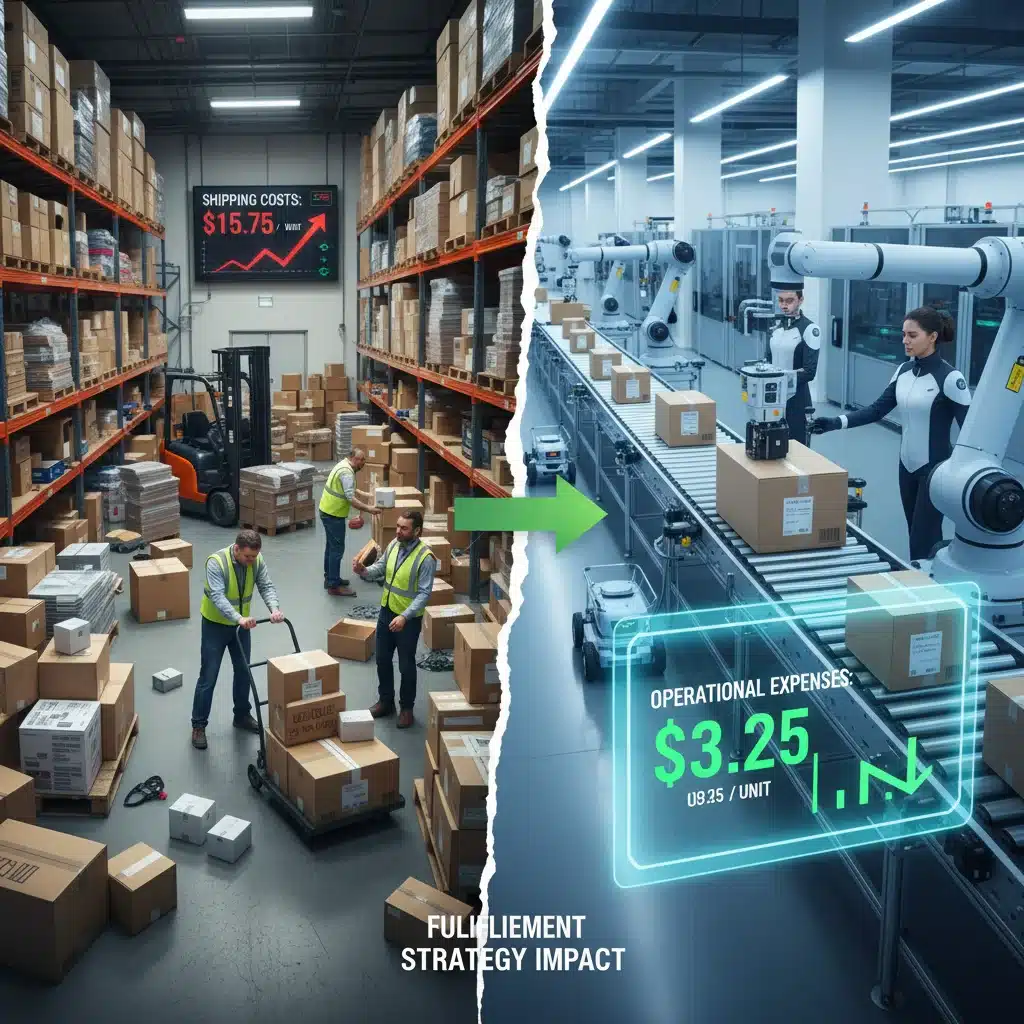
Fulfillment is often the single largest cost component after the cost of goods sold. Optimizing your fulfillment strategy can lead to substantial savings on US marketplace fees.
Leveraging Multi-Channel Fulfillment (MCF) or Third-Party Logistics (3PL)
While FBA is convenient, it’s not always the most cost-effective solution for all products or scenarios. Explore alternatives like Multi-Channel Fulfillment (MCF) offered by Amazon for sales on other platforms, or consider independent 3PL providers. A 3PL can offer more flexible pricing, specialized services, and potentially lower storage and shipping costs, especially for oversized items or those with unpredictable demand. Carefully compare the total cost of FBA (including storage, pick-and-pack, shipping, and returns) against 3PL quotes.
Optimizing Shipping Methods and Carriers
If you’re handling your own fulfillment (FBM – Fulfillment by Merchant), thoroughly research and negotiate with various shipping carriers (USPS, FedEx, UPS, DHL). Volume discounts can significantly reduce per-package shipping costs. Utilize shipping software that compares rates across carriers to find the most economical option for each shipment. Consider regional carriers for shorter distances. For international shipping, understand customs duties and taxes to avoid unexpected charges.
Distributed Inventory Placement
For FBM sellers with multiple warehouses or 3PL partners, strategically distributing inventory across different regions of the US can reduce transit times and shipping costs to customers. This is particularly effective for high-volume sellers. Similarly, FBA sellers can sometimes influence inventory placement by shipping to specific fulfillment centers, though Amazon ultimately controls this.
Packaging Optimization
Beyond product dimensions, the packaging itself impacts shipping costs. Using the smallest possible packaging that still protects the product, and opting for lightweight materials, can lead to significant savings. Avoid excessive void fill or unnecessarily large boxes. Custom packaging solutions can sometimes be more cost-effective in the long run by reducing material waste and shipping volume.
Automating Fulfillment Processes
Manual fulfillment is prone to errors and inefficiencies, which translate into higher costs. Implementing automation for order processing, inventory tracking, and shipping label generation can streamline operations, reduce labor costs, and minimize errors that lead to costly returns or re-shipments. Integration with marketplace APIs can further enhance efficiency.
Negotiating Carrier Rates and Service Level Agreements
As your shipping volume grows, leverage that volume to negotiate better rates with carriers. Don’t be afraid to shop around and get competitive bids. Also, pay close attention to Service Level Agreements (SLAs) to ensure you’re getting the service you pay for and to hold carriers accountable for any failures that might impact your business or incur additional costs.
Platform-Specific Fee Considerations and Strategies
While general strategies apply, each major US marketplace has its unique fee structure that requires tailored optimization.
Amazon (FBA & FBM)
- FBA Fees: Closely monitor changes to FBA fulfillment fees, storage fees, and long-term storage fees. Utilize Amazon’s FBA inventory tools to manage stock levels proactively. Consider FBA Small and Light program for eligible items to reduce fulfillment costs.
- Referral Fees: Ensure accurate product classification. Review the fee categories regularly as Amazon sometimes adjusts them.
- Advertising: Optimize Amazon Ads campaigns for ROI. A/B test ad copy and targeting to ensure every dollar spent generates profitable sales.
- Returns: Focus on product quality and accurate listings to minimize returns, which can incur processing fees.
eBay
- Insertion Fees: Take advantage of your allotted free listings. For high-volume sellers, an eBay Store subscription can significantly reduce per-listing fees and offer additional benefits.
- Final Value Fees: These are similar to referral fees. Ensure accurate categorization. These fees are calculated on the total sale price, including shipping, so factor this into your pricing.
- Promoted Listings: Use Promoted Listings strategically. Monitor their performance and adjust ad rates to ensure a positive return.
- Payment Processing: With eBay Managed Payments, the payment processing fee is often integrated into the final value fee, simplifying calculations.
Walmart Marketplace
- Referral Fees: Walmart’s referral fees are generally competitive. Similar to Amazon, ensure correct category assignment.
- Shipping: If fulfilling yourself, leverage Walmart’s shipping options or integrate with your preferred carrier. Walmart Fulfillment Services (WFS) is an alternative to FBA, offering competitive rates. Evaluate if WFS is a better fit for your products and margins.
- Performance Standards: Walmart has strict performance standards. Failing to meet these can lead to penalties or even account suspension, which is a significant indirect cost.
Etsy
- Listing Fees: Etsy charges a small fee per listing, which expires after four months. Renewing listings incurs another fee. Manage your active listings to avoid unnecessary charges for old or inactive items.
- Transaction Fees: A percentage of the total sale price (including shipping) is charged.
- Payment Processing Fees: Etsy Payments has its own processing fees.
- Advertising: Etsy Ads are available, monitor their effectiveness closely.
Understanding these platform-specific nuances is crucial for tailoring your strategy to each marketplace where you sell. A one-size-fits-all approach to managing US marketplace fees will likely leave money on the table.
Tools and Technologies for Fee Management
Manually tracking and optimizing US marketplace fees across multiple platforms can be a daunting task. Fortunately, a range of tools and technologies can automate and simplify this process, helping you achieve those 5-10% savings.
Inventory Management Systems (IMS)
A robust IMS is fundamental. It helps you track inventory levels in real-time, forecast demand, manage stock across multiple warehouses (if applicable), and identify slow-moving items at risk of long-term storage fees. Many IMS solutions integrate directly with marketplaces, providing a unified view of your stock.
Accounting and Analytics Software
Integrate your marketplace sales data with accounting software (e.g., QuickBooks, Xero) to get a clear picture of your true profitability after all fees. Specialized e-commerce analytics tools can break down fee costs by product, category, and marketplace, highlighting areas for optimization. These tools can also identify discrepancies in fees charged by marketplaces.
Repricing Tools
Automated repricing tools can dynamically adjust your product prices to remain competitive while protecting your profit margins after fees. These tools are invaluable in fast-moving categories and can help you win the Buy Box more often without sacrificing profitability.
Shipping Software and Integrations
For FBM sellers, shipping software can automate label generation, compare carrier rates, and manage tracking. Integrating this with your order management system streamlines the fulfillment process and helps you choose the most cost-effective shipping options.
Fee Audit and Reconciliation Services
Several third-party services specialize in auditing marketplace fees, particularly FBA fees. They can identify discrepancies, overcharges, or lost inventory, and help you file claims for reimbursement. While these services come with their own fees, the potential savings often outweigh the cost, especially for high-volume sellers.
Business Intelligence (BI) Dashboards
Creating custom BI dashboards allows you to visualize your key performance indicators (KPIs) related to fees, sales, and profitability across all marketplaces. This provides a holistic view and enables data-driven decision-making for ongoing optimization.
Future-Proofing Your Strategy: 2026 and Beyond
The e-commerce landscape is constantly evolving, and so are US marketplace fees. To ensure sustained profitability and achieve your 5-10% cost reduction target by 2026, it’s essential to adopt a proactive and adaptable mindset.
Stay Informed About Fee Changes
Marketplaces typically announce fee changes well in advance. Subscribe to their seller newsletters, follow official announcements, and participate in seller forums. Proactively analyzing the impact of impending fee changes on your product catalog allows you to adjust pricing, inventory, or fulfillment strategies before they go into effect.
Diversify Your Sales Channels
While marketplaces offer reach, relying too heavily on one platform can expose you to significant risks from fee changes or policy updates. Diversifying to your own e-commerce website (e.g., Shopify), other marketplaces, or even international markets can reduce your dependence and give you more leverage.
Focus on Customer Lifetime Value (CLV)
Acquiring new customers through marketplaces can be expensive due to referral fees and advertising costs. Focus on providing exceptional customer service and product quality to encourage repeat purchases and build brand loyalty. Loyal customers often bypass marketplaces to purchase directly from your website, reducing fee exposure.
Invest in Brand Building
A strong brand can command higher prices and reduce the need for aggressive advertising spending. It also creates a direct relationship with customers, making them less price-sensitive and more likely to seek you out directly, again circumventing certain marketplace fees.
Continuous Auditing and Optimization
Fee optimization is not a one-time task; it’s an ongoing process. Regularly audit your invoices, analyze your profit and loss statements, and review your operational efficiency. Look for new opportunities to streamline processes, negotiate better rates, and adapt to market changes.
Conclusion: A Path to Greater Profitability
Navigating the complex world of US marketplace fees requires vigilance, strategic planning, and a commitment to continuous optimization. By meticulously understanding each fee component, implementing smart listing strategies, optimizing fulfillment processes, and leveraging appropriate technologies, businesses can unlock significant cost savings. The ambitious goal of reducing costs by 5-10% by 2026 is entirely achievable for those who embrace a data-driven and proactive approach.
The e-commerce landscape will undoubtedly continue to evolve, with new fees emerging and existing ones changing. However, by building a robust framework for fee management and operational efficiency today, you can future-proof your business against these shifts, ensuring sustained profitability and competitive advantage. Start implementing these strategies now, and watch your margins grow as you master the art of marketplace fee optimization.