Headless Commerce Platforms: 2026 USA Retailer Analysis & Comparison
The Latest in Headless Commerce Platforms for USA Retailers: A 2026 Comparison and Analysis of 5 Top Solutions
In the rapidly evolving landscape of digital retail, staying ahead means embracing innovative technologies. For USA retailers, the shift towards more flexible, scalable, and customer-centric e-commerce experiences is no longer an option but a necessity. This is where headless commerce platforms come into play, offering a revolutionary approach to online selling that decouples the front-end (customer-facing) from the back-end (e-commerce functionalities).
As we look towards 2026, the adoption of headless commerce platforms is set to accelerate, driven by the demand for personalised shopping journeys, omnichannel presence, and faster time-to-market for new features. This comprehensive guide will delve into the world of headless commerce, explain its benefits, and provide an in-depth comparison and analysis of five leading solutions specifically tailored for USA retailers. Our goal is to equip you with the knowledge needed to make an informed decision, ensuring your business thrives in the competitive digital arena.
Understanding Headless Commerce: A Paradigm Shift for Retailers
Before diving into specific platforms, it’s crucial to grasp the fundamental concept of headless commerce. Traditionally, e-commerce platforms were monolithic, meaning the front-end (what customers see) and the back-end (order processing, inventory management, payments) were tightly intertwined. While convenient for simpler setups, this architecture often limited customisation, slowed down development, and made it challenging to adapt to new customer touchpoints.
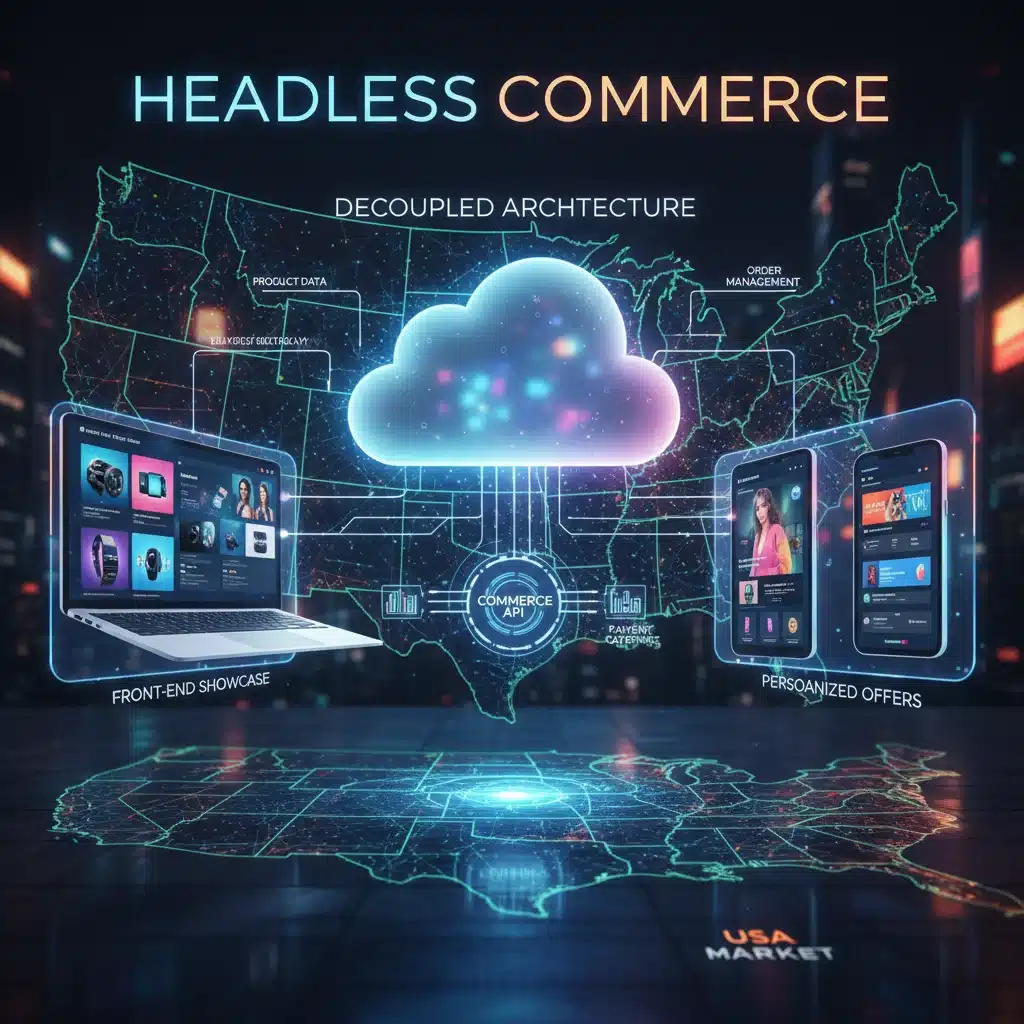
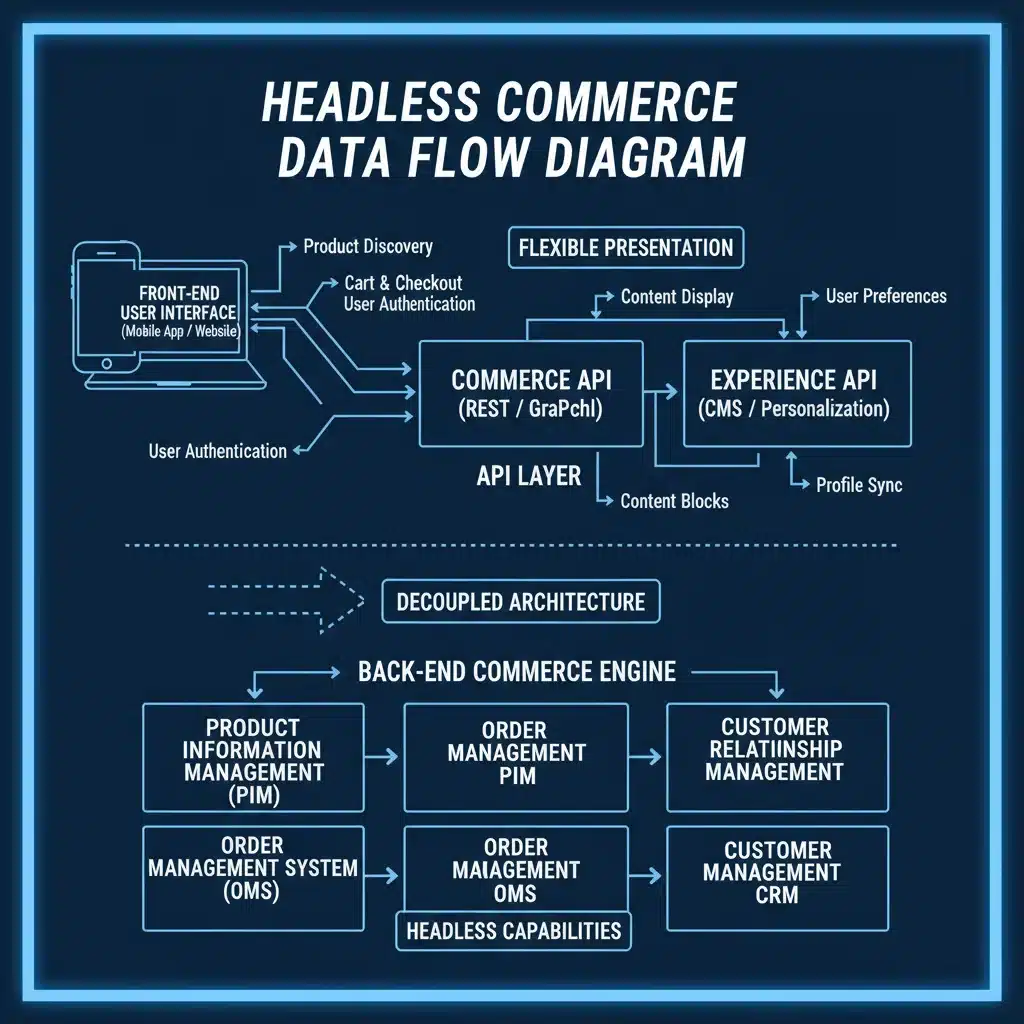
Headless commerce, on the other hand, separates these two layers. The ‘head’ (the front-end presentation layer, such as a website, mobile app, IoT device, or voice assistant) is detached from the ‘body’ (the back-end commerce engine). Communication between these layers happens via Application Programming Interfaces (APIs). This decoupling offers unprecedented flexibility, allowing retailers to use best-of-breed front-end technologies and deliver consistent experiences across any channel without being constrained by the back-end system.
Why are Headless Commerce Platforms Becoming Indispensable for USA Retailers?
The benefits of adopting headless commerce platforms are manifold, especially for USA retailers facing intense competition and evolving customer expectations:
- Unmatched Flexibility and Customisation: Retailers can create unique, bespoke front-end experiences that perfectly align with their brand identity and customer journey, without being limited by pre-built templates. This is crucial for standing out in a crowded market.
- Omnichannel Excellence: With headless, you can serve content and products to any device or channel – be it a traditional website, a progressive web app (PWA), a mobile app, smart mirrors in physical stores, voice assistants, or social commerce platforms. This provides a truly seamless and consistent customer experience across all touchpoints.
- Faster Innovation and Time-to-Market: Developers can work on the front-end independently of the back-end, speeding up the development of new features, campaigns, and user interfaces. This agility is vital for responding quickly to market trends and customer feedback.
- Improved Performance and Scalability: Decoupling often leads to faster loading times and a more responsive user experience, which directly impacts conversion rates and SEO. Headless architectures are also inherently more scalable, able to handle spikes in traffic and transaction volumes with greater ease.
- Enhanced SEO Capabilities: With full control over the front-end, retailers can implement advanced SEO strategies, optimise page speed, and structure content in a way that search engines favour, leading to higher organic visibility.
- Future-Proofing Your E-commerce: As new technologies emerge, a headless setup allows you to integrate them into your front-end without overhauling your entire commerce infrastructure, ensuring your business remains adaptable and competitive for years to come.
Key Considerations When Choosing Headless Commerce Platforms
Selecting the right headless commerce platforms requires careful evaluation of several factors. For USA retailers, these considerations are paramount to ensure the chosen solution aligns with their business goals, technical capabilities, and growth aspirations:
- API Richness and Documentation: The quality and comprehensiveness of APIs are the backbone of any headless system. Robust, well-documented APIs are essential for seamless integration and development.
- Developer Experience: Ease of use for developers, availability of SDKs, and a strong developer community can significantly impact implementation time and ongoing maintenance.
- Scalability and Performance: The platform must be able to handle current and future traffic volumes, especially during peak seasons, without compromising performance.
- Integration Ecosystem: Evaluate the platform’s ability to integrate with existing systems like CRM, ERP, PIM, and marketing automation tools. A rich marketplace or extensive API library is a plus.
- Cost Structure: Understand the licensing models, transaction fees, hosting costs, and potential development expenses. Consider both upfront and long-term costs.
- Security and Compliance: Ensure the platform meets industry security standards and compliance requirements relevant to USA retailers, such as PCI DSS.
- Support and Service Level Agreements (SLAs): Reliable support is critical, especially for mission-critical e-commerce operations.
- Feature Set: While headless offers flexibility, the underlying commerce engine should still provide robust features for product management, order management, pricing, promotions, and customer accounts.
Top 5 Headless Commerce Platforms for USA Retailers in 2026: An In-Depth Comparison
Now, let’s explore five of the leading headless commerce platforms that USA retailers should consider in 2026. Each offers a unique blend of features, strengths, and target audiences.
1. Shopify Plus (Headless Capabilities)
Shopify Plus has long been a dominant force in e-commerce, and its robust API-first approach, particularly with its Storefront API and Hydrogen/Oxygen stack, makes it a strong contender in the headless space. It offers a familiar, user-friendly back-end with the flexibility of headless.
- Strengths:
- Ease of Use (Back-end): For merchants already familiar with Shopify, the transition to headless on Plus is relatively smooth for back-office operations.
- Extensive App Ecosystem: A vast app store complements core functionalities, reducing the need for custom development for many features.
- Scalability: Designed for high-growth merchants, Shopify Plus can handle significant traffic and transaction volumes.
- Developer Tools: Hydrogen (a React-based framework) and Oxygen (a global hosting solution) simplify headless development and deployment.
- Community Support: A large and active community provides extensive resources and support.
- Considerations for USA Retailers:
- Pricing: While powerful, Shopify Plus can be a significant investment for smaller enterprises.
- Customisation Limits (Back-end): While the front-end is fully customisable, the back-end core functionalities, though extensive, might have some limitations for highly unique business logic compared to truly enterprise-grade platforms.
- Vendor Lock-in: While less restrictive with headless, you are still operating within the Shopify ecosystem.
- Best For: High-growth mid-market to large enterprises in the USA looking for a powerful, relatively easy-to-manage back-end combined with complete front-end flexibility, especially those already familiar with Shopify.
2. Commercetools
Commercetools is a pioneering force in the ‘MACH’ (Microservices, API-first, Cloud-native, Headless) architecture movement. It is a pure-play headless commerce platform built from the ground up to be API-first and cloud-native, offering unparalleled flexibility and scalability for complex enterprise needs.
- Strengths:
- True MACH Architecture: Provides ultimate flexibility, allowing retailers to build highly customised commerce experiences across any touchpoint.
- Microservices Approach: Individual components (e.g., product, cart, order) are separate services, enabling independent scaling and development.
- Global Scalability: Built for international operations, making it ideal for USA retailers with global ambitions.
- Developer-Centric: Offers extensive APIs, SDKs, and comprehensive documentation for developers.
- Integration Friendly: Designed to integrate seamlessly with a wide array of third-party services.
- Considerations for USA Retailers:
- Complexity: The sheer flexibility can lead to higher initial development costs and a steeper learning curve for teams new to MACH.
- Requires Strong Technical Team: Best suited for companies with in-house development expertise or a trusted agency partner.
- No Out-of-the-Box Storefront: You need to build your front-end from scratch, which is its core strength but also a potential hurdle.
- Best For: Large enterprises and innovative mid-market businesses in the USA that require maximum flexibility, have complex business logic, strong development resources, and are committed to a best-of-breed approach.
3. BigCommerce (Open SaaS Headless)
BigCommerce offers an ‘Open SaaS’ approach to headless commerce, providing a powerful commerce engine with robust APIs that allow retailers to connect to any front-end. It balances SaaS simplicity with headless flexibility, making it an attractive option for many USA businesses.
- Strengths:
- Hybrid Approach: Offers the benefits of a SaaS platform (managed hosting, security, updates) with the flexibility of headless.
- Robust Core Features: Provides strong out-of-the-box functionalities for product management, SEO, marketing, and multi-channel selling.
- API-First Design: Comprehensive APIs allow for seamless integration with various front-end frameworks (e.g., Next.js, Gatsby, Nuxt.js) and third-party systems.
- Lower TCO (Total Cost of Ownership): Compared to pure MACH platforms, BigCommerce can offer a more cost-effective headless solution due to its SaaS nature.
- Global Capabilities: Supports multi-currency, multi-language, and international shipping, beneficial for USA retailers looking to expand.
- Considerations for USA Retailers:
- Pricing Tiers: While flexible, certain features are tied to higher-tier plans.
- Customisation Limits (Back-end): Similar to Shopify Plus, while highly flexible, the core back-end might have some limitations for extremely unique business processes.
- Performance: While generally good, ensure the chosen front-end framework and hosting are optimised for peak performance.
- Best For: Mid-market to large USA retailers who want a powerful, scalable commerce back-end with the flexibility of headless, without the full complexity and overhead of a pure MACH solution.
4. Adobe Commerce (formerly Magento Open Source & Commerce)
Adobe Commerce, particularly its cloud-based version, has evolved significantly to embrace headless architecture. While traditionally a monolithic platform, its extensive API layer and ecosystem make it a viable option for large enterprises seeking deep customisation and control over their entire commerce experience.
- Strengths:
- Unmatched Customisation: Historically known for its ability to be customised to almost any business requirement, which extends to its headless implementations.
- Rich Feature Set: Offers a comprehensive suite of features for complex B2C and B2B commerce scenarios, including advanced pricing, promotions, and customer segmentation.
- Extensive Ecosystem: A vast network of developers, agencies, and extensions provides extensive support and integration options.
- PWA Studio: Adobe provides PWA Studio, a set of tools and frameworks for building modern, headless storefronts with React.
- Enterprise-Grade Security: Robust security features and compliance for large-scale operations.
- Considerations for USA Retailers:
- Cost and Complexity: Adobe Commerce is a significant investment in terms of licensing, development, and maintenance, requiring skilled technical resources.
- Implementation Time: Due to its complexity and customisation capabilities, implementation can be longer and more involved.
- Performance Optimisation: Requires careful optimisation to ensure high performance, especially with highly customised instances.
- Best For: Large USA enterprises with complex, unique business requirements, significant development resources, and a need for deep control and customisation over every aspect of their commerce platform.

5. Elastic Path
Elastic Path is another strong contender in the MACH space, offering a composable commerce platform that focuses on providing flexible, API-first building blocks. It’s designed for enterprises that need to assemble a best-of-breed solution tailored to their exact specifications, particularly those with complex product catalogues and pricing structures.
- Strengths:
- Composable Commerce: Allows retailers to pick and choose individual commerce services (e.g., product catalogue, pricing, inventory) and integrate them with other systems.
- API-First and Cloud-Native: Built for modern, agile development and deployment.
- Complex Product Modelling: Excellent for businesses with intricate product configurations, bundles, and pricing rules.
- Multi-Store and Multi-Currency: Supports diverse business models and global expansion effectively.
- Developer-Friendly: Comprehensive APIs and SDKs facilitate integration and customisation.
- Considerations for USA Retailers:
- High Technical Bar: Like Commercetools, it requires a strong technical team or experienced agency to implement and manage effectively.
- No Out-of-the-Box Storefront: Requires building the front-end from scratch, necessitating front-end development expertise.
- Pricing: Geared towards enterprise clients, so the cost can be substantial.
- Best For: Large USA enterprises with highly complex product catalogues, unique pricing strategies, and a strong desire for a truly composable, best-of-breed commerce solution, backed by significant technical resources.
The Future of Retail: Embracing Headless for Competitive Advantage
The digital commerce landscape is dynamic, with customer expectations continually rising. For USA retailers, the decision to adopt headless commerce platforms is a strategic one that can unlock unparalleled flexibility, foster innovation, and deliver superior customer experiences. The platforms highlighted above – Shopify Plus, Commercetools, BigCommerce, Adobe Commerce, and Elastic Path – each offer compelling reasons for consideration, catering to different scales of business, technical capabilities, and strategic objectives.
As 2026 approaches, the imperative for retailers to differentiate themselves through unique digital experiences will only grow. Headless commerce provides the architectural foundation for this differentiation, allowing businesses to iterate rapidly, integrate new technologies seamlessly, and truly put the customer at the centre of their strategy. The investment in a headless solution is not just about technology; it’s an investment in the future resilience and growth of your retail business.
Making the Right Choice: A Strategic Imperative
Choosing among these powerful headless commerce platforms is a significant strategic decision. It’s not merely about selecting the most feature-rich option, but identifying the platform that best aligns with your long-term vision, current technical capabilities, and budget. Consider conducting a thorough discovery phase, involving key stakeholders from marketing, sales, IT, and customer service. Engage with potential platform vendors, request demos, and speak to their existing customers, particularly those in the USA retail sector.
Furthermore, evaluating the total cost of ownership (TCO) beyond just licensing fees is crucial. This includes development costs, integration expenses, ongoing maintenance, and the cost of skilled personnel or agency partnerships. A phased implementation approach, starting with a minimum viable product (MVP) and iteratively adding features, can also help mitigate risks and ensure a smoother transition to a headless architecture.
Ultimately, the move to headless commerce is about empowering your business to be more agile, innovative, and customer-centric. By carefully evaluating the leading headless commerce platforms available to USA retailers in 2026, you can lay the groundwork for a robust, future-proof digital commerce strategy that drives sustained growth and competitive advantage.
Conclusion: Paving the Way for Digital Excellence
The era of monolithic e-commerce is steadily giving way to a more agile, composable future. For USA retailers, embracing headless commerce platforms is no longer a niche strategy but a mainstream requirement for staying competitive and meeting the ever-increasing demands of the modern consumer. The five platforms we’ve analysed – Shopify Plus, Commercetools, BigCommerce, Adobe Commerce, and Elastic Path – represent the vanguard of this movement, each offering distinct advantages for different business needs.
Whether you prioritise ease of use and a vast app ecosystem (Shopify Plus), ultimate flexibility and a pure MACH approach (Commercetools, Elastic Path), or a balance of SaaS benefits with headless capabilities (BigCommerce), there’s a solution tailored for your retail enterprise. For those with deep technical resources and complex requirements, Adobe Commerce continues to offer unparalleled customisation.
The journey to headless commerce is a transformative one, promising not just technological upgrades but a fundamental shift in how businesses interact with their customers and adapt to market changes. By carefully considering the insights and comparisons provided in this 2026 analysis, USA retailers can confidently navigate this exciting landscape, selecting the ideal headless commerce platforms to power their next generation of digital retail success.