API-First E-commerce: Scalability, Cost Reduction, and Future Growth
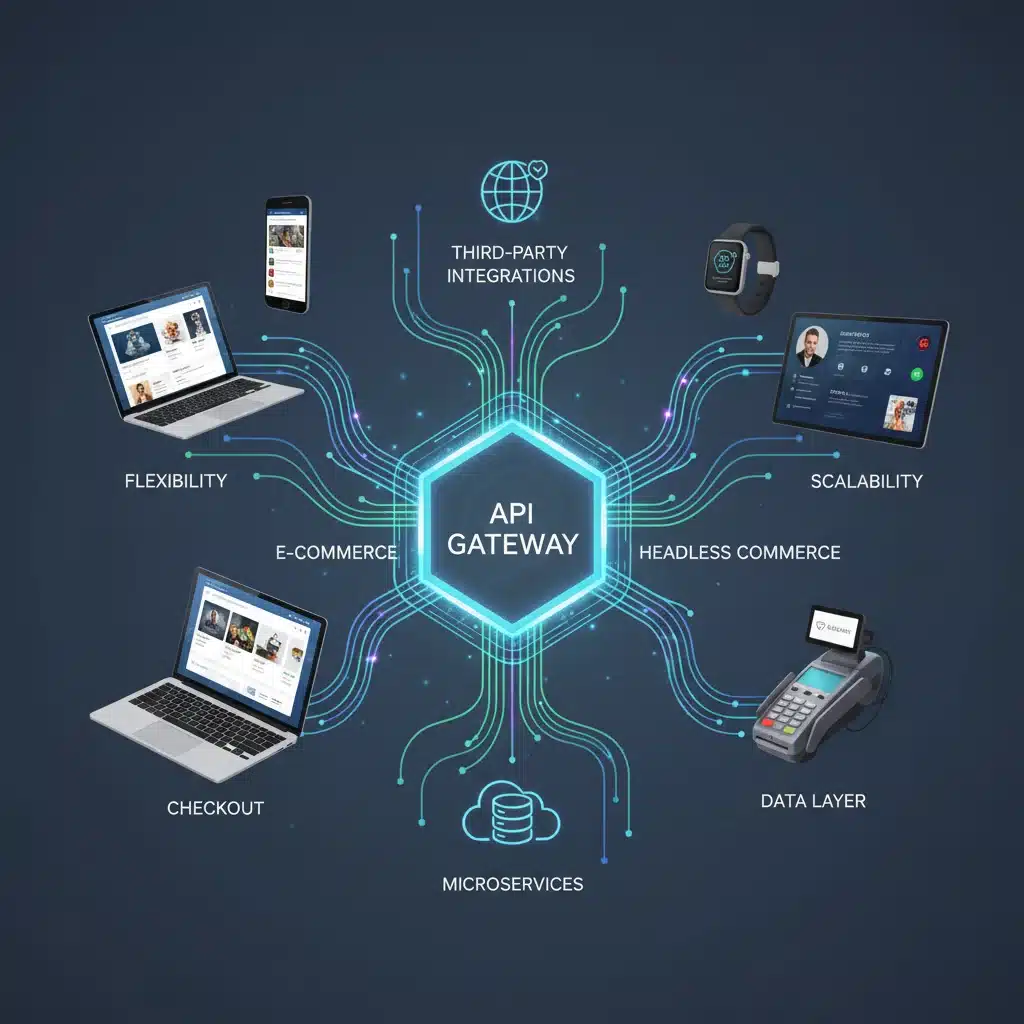
In the rapidly evolving landscape of digital commerce, businesses are constantly seeking innovative solutions to stay competitive, enhance customer experiences, and optimise operational efficiency. Traditional monolithic e-commerce platforms, while having served their purpose, are increasingly proving to be bottlenecks to agility and growth. Enter API-first e-commerce architectures – a paradigm shift that promises unparalleled scalability, flexibility, and significant cost reductions. For US businesses looking to thrive in 2026 and beyond, embracing an API-first approach isn’t just an option; it’s a strategic imperative.
The digital economy demands speed, adaptability, and the ability to integrate diverse technologies seamlessly. Consumers expect personalised experiences across multiple touchpoints, and businesses need the infrastructure to deliver these expectations without extensive redevelopment cycles. This is precisely where API-first e-commerce shines, offering a modular, composable approach that empowers businesses to build bespoke solutions tailored to their unique needs.
This comprehensive guide will delve deep into the intricacies of API-first e-commerce, exploring its core principles, tangible benefits, and why it’s becoming the cornerstone of modern digital strategies. We will particularly focus on how this architectural model is poised to drive substantial cost savings, potentially up to 18% for US businesses by 2026, while simultaneously fostering an environment of continuous innovation and market responsiveness.
Understanding API-First E-commerce: A Paradigm Shift
At its heart, an API-first e-commerce strategy means that Application Programming Interfaces (APIs) are treated as first-class citizens in the development process. Instead of building a monolithic application and then exposing APIs as an afterthought, the entire system is designed with APIs as the primary interface for all interactions. This fundamental shift in thinking has profound implications for how e-commerce platforms are built, extended, and maintained.
Imagine your e-commerce platform as a collection of independent, interconnected services rather than a single, sprawling application. Each service – be it product catalog, inventory management, payment processing, or customer authentication – exposes a well-defined API. This allows different parts of your system, or even third-party applications, to communicate and exchange data seamlessly without being tightly coupled to the underlying implementation details.
This approach stands in stark contrast to traditional monolithic platforms where all functionalities are bundled together. While simpler to set up initially, monoliths often become rigid, difficult to scale, and costly to modify as business requirements evolve. An API-first e-commerce architecture, on the other hand, embraces modularity, enabling businesses to ‘compose’ their ideal e-commerce stack using best-of-breed services and technologies.
The Core Principles of API-First Development
- API as the Contract: APIs are designed and documented first, serving as the definitive contract for how different components will interact.
- Modularity and Decoupling: Services are independent and loosely coupled, meaning changes to one service don’t necessarily impact others.
- Reusability: APIs are designed to be reusable across various front-end applications (web, mobile, IoT) and integrations.
- Scalability: Individual services can be scaled independently based on demand, optimising resource utilisation.
- Flexibility: Businesses can easily swap out or integrate new services without overhauling the entire system.
This architectural model often goes hand-in-hand with concepts like headless commerce and microservices, which further empower businesses to achieve unprecedented levels of customisation and agility. By focusing on the API first, businesses are building for the future, anticipating diverse consumption channels and dynamic market demands.
Driving Scalability with API-First E-commerce
One of the most compelling advantages of an API-first e-commerce architecture is its inherent ability to scale. In today’s global marketplace, e-commerce businesses experience fluctuating traffic patterns, seasonal peaks, and sudden surges in demand. A system that can’t scale efficiently risks losing sales, damaging brand reputation, and incurring significant operational costs.
Traditional monolithic platforms often struggle with scalability. When demand increases, you typically have to scale the entire application, even if only a specific component (e.g., product search) is experiencing heavy load. This leads to inefficient resource allocation and higher infrastructure costs.
With an API-first e-commerce model built on microservices, individual components can be scaled independently. If your product catalog API is experiencing high traffic, you can allocate more resources specifically to that service without impacting other parts of your system, such as the order processing or customer authentication services. This granular control over scaling not only optimises performance during peak times but also ensures more efficient use of computing resources.
Key Scalability Benefits:
- Elastic Scaling: Ability to dynamically adjust resources for specific services based on real-time demand.
- Improved Performance: Distributing workloads across independent services reduces bottlenecks and improves overall system responsiveness.
- Enhanced Resilience: The failure of one service does not necessarily bring down the entire e-commerce platform, leading to greater uptime and reliability.
- Global Reach: Easily deploy services in different geographical regions to serve diverse customer bases with low latency.
Consider a flash sale event. In a monolithic system, the entire application might buckle under the sudden load. In an API-first e-commerce setup, the product information service, cart service, and checkout service could all be scaled up independently to handle the increased requests, ensuring a smooth customer experience and preventing lost revenue. This level of adaptability is critical for businesses operating in a fast-paced, unpredictable digital environment.
Reducing Development Costs: The 18% Advantage for US Businesses by 2026
Beyond scalability, the financial implications of adopting an API-first e-commerce architecture are substantial. Industry projections suggest that US businesses can anticipate a reduction in development costs by as much as 18% by 2026 through this approach. This isn’t just about cutting corners; it’s about smarter, more efficient development that yields long-term savings and accelerates time-to- market.
How API-First Architectures Lead to Cost Savings:
- Accelerated Development Cycles: With modular services and well-defined APIs, developers can work on different components simultaneously and independently. This parallel development significantly shortens project timelines. Furthermore, reusable APIs mean less code needs to be written from scratch for new features or front-end experiences.
- Reduced Maintenance Overhead: Monolithic applications are notoriously difficult and costly to maintain. A small change in one part of the code can have unintended ripple effects across the entire system, requiring extensive testing. In an API-first e-commerce environment, services are isolated, making debugging, updates, and maintenance much simpler and less prone to introducing new bugs.
- Optimal Resource Utilisation: As discussed with scalability, the ability to scale individual services means businesses only pay for the resources they need, when they need them. This reduces infrastructure costs associated with over-provisioning resources for an entire monolithic application. Cloud-native deployments, often paired with API-first, further enhance this cost efficiency.
- Faster Integrations: Integrating third-party services (e.g., CRM, ERP, marketing automation, shipping providers) is a common, often costly, endeavour for e-commerce businesses. An API-first e-commerce platform, by its very nature, is designed for seamless integration, reducing the complexity and development effort required to connect new tools and services.
- Lower Risk of Vendor Lock-in: By decoupling the front-end from the back-end and using open APIs, businesses gain greater flexibility in choosing best-of-breed solutions. This reduces dependence on a single vendor’s ecosystem, allowing for more competitive pricing and avoiding costly migrations down the line.
- Increased Developer Productivity: Developers can focus on building specific services without needing to understand the entire codebase. This specialisation, coupled with clear API documentation, boosts productivity and reduces the learning curve for new team members.
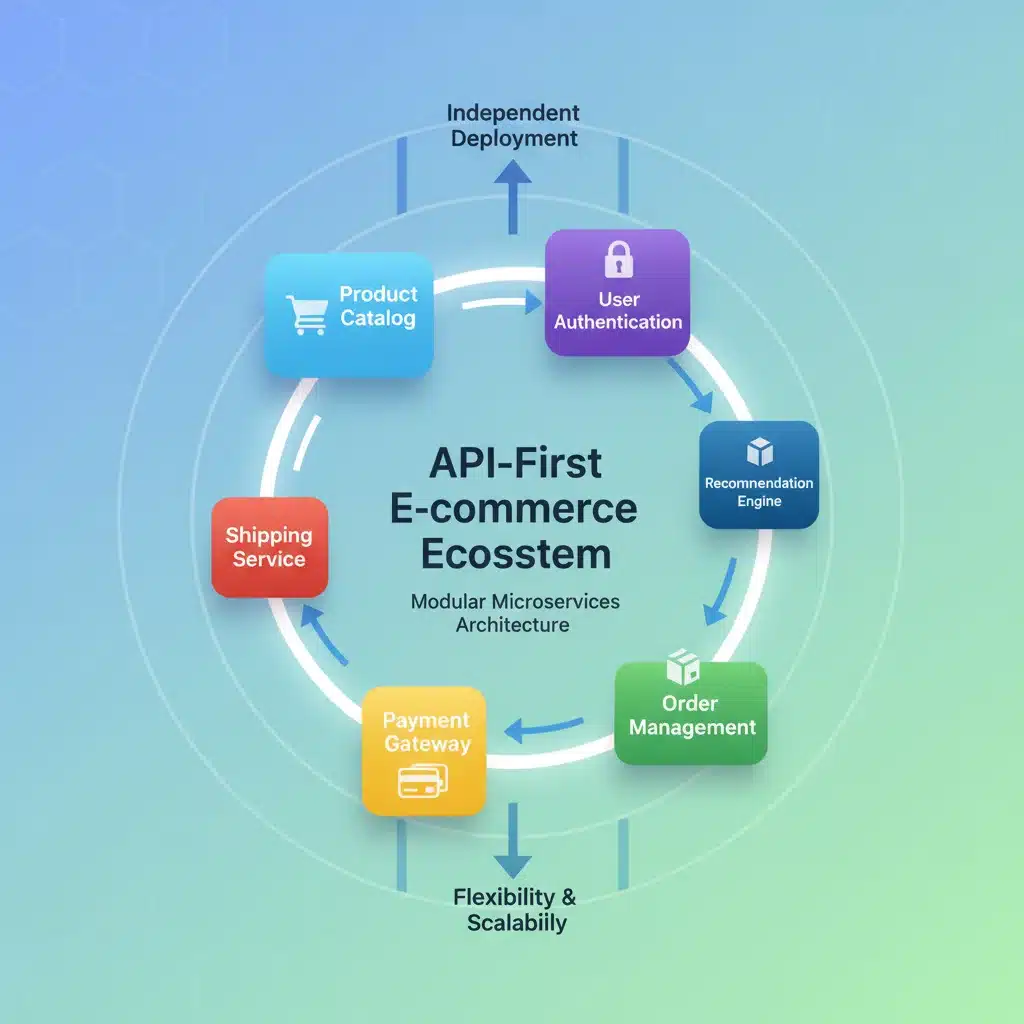
The cumulative effect of these factors is a significant reduction in total cost of ownership (TCO) for e-commerce platforms. For US businesses facing intense competition and pressure on profit margins, these savings can be reinvested into innovation, marketing, or further enhancing the customer experience, creating a virtuous cycle of growth.
Enhanced Flexibility and Innovation
Beyond cost and scalability, an API-first e-commerce architecture unlocks unprecedented levels of flexibility and fosters a culture of continuous innovation. In today’s dynamic market, the ability to rapidly adapt to new trends, integrate emerging technologies, and experiment with novel customer experiences is paramount.
Key Innovation Drivers:
- Omnichannel Readiness: An API-first approach naturally supports omnichannel strategies. The same APIs can power your website, mobile app, in-store kiosks, voice assistants, IoT devices, and social commerce channels, ensuring a consistent brand experience across all touchpoints.
- Faster Time-to-Market for New Features: With independent services, new features can be developed, tested, and deployed much faster. Businesses can react quickly to market demands, launch new products, or implement promotional campaigns without extensive system-wide overhauls.
- Experimentation and A/B Testing: The modular nature allows for easier experimentation. You can develop and test new front-end experiences or integrate new services without disrupting the core e-commerce functionality, facilitating data-driven decision-making.
- Integration of Emerging Technologies: Want to integrate AI-powered chatbots, augmented reality (AR) product visualisations, or blockchain for supply chain transparency? An API-first e-commerce platform makes these integrations far simpler, allowing businesses to leverage cutting-edge technologies as they emerge.
- Empowering Developers: Providing clear APIs empowers front-end developers, marketing teams, and even third-party partners to build innovative applications and experiences on top of your core commerce functionality without needing deep back-end expertise.
Consider the rapid rise of social commerce or shoppable videos. Businesses with monolithic platforms might struggle to integrate these new sales channels quickly. An API-first e-commerce platform, however, can expose its product, inventory, and checkout APIs, allowing developers to build custom front-ends for these new channels with relative ease and speed. This agility is a significant competitive advantage in a constantly changing digital world.
Implementation Considerations for US Businesses
While the benefits of API-first e-commerce are clear, a successful transition requires careful planning and strategic execution. US businesses considering this architectural shift should be mindful of several key factors.
Strategic Planning and Assessment:
- Evaluate Current Stack: Understand the limitations and capabilities of your existing e-commerce platform. Identify which components can be decoupled first.
- Define Business Requirements: Clearly articulate your long-term business goals, including desired scalability, integration needs, and customer experience objectives.
- API Strategy: Develop a comprehensive API strategy that includes clear documentation, versioning, security protocols, and governance.
Technology and Tools:
- Choose a Headless Commerce Platform: Many vendors offer headless commerce solutions that are inherently API-first, providing the core commerce functionality as services.
- Microservices Frameworks: Utilise appropriate frameworks and tools for building and managing microservices (e.g., Kubernetes for orchestration, Docker for containerisation).
- API Gateway: Implement an API Gateway to manage, secure, and monitor all API traffic, providing a single entry point for external consumers.
- Developer Portal: Create a comprehensive developer portal with clear API documentation, SDKs, and tutorials to foster adoption and innovation.
Team and Culture:
- Skillset Development: Invest in training your development team in API design principles, microservices architecture, and relevant technologies.
- Cross-functional Collaboration: Foster collaboration between development, marketing, and product teams to ensure alignment on API design and feature development.
- Iterative Approach: Consider a phased approach, migrating components gradually rather than attempting a ‘big bang’ overhaul. Start with less critical functionalities and learn along the way.
The journey to an API-first e-commerce architecture is a strategic investment. It requires a shift in mindset from building products to building platforms. However, the long-term rewards in terms of agility, competitive advantage, and sustainable growth—are immense.

The Future of E-commerce is API-First
As we look towards 2026 and beyond, the trajectory of e-commerce is clear: it will be increasingly personalised, omnichannel, and data-driven. The underlying architecture that enables this future is undoubtedly API-first e-commerce. The ability to seamlessly integrate new technologies, adapt to evolving customer behaviours, and maintain a competitive edge will hinge on the flexibility and scalability that this approach provides.
Key Future Trends Driven by API-First:
- Hyper-Personalisation at Scale: With decoupled services, businesses can more easily integrate AI/ML engines to deliver highly personalised product recommendations, content, and offers across all touchpoints.
- Composable Commerce: The API-first approach is the foundation of composable commerce, where businesses can ‘compose’ their unique commerce stack by selecting best-of-breed components from various vendors, avoiding vendor lock-in and fostering innovation.
- Edge Computing and IoT Integration: As more devices become ‘smart’ and connected, APIs will be crucial for integrating e-commerce functionalities directly into IoT devices, smart appliances, and edge computing environments.
- Voice and Conversational Commerce: The rise of voice assistants and chatbots demands robust APIs to facilitate natural language interactions for shopping, order tracking, and customer service.
- Global Expansion and Localisation: API-first architectures make it easier to adapt e-commerce experiences for different regions, languages, currencies, and regulatory requirements, facilitating seamless global expansion.
The prediction of an 18% reduction in development costs for US businesses by 2026 is not merely an optimistic forecast; it reflects the inherent efficiencies and strategic advantages embedded within the API-first e-commerce model. Businesses that embrace this shift early will not only realise significant financial benefits but also position themselves as leaders in innovation, capable of delivering exceptional customer experiences that drive loyalty and growth.
Conclusion: Embracing the API-First Advantage
The digital commerce landscape is undergoing a profound transformation, and the API-first e-commerce architecture stands at the forefront of this evolution. For US businesses, the transition from monolithic systems to a modular, API-driven approach is no longer a luxury but a strategic necessity for long-term success.
By prioritising flexibility, scalability, and integration through a well-executed API strategy, businesses can unlock significant development cost reductions, foster rapid innovation, and deliver unparalleled customer experiences across every touchpoint. The projected 18% reduction in development costs by 2026 is a compelling testament to the economic viability and strategic wisdom of this architectural model.
The journey to becoming an API-first e-commerce enterprise requires vision, commitment, and a willingness to embrace change. However, the rewards—in terms of agility, competitive advantage, and sustainable growth—are immense. Businesses that proactively adopt this approach will not only future-proof their operations but also emerge as leaders in an increasingly complex and dynamic digital world, ready to meet the demands of tomorrow’s consumers today.