Voice Commerce Adoption: 10% US Sales Increase by 2026 via Smart Devices

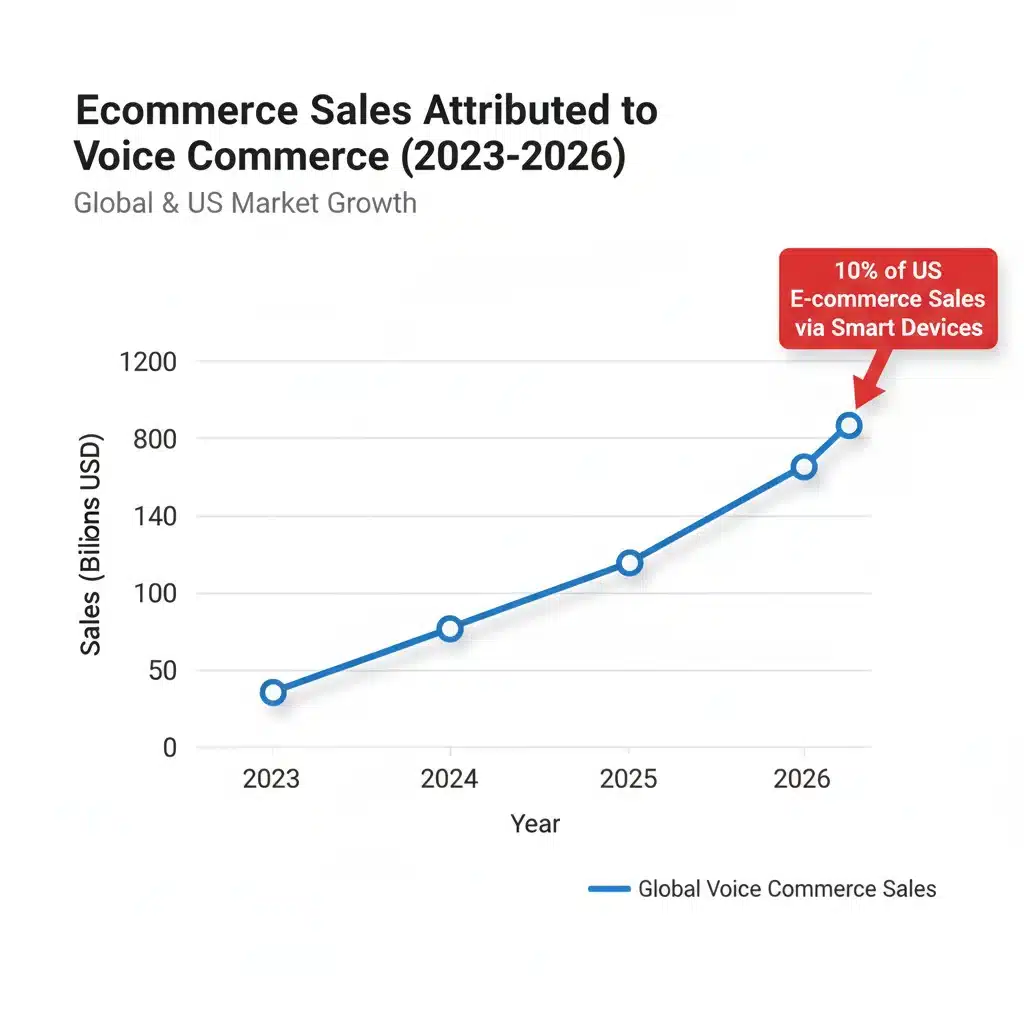
In the rapidly evolving landscape of digital commerce, a new frontier is emerging that promises to redefine how consumers shop and interact with brands: voice commerce. This innovative method of purchasing goods and services through voice-activated assistants and smart devices is no longer a futuristic concept but a burgeoning reality. Industry experts and market analysts are projecting a significant surge in its adoption, with a particularly compelling forecast for the United States: a 10% increase in US sales via smart devices by 2026 attributed to voice commerce. This isn’t just a minor uptick; it represents a substantial shift in consumer behaviour and a potent opportunity for businesses to innovate and capture a growing market share.
The rise of voice commerce is intrinsically linked to the proliferation of smart speakers, smartphones with advanced voice assistants, and other internet-of-things (IoT) devices that seamlessly integrate into daily life. From ordering groceries to purchasing electronics, booking services, or simply reordering favourite items, the convenience and hands-free nature of voice shopping are proving irresistible to a growing segment of the population. This article will delve into the driving forces behind this anticipated growth, explore the current state of voice commerce, examine the challenges and opportunities it presents, and provide actionable insights for businesses looking to leverage this transformative trend.
The Accelerating Momentum of Voice Commerce Growth
The journey of voice commerce began with simple commands, like setting timers or checking weather forecasts. Today, these capabilities have expanded dramatically, allowing for complex transactional interactions. The forecast of a 10% increase in US sales via smart devices by 2026 is a testament to the technology’s maturation and increasing consumer comfort with voice interfaces. Several factors contribute to this accelerating momentum:
Enhanced Accuracy and Natural Language Processing (NLP)
Early voice assistants often struggled with accents, complex queries, and understanding context. However, significant advancements in artificial intelligence (AI) and natural language processing (NLP) have dramatically improved their accuracy and ability to comprehend nuanced human speech. This enhanced understanding makes voice interactions feel more natural and less frustrating, encouraging more users to engage in voice commerce.
Ubiquity of Smart Devices
Smart speakers like Amazon Echo and Google Home have become staples in millions of households. Simultaneously, nearly every modern smartphone is equipped with a sophisticated voice assistant. This widespread availability means that the infrastructure for voice commerce is already in place for a vast consumer base, requiring minimal additional investment for users to start shopping by voice.
Convenience and Efficiency
One of the most compelling advantages of voice commerce is its unparalleled convenience. Consumers can shop while multitasking – cooking, driving, or engaging in other activities – without needing to pick up a device or navigate a website. This hands-free and often screen-free experience saves time and simplifies the purchasing process, making it particularly appealing for routine purchases or quick reorders.
Personalisation and Predictive Capabilities
As voice assistants learn user preferences and purchasing habits, they can offer highly personalised recommendations and even anticipate needs. Imagine a smart speaker suggesting a reorder of your favourite coffee when it detects your supply is low, or recommending a new product based on your past purchases. This level of personalisation enhances the shopping experience and fosters greater loyalty.
Understanding the 10% US Sales Increase by 2026
The projection of a 10% increase in US sales via smart devices by 2026 is not a random figure; it’s based on comprehensive market analysis, consumer adoption rates, and technological advancements. This growth represents a significant portion of the overall e-commerce market, indicating that voice commerce is poised to become a critical sales channel.
Market Size and Growth Trajectory
To fully appreciate a 10% increase, it’s essential to consider the scale of the US retail market. Even a seemingly small percentage of a multi-trillion-dollar industry translates into billions of dollars in new revenue. This growth trajectory suggests a sustained upward trend, with voice commerce moving beyond early adopters to capture a broader mainstream audience.
Key Categories Driving Growth
While voice commerce can apply to a wide range of products, certain categories are expected to drive the initial surge. These typically include:
- Groceries and Household Essentials: Repeat purchases and low-consideration items are perfect for voice ordering.
- Digital Content and Subscriptions: Renewing subscriptions or purchasing e-books and music through voice is seamless.
- Food Delivery: Ordering takeout or delivery with a simple voice command is highly convenient.
- Electronics and Small Appliances: For known products or reorders, voice can expedite the process.
Demographic Shifts and Adoption
While younger, tech-savvy demographics were early adopters, the ease of use and accessibility of voice technology are attracting older generations and those with limited mobility. This widening demographic appeal further fuels the potential for significant voice commerce growth.
Challenges and Opportunities for Businesses
While the prospects for voice commerce are bright, businesses face both challenges and immense opportunities in adapting to this new paradigm.
Challenges:
- Discovery and SEO: Optimising for voice search is different from traditional text-based SEO. Businesses need to focus on conversational keywords, natural language queries, and providing concise, direct answers.
- Visual vs. Auditory Experience: Voice commerce lacks the visual cues of traditional online shopping. Brands must find innovative ways to convey product information, trust, and brand identity through audio.
- Security and Trust: Consumers need assurance that their personal and financial information is secure when making purchases through voice. Building this trust is paramount.
- Limited Screen Real Estate: Even with smart displays, the primary interaction is auditory. This limits the amount of information that can be presented, making concise and relevant responses crucial.
- Returns and Customer Service: Handling returns and customer queries through a voice-only interface can be complex, requiring robust backend support.
Opportunities:
- New Sales Channels: Voice commerce opens up entirely new avenues for sales, reaching consumers in moments and locations previously inaccessible.
- Enhanced Customer Experience: For certain purchases, voice offers an unparalleled level of convenience and speed, leading to higher customer satisfaction.
- Brand Differentiation: Early adopters who excel in voice commerce can gain a significant competitive advantage and establish themselves as innovative leaders.
- Data and Insights: Interactions through voice provide a wealth of data on consumer preferences, language patterns, and purchasing triggers, which can inform broader marketing strategies.
- Reduced Friction: By removing barriers like typing and clicking, voice commerce streamlines the purchasing journey, potentially increasing conversion rates for specific product types.
Strategies for Capitalising on Voice Commerce Growth
To effectively tap into the projected 10% increase in US sales via smart devices by 2026, businesses must adopt a proactive and strategic approach. Here are key strategies:
1. Optimise for Voice Search SEO
This is perhaps the most critical first step. Voice searches are typically longer, more conversational, and question-based than text searches. Businesses need to:
- Focus on Long-Tail Keywords: Anticipate how customers would naturally ask for your products or services.
- Answer Common Questions: Create FAQ sections on your website that directly answer questions using natural language.
- Structured Data Markup: Implement schema markup to help search engines and voice assistants understand your content better.
- Local SEO: Many voice searches are location-based, so ensure your Google My Business profile is accurate and optimised.
2. Develop a Voice Commerce Strategy
Don’t just dabble; commit to a clear strategy. This involves:
- Identify Suitable Products/Services: Determine which of your offerings are best suited for voice purchasing (e.g., reorderable items, low-consideration purchases).
- Integrate with Major Voice Assistants: Explore developing skills or actions for Amazon Alexa, Google Assistant, and Apple Siri.
- Streamline the Purchase Flow: Ensure the voice-guided checkout process is as simple and intuitive as possible, minimising friction.
- Provide Clear Audio Cues: Since there’s no visual, audio feedback is crucial. Confirmations, options, and error messages must be clear and concise.
3. Prioritise User Experience (UX)
A positive voice shopping experience is paramount for repeat business:
- Natural Conversation Flow: Design interactions that mimic human conversation, avoiding robotic or overly complex language.
- Personalisation: Leverage user data to offer tailored recommendations and remember past preferences.
- Error Handling: Implement robust error handling that guides users back on track without frustration.
4. Build Trust and Security
Address consumer concerns about security head-on:
- Transparent Policies: Clearly communicate how user data is collected and protected.
- Authentication Methods: Implement secure authentication (e.g., voice biometrics, PINs) for transactions.
- Customer Support: Ensure easy access to customer support for any issues or concerns related to voice purchases.

5. Integrate Voice into Your Omnichannel Strategy
Voice commerce shouldn’t exist in a silo. It should be a seamless part of your broader omnichannel strategy, complementing your website, mobile app, and physical stores. For example, a customer might use voice to add items to a cart, then review and complete the purchase on a desktop or mobile device. Or they might use a voice assistant in-store to check product availability.
6. Experiment and Iterate
The voice commerce landscape is still evolving. Businesses should be prepared to experiment with different approaches, collect user feedback, and iterate on their voice commerce offerings to continuously improve the experience and capture more of the market share.
The Future Beyond 2026: What to Expect
While the 10% increase in US sales via smart devices by 2026 is a significant milestone, it’s merely a stepping stone. The future of voice commerce holds even greater potential:
More Sophisticated AI
AI will continue to advance, leading to even more natural, intuitive, and predictive voice interactions. Voice assistants will become better at understanding complex multi-turn conversations and discerning user intent with higher accuracy.
Multimodal Experiences
The integration of voice with visual elements on smart displays and other screens will become more seamless. Users might initiate a search with voice, then refine their choices visually, offering the best of both worlds.
Greater Integration with IoT Ecosystems
Voice commerce will become deeply embedded in the broader IoT ecosystem. Imagine your smart refrigerator automatically reordering milk when it’s low, or your car ordering your coffee on your commute home – all confirmed via voice.
Expansion into New Industries
Beyond retail, voice commerce will likely expand further into services, healthcare, finance, and other sectors, offering new ways for consumers to manage their lives and make transactions.
Conclusion: Embracing the Voice Revolution for Future Growth
The projection of a 10% increase in US sales via smart devices by 2026 due to voice commerce is a clear signal that this technology is moving from niche to mainstream. For businesses, ignoring this trend is no longer an option. Instead, it represents a crucial opportunity to innovate, enhance customer experiences, and unlock new revenue streams. By understanding the drivers of voice commerce growth, addressing the associated challenges, and strategically optimising for voice interactions, companies can position themselves at the forefront of this exciting digital revolution.
The future of shopping is increasingly conversational. Those who master the art of engaging with customers through voice will not only meet the evolving demands of the modern consumer but will also secure a significant competitive edge in the years to come. The time to invest in voice commerce is now, ensuring your brand is heard loud and clear in the marketplace of tomorrow.