AI-Powered Personalisation: Boosting US E-commerce Conversions by 15% in 2026
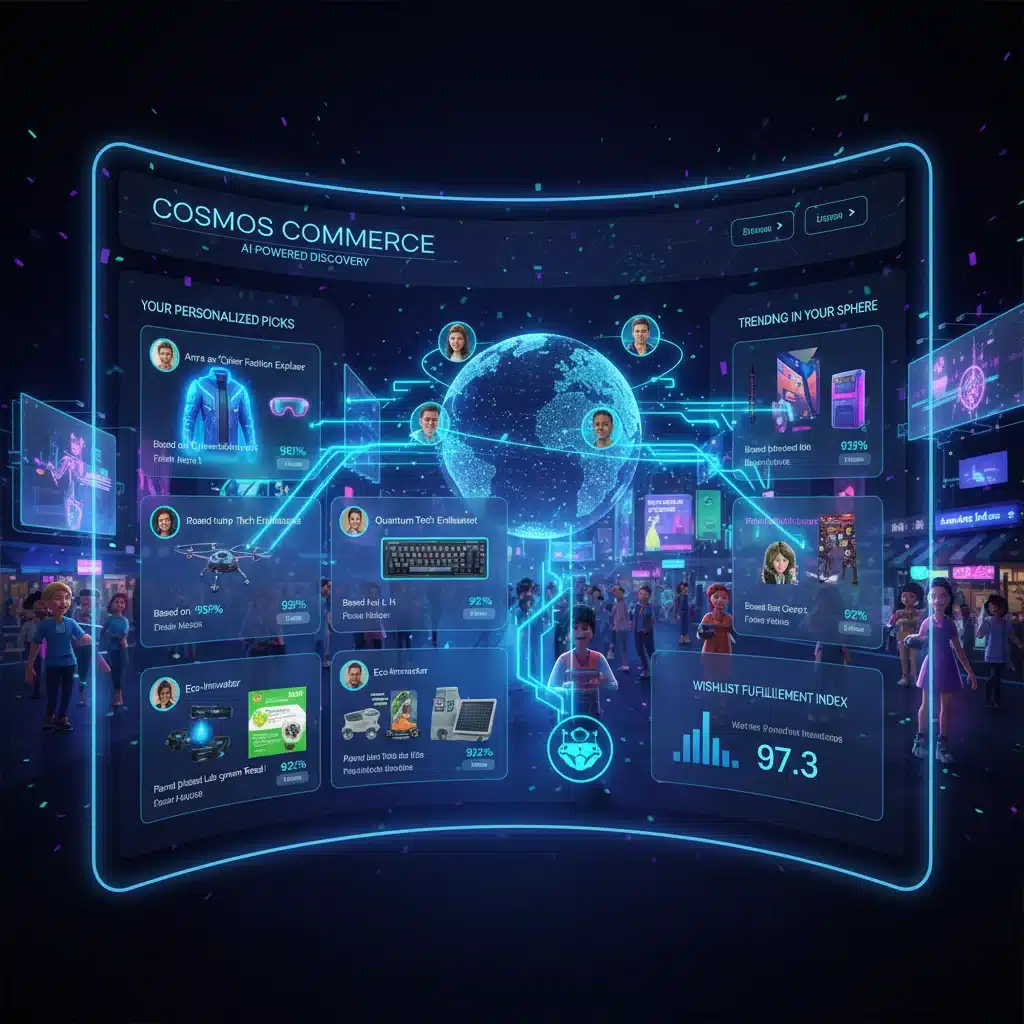
The digital marketplace is a battleground for consumer attention, and in the US e-commerce landscape, the stakes have never been higher. As competition intensifies and consumer expectations soar, businesses are constantly seeking innovative ways to stand out and convert browsers into loyal customers. Enter AI e-commerce personalisation – a game-changer poised to redefine online retail. Industry projections suggest that by 2026, AI-powered personalisation will drive an average increase of 15% in conversion rates across US e-commerce. This isn’t just a marginal improvement; it’s a transformative shift that promises significant returns for businesses willing to embrace the future of retail.
At its core, AI e-commerce personalisation is about delivering highly relevant and unique experiences to individual customers. It moves beyond basic segmentation, leveraging artificial intelligence and machine learning to analyse vast datasets, understand individual preferences, predict future behaviour, and tailor every interaction. From product recommendations to website layouts, pricing, and marketing communications, AI ensures that each customer feels seen, understood, and valued. This deep level of customisation fosters stronger engagement, builds trust, and ultimately, accelerates the path to purchase.
This comprehensive guide will delve into the intricate world of AI e-commerce personalisation, exploring its mechanisms, benefits, and the strategic imperatives for US businesses. We will examine the technologies underpinning this revolution, highlight real-world applications, and provide actionable insights for implementing effective AI personalisation strategies. Furthermore, we will cast our gaze forward, anticipating the future trends and challenges that will shape the landscape of personalised e-commerce in the years to come.
The Foundation of AI E-commerce Personalisation: Understanding the ‘How’
Before we can fully appreciate the impact of AI e-commerce personalisation, it’s crucial to understand the technological backbone that makes it possible. This isn’t simply about recommending items based on past purchases; it’s a sophisticated interplay of various AI disciplines working in concert.
Machine Learning and Predictive Analytics
At the heart of AI e-commerce personalisation lies machine learning (ML). ML algorithms are trained on enormous volumes of customer data, including browsing history, purchase patterns, search queries, demographic information, and even real-time behaviour. Through this training, ML models learn to identify intricate patterns and correlations that human analysts might miss. Predictive analytics, a subset of ML, then uses these learned patterns to forecast future actions. For instance, an ML model can predict what products a customer is likely to be interested in next, when they might churn, or what price point they are most sensitive to. This predictive capability is what allows e-commerce platforms to proactively offer relevant content and products, rather than merely reacting to past behaviour.
Natural Language Processing (NLP) for Enhanced Understanding
NLP plays a pivotal role in understanding unstructured data, particularly customer reviews, feedback, and search queries. By processing and interpreting human language, NLP allows AI systems to grasp the sentiment behind customer comments, identify emerging trends, and even understand the nuances of a customer’s product preferences expressed in natural language. This enables more intelligent search results, personalised content generation, and even AI-powered chatbots that can offer human-like assistance, further enhancing the personalised experience.
Computer Vision for Visual Personalisation
While often overlooked in the context of personalisation, computer vision is gaining traction. This AI capability allows systems to ‘see’ and interpret images and videos. In e-commerce, it can be used to analyse product images to understand visual attributes (e.g., colour, style, pattern) and match them with a customer’s inferred visual preferences. For fashion retailers, this could mean recommending outfits based on visual similarity to items a customer has previously browsed or purchased. It also aids in visual search, allowing customers to upload an image and find similar products, a truly personalised shopping journey.
Deep Learning for Complex Pattern Recognition
Deep learning, a more advanced form of machine learning, utilises neural networks with multiple layers to uncover even more complex patterns in data. This is particularly effective for tasks requiring a high degree of abstraction, such as understanding subtle shifts in customer taste over time or identifying highly niche product preferences that might not be obvious from simple demographic data. Deep learning can power highly sophisticated recommendation engines that adapt and evolve with each customer interaction, making the AI e-commerce personalisation truly dynamic.
Key Areas Where AI Personalisation Drives Conversions
The 15% conversion rate increase projected for US e-commerce by 2026 isn’t a single, monolithic gain. Instead, it’s the cumulative effect of AI-powered personalisation across multiple touchpoints and strategies. Let’s explore the critical areas where AI makes a tangible difference.
1. Hyper-Personalised Product Recommendations
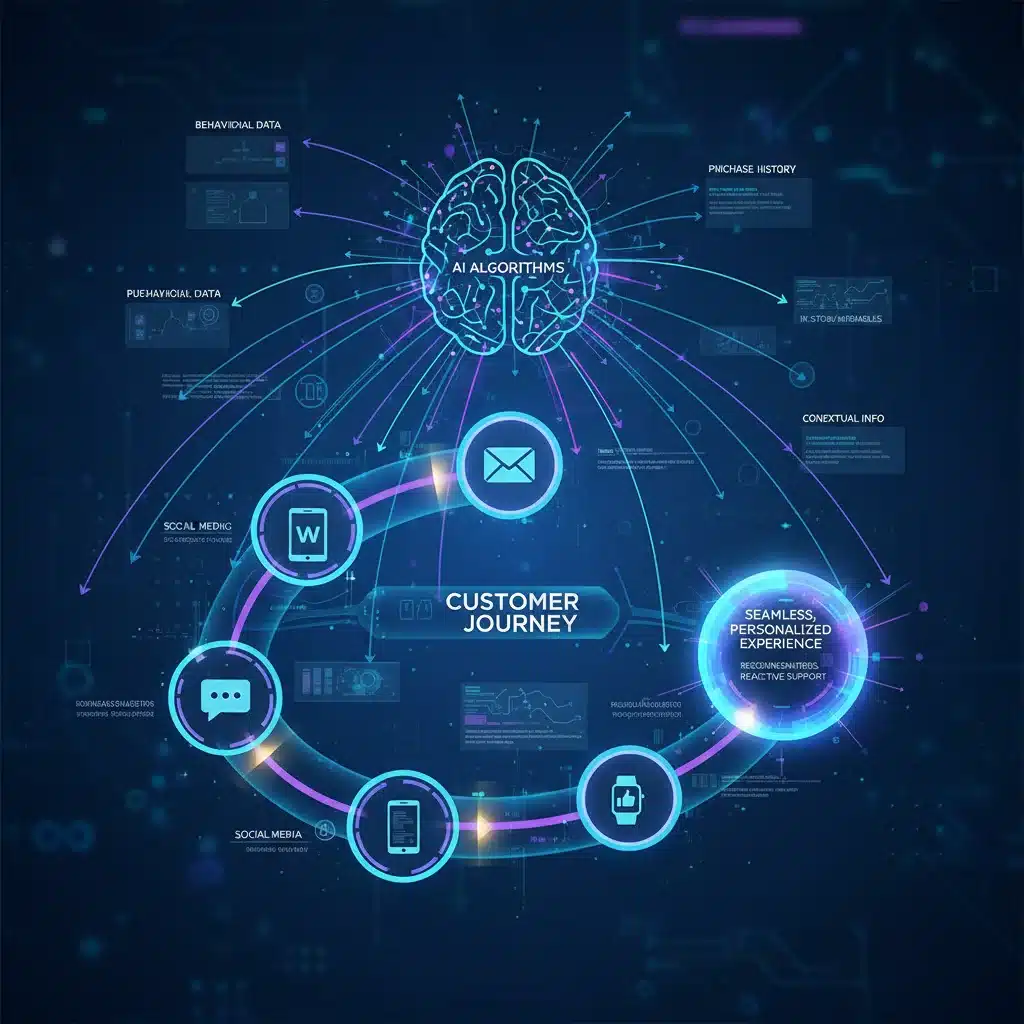
This is perhaps the most visible application of AI e-commerce personalisation. Beyond basic ‘customers who bought this also bought…’ suggestions, AI-driven recommendation engines consider a multitude of factors: real-time browsing behaviour, purchase history, demographic data, geographic location, time of day, and even external factors like weather. This leads to highly accurate and timely recommendations that genuinely resonate with the customer, increasing the likelihood of an impulse purchase or discovery of a desired item. The more relevant the suggestion, the higher the conversion probability.
2. Dynamic Website Content and Layout
Imagine a website that rearranges itself to suit your preferences the moment you land on it. AI enables dynamic content presentation, where elements like hero banners, featured categories, promotional offers, and even the overall layout of a page can be customised for each visitor. A first-time visitor might see popular items, while a returning customer might see products related to their previous searches or abandoned carts. This tailored experience reduces friction, helps customers find what they’re looking for faster, and significantly improves user experience, directly impacting conversion rates.
3. Personalised Email Marketing and Push Notifications
Generic email blasts are a relic of the past. AI-powered email personalisation ensures that subscribers receive messages that are highly relevant to their interests. This includes personalised product updates, abandoned cart reminders with tailored incentives, birthday offers, and content recommendations based on their engagement history. Similarly, push notifications can be customised to alert customers about restocked items they viewed, price drops on wishlisted products, or special offers relevant to their location and preferences. This targeted communication drastically improves open rates, click-through rates, and ultimately, conversions.
4. Optimised Pricing and Promotions
AI can analyse customer segments and their price sensitivity to offer dynamic pricing and personalised promotions. This doesn’t mean unfair pricing, but rather offering the right discount to the right customer at the right time to maximise conversion without eroding profit margins unnecessarily. For example, an AI might identify a customer who is on the fence about a purchase and offer a small, targeted discount to nudge them towards conversion, while another customer who is highly committed might not receive the same offer. This strategic approach to pricing and promotions is a powerful lever for boosting conversion rates.
5. Enhanced Search and Navigation
AI transforms the on-site search experience by understanding user intent rather than just keyword matching. If a customer searches for ‘summer dress’, AI can infer style preferences, colour choices, or even size based on past interactions, providing more accurate and personalised search results. Similarly, AI can optimise navigation paths, suggesting categories or filters that are most likely to lead the user to their desired product, reducing frustration and improving the overall shopping flow. This seamless navigation is crucial for conversion, as customers are less likely to abandon a site when they can easily find what they need.
6. AI-Powered Chatbots and Virtual Assistants
Customer service is a critical component of the e-commerce experience. AI-powered chatbots and virtual assistants can provide instant, personalised support 24/7. They can answer common questions, guide customers through the purchasing process, recommend products, and even help resolve issues, all while maintaining a consistent brand voice. By providing immediate and relevant assistance, these AI tools reduce customer frustration, improve satisfaction, and prevent potential cart abandonments, directly contributing to higher conversion rates.
Implementing AI E-commerce Personalisation: A Strategic Roadmap
Achieving the projected 15% conversion boost requires a thoughtful and strategic approach to implementing AI e-commerce personalisation. It’s not a ‘set it and forget it’ solution but an ongoing process of data collection, analysis, and optimisation.
1. Define Clear Goals and KPIs
Before diving into technology, clearly define what you aim to achieve. Is it higher conversion rates, increased average order value (AOV), reduced cart abandonment, or improved customer lifetime value (CLTV)? Establish measurable Key Performance Indicators (KPIs) to track progress and demonstrate ROI. For AI e-commerce personalisation, conversion rate is a primary KPI, but also consider engagement metrics, click-through rates, and customer satisfaction scores.
2. Invest in Robust Data Infrastructure
AI is only as good as the data it’s fed. A solid data infrastructure is paramount. This involves collecting comprehensive first-party data (browsing history, purchase data, interactions), integrating third-party data (demographics, psychographics), and ensuring data quality and cleanliness. A Customer Data Platform (CDP) can be invaluable here, unifying customer data from various sources into a single, comprehensive profile.
3. Choose the Right AI Personalisation Platform
The market offers a wide array of AI personalisation platforms. Evaluate solutions based on your specific needs, budget, scalability, and integration capabilities with your existing e-commerce platform (e.g., Shopify, Magento, Salesforce Commerce Cloud). Look for platforms that offer a comprehensive suite of features, including recommendation engines, dynamic content optimisation, A/B testing capabilities, and detailed analytics.
4. Start Small, Learn, and Scale
Don’t try to personalise everything at once. Begin with a specific area, such as product recommendations on product pages, and measure its impact. Learn from the results, refine your strategies, and then gradually expand personalisation efforts to other touchpoints like homepage content, email campaigns, or search results. This iterative approach allows for continuous improvement and reduces risk.
5. Prioritise Customer Privacy and Trust
While personalisation is powerful, it must be balanced with customer privacy. Be transparent about data collection practices, comply with regulations like GDPR and CCPA, and give customers control over their data preferences. Building trust is essential for long-term customer relationships and sustained conversion gains from AI e-commerce personalisation.
6. Continuously Monitor and Optimise
AI models are not static; they require continuous monitoring and optimisation. Regularly analyse performance metrics, conduct A/B tests to compare different personalisation strategies, and fine-tune algorithms based on new data and evolving customer behaviour. The e-commerce landscape is dynamic, and your personalisation efforts must be equally agile.
The Future Landscape: Beyond 2026 for AI E-commerce Personalisation
The projected 15% conversion boost by 2026 is just the beginning. The future of AI e-commerce personalisation promises even more sophisticated and immersive experiences.
Hyper-Personalisation at Scale
Expect even finer-grained personalisation, moving beyond segments to truly individualised experiences. AI will be able to detect micro-moments of intent and adapt in real-time, offering perfectly timed interventions that guide customers towards conversion.
Voice and Conversational Commerce
As voice assistants become more prevalent, AI will enable personalised shopping experiences through natural language conversations. Customers will be able to verbally express their needs and preferences, and AI will respond with tailored product suggestions and purchasing options, making shopping more intuitive and hands-free.
Augmented Reality (AR) and Virtual Reality (VR) Integration
AI will power personalised AR/VR shopping experiences. Imagine trying on clothes virtually that are recommended specifically for your body type and style preferences, or visualising furniture in your home before purchase, all driven by AI’s understanding of your taste. This immersive personalisation will bridge the gap between online and offline shopping.
Ethical AI and Trust
As AI becomes more pervasive, ethical considerations will come to the forefront. Ensuring fairness, transparency, and accountability in AI personalisation algorithms will be crucial to maintaining customer trust and avoiding biases. Companies that prioritise ethical AI will gain a significant competitive advantage.
Predictive Customer Service and Proactive Engagement
AI will move beyond reactive customer service to proactive engagement. By predicting potential issues or needs, AI can initiate contact with customers before they even realise they have a problem, offering solutions or assistance. This level of foresight will elevate customer satisfaction and loyalty, indirectly boosting conversions.
Challenges and Considerations for US E-commerce Businesses
While the benefits of AI e-commerce personalisation are clear, businesses must also be mindful of potential challenges.
Data Silos and Integration Complexity
Many organisations struggle with fragmented data spread across various systems. Integrating these disparate data sources to create a unified customer view for AI analysis can be a significant technical hurdle.
Talent Gap
Implementing and managing sophisticated AI personalisation solutions requires specialised skills in data science, machine learning engineering, and AI strategy. The talent pool for these roles can be competitive and expensive.
Cost of Implementation
Investing in AI platforms, data infrastructure, and skilled personnel can represent a substantial upfront cost. Businesses need to carefully assess the potential ROI and plan for a phased implementation to manage expenditure.
Maintaining Human Touch
While AI excels at automation and data analysis, it’s crucial not to lose the human element. Personalisation should enhance, not replace, genuine human connection where it matters most. Striking the right balance is key to avoiding an overly robotic customer experience.
Regulatory Landscape Evolution
Data privacy regulations are constantly evolving. US e-commerce businesses must stay abreast of changes at federal and state levels to ensure their AI e-commerce personalisation strategies remain compliant and ethical.
Conclusion: Embracing the Personalised Future of US E-commerce
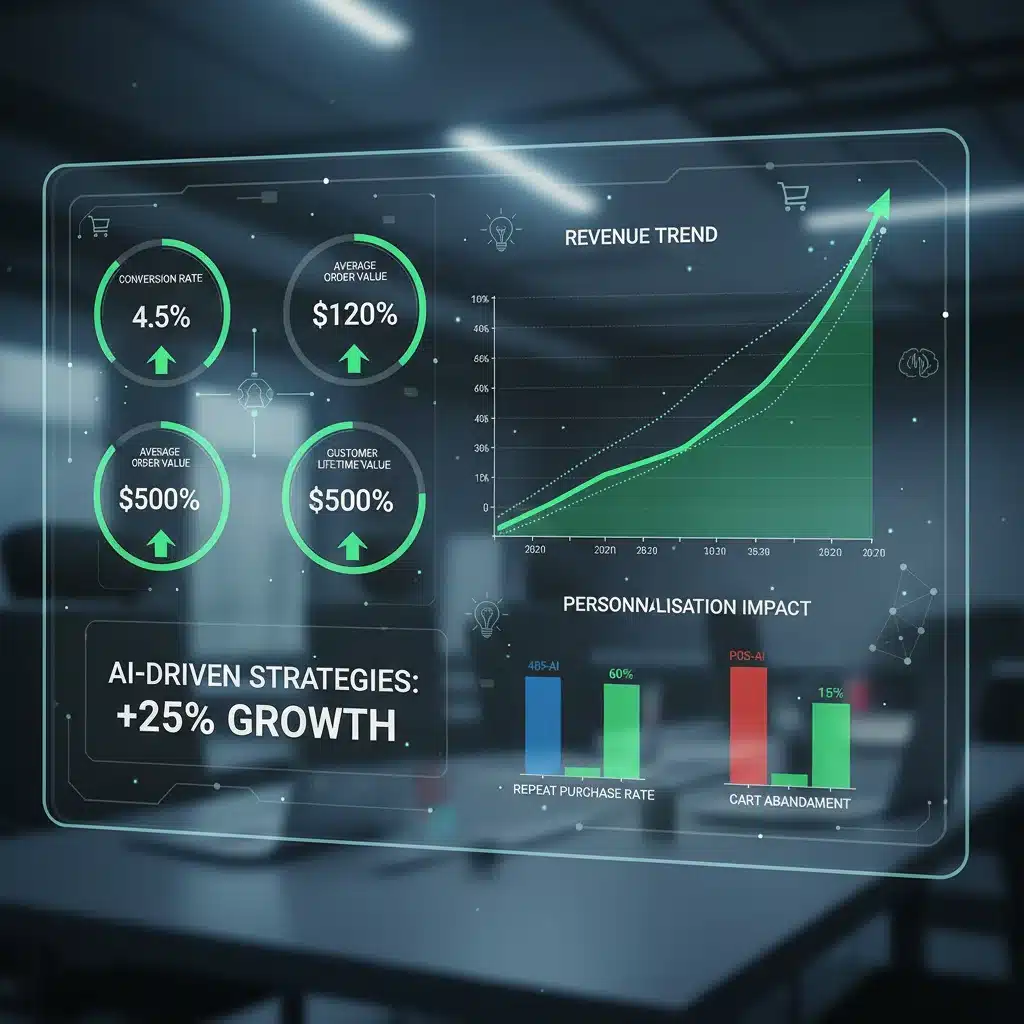
The projection of a 15% increase in US e-commerce conversion rates by 2026 due to AI-powered personalisation is a compelling indicator of the technology’s transformative potential. Businesses that strategically adopt and refine their AI personalisation efforts will not only meet but exceed evolving customer expectations, fostering deeper engagement, stronger loyalty, and ultimately, significant revenue growth.
The journey towards hyper-personalised e-commerce is not without its complexities, but the rewards for early adopters and diligent innovators are substantial. By focusing on robust data strategies, selecting appropriate AI tools, prioritising customer privacy, and committing to continuous optimisation, US e-commerce businesses can harness the power of AI to create truly exceptional and highly profitable customer experiences. The future of online retail is personal, and AI is the engine driving this exciting evolution.
Don’t be left behind in the race for customer attention. Start exploring how AI e-commerce personalisation can revolutionise your online business today. The 15% conversion boost is within reach for those ready to innovate.