AI-Driven Analytics: Transforming US Digital Retail in 2026

The landscape of US digital retail is undergoing a seismic shift, driven by the relentless march of artificial intelligence. As we hurtle towards 2026, the integration of AI-driven analytics is no longer a futuristic concept but a present reality, reshaping how businesses understand their customers, optimise operations, and, crucially, boost their conversion rates. This isn’t just about incremental improvements; we’re talking about a potential surge of up to 12% in conversion rates for early adopters, setting a new benchmark for success in the intensely competitive e-commerce arena. The power of AI Retail Analytics lies in its ability to process vast quantities of data at unprecedented speeds, unearthing insights that would remain hidden to traditional analytical methods. This deep dive will unpack the top 5 AI-driven analytics tools that are poised to transform US digital retail operations in 2026, providing insider knowledge that could be the key to your brand’s future prosperity.
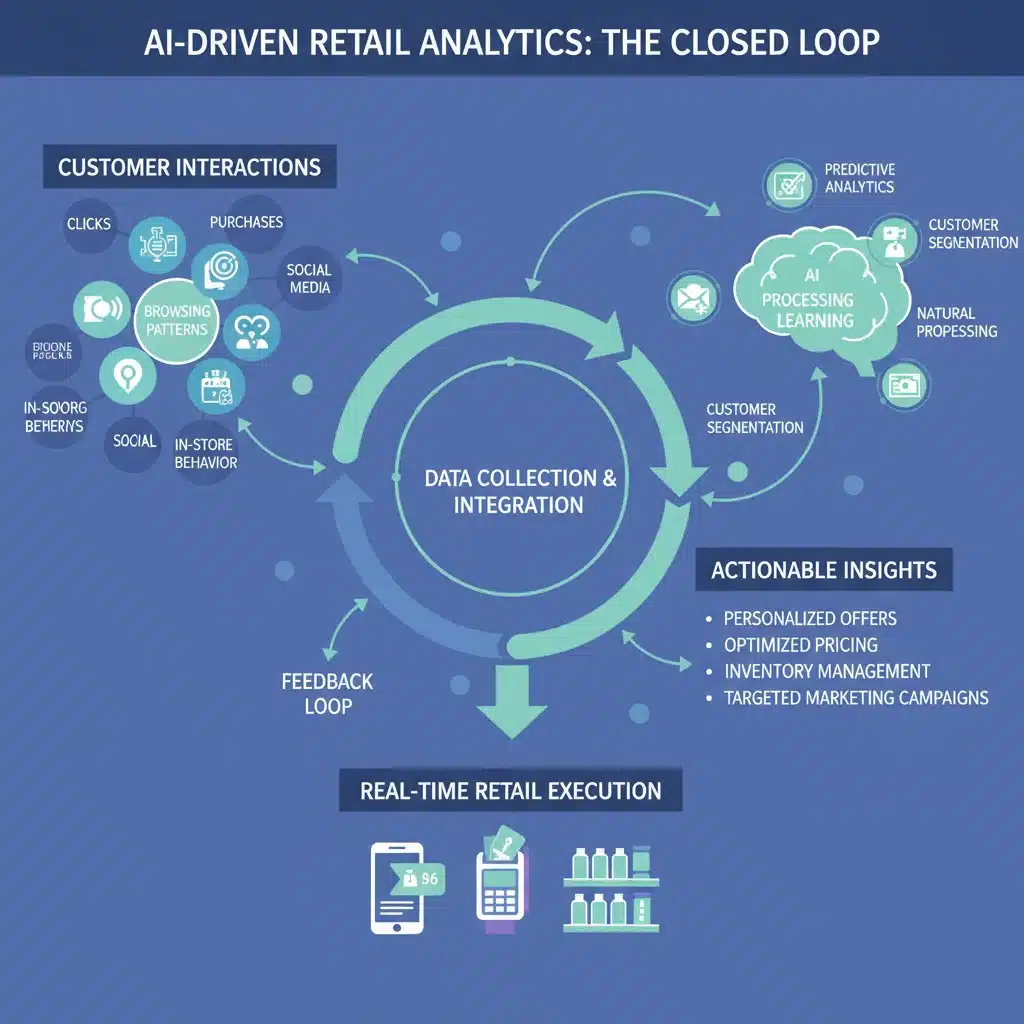
For years, retailers have grappled with the challenge of understanding complex customer journeys, predicting demand, and personalising experiences at scale. The sheer volume of data generated by online interactions – from clicks and views to purchases and returns – has often overwhelmed conventional analytical systems. This is where AI Retail Analytics steps in, offering a sophisticated suite of technologies that can not only make sense of this deluge but also translate it into actionable intelligence. From predictive inventory management to hyper-personalised marketing campaigns, AI is empowering retailers to make data-driven decisions with a level of precision and foresight previously unimaginable. The stakes are high, and those who fail to embrace these transformative tools risk being left behind in a rapidly evolving market.
The Dawn of a New Era: Why AI Retail Analytics is Indispensable for 2026
The digital retail sector in the US is characterised by fierce competition, evolving consumer expectations, and a constant need for innovation. In this environment, gaining a competitive edge is paramount, and AI-driven analytics offers precisely that. By leveraging machine learning algorithms, natural language processing, and advanced statistical models, these tools can identify patterns, forecast trends, and automate processes that significantly impact the bottom line. The primary goal for any digital retailer is to convert visitors into loyal customers, and this is where the projected 12% increase in conversion rates becomes a game-changer. Imagine the impact on revenue and market share if your conversion rates could jump by such a significant margin. This isn’t just about efficiency; it’s about strategic advantage.
The traditional approach to retail analytics often involved retrospective analysis – looking back at what happened. However, AI Retail Analytics is inherently forward-looking. It’s about predicting what will happen, understanding why it will happen, and suggesting the best course of action. This proactive stance allows retailers to anticipate customer needs, optimise pricing strategies, manage inventory more effectively, and tailor marketing messages with unparalleled accuracy. The result is a more seamless, personalised, and ultimately more profitable customer experience. As we approach 2026, the businesses that have successfully integrated AI into their analytical frameworks will be the ones leading the charge, setting new standards for customer engagement and operational excellence.
Understanding the Core Components of AI Retail Analytics
Before diving into specific tools, it’s essential to grasp the fundamental components that make AI Retail Analytics so powerful. At its heart, AI in retail analytics relies on several key technologies:
- Machine Learning (ML): This is the engine that allows systems to learn from data without explicit programming. In retail, ML algorithms can predict customer churn, recommend products, and optimise pricing based on historical data and real-time market conditions.
- Natural Language Processing (NLP): NLP enables AI systems to understand, interpret, and generate human language. This is crucial for analysing customer feedback, reviews, and social media sentiment, providing invaluable insights into customer perceptions and preferences.
- Computer Vision: While more prevalent in physical retail for tasks like foot traffic analysis and shelf monitoring, computer vision also plays a role in digital retail by analysing user interface interactions, visual search, and even product imagery for quality control and categorisation.
- Predictive Analytics: This component uses statistical algorithms and machine learning techniques to identify the likelihood of future outcomes based on historical data. For retailers, this means forecasting demand, identifying potential supply chain disruptions, and predicting customer behaviour.
- Prescriptive Analytics: Taking predictive analytics a step further, prescriptive analytics not only predicts what will happen but also suggests actions to take and anticipates the implications of each decision. This is vital for optimising marketing spend, inventory levels, and promotional strategies.
The synergy of these components creates a robust analytical framework that can tackle the most complex challenges faced by digital retailers. The ability to move beyond descriptive (what happened) and diagnostic (why it happened) analytics to predictive and prescriptive insights is what truly distinguishes modern AI Retail Analytics from its predecessors. This comprehensive approach empowers businesses to not only react to market changes but to proactively shape their future.
The Top 5 AI-Driven Analytics Tools Revolutionising US Digital Retail by 2026
The market is flooded with various analytics solutions, but only a select few are truly leveraging AI to its fullest potential to drive significant change in digital retail. Here are the top 5 AI-driven analytics tools that are set to define the US digital retail landscape in 2026, each offering unique capabilities to boost conversion rates and operational efficiency.
1. Dynamic Personalisation Platforms (e.g., Dynamic Yield, Optimizely)
At the forefront of enhancing conversion rates is the advent of dynamic personalisation platforms powered by AI. These tools go beyond simple recommendation engines, offering real-time, hyper-personalised experiences across all touchpoints of the customer journey. They leverage machine learning to analyse individual customer behaviour, preferences, and intent, dynamically adjusting website content, product recommendations, pricing, and even promotional offers. For instance, if a customer frequently browses running shoes, the platform might dynamically adjust the homepage to feature new arrivals in that category, offer a discount on related accessories, or even suggest local running events. This level of tailored interaction significantly increases engagement and the likelihood of conversion.
By 2026, these platforms will be even more sophisticated, integrating data from an even wider array of sources, including IoT devices, voice assistants, and augmented reality experiences. The goal is to create an almost clairvoyant understanding of each customer, anticipating their needs before they even articulate them. The impact on conversion rates is direct and substantial, as customers are far more likely to purchase when they feel understood and valued, and when the products presented are precisely what they are looking for. The continuous learning capabilities of these AI systems mean that the personalisation models are constantly refining themselves, becoming more accurate and effective over time. This iterative improvement is a core strength of AI Retail Analytics in driving sustained growth.
2. Advanced Customer Journey Analytics Tools (e.g., Adobe Analytics, Google Analytics 4 with AI)
Understanding the complete customer journey, from initial awareness to post-purchase engagement, is critical for identifying pain points and optimisation opportunities. Traditional analytics tools often provide fragmented views, making it challenging to stitch together a coherent narrative. However, AI-driven customer journey analytics tools are changing this by using machine learning to map complex, multi-channel customer paths. They can identify common journey patterns, predict where customers might drop off, and even suggest interventions to guide them towards conversion.
These tools excel at identifying bottlenecks in the conversion funnel, whether it’s a confusing checkout process, a poorly designed product page, or a lack of relevant information. By analysing millions of user interactions, AI can pinpoint the exact moments and reasons for customer abandonment. Furthermore, they can segment customers based on their journey behaviour, allowing retailers to target specific groups with tailored messages or offers. The ability to visualise and understand these intricate journeys provides unparalleled insights, leading to data-backed decisions that streamline the path to purchase and significantly uplift conversion rates. The integration of AI into platforms like Google Analytics 4 is a testament to the growing importance of advanced AI Retail Analytics in understanding consumer behaviour.
3. Predictive Demand and Inventory Optimisation Systems (e.g., Blue Yonder, Relex Solutions)
For digital retailers, managing inventory efficiently is a delicate balancing act. Too much stock leads to carrying costs and potential obsolescence, while too little results in lost sales and frustrated customers. AI-driven predictive demand and inventory optimisation systems are solving this perennial problem by leveraging machine learning to forecast demand with remarkable accuracy. These tools analyse historical sales data, seasonal trends, promotional impacts, external factors like weather and economic indicators, and even social media sentiment to predict future demand.
Beyond prediction, these systems also prescribe optimal inventory levels, reorder points, and even suggest pricing adjustments to balance supply and demand. This not only minimises stockouts and overstocking but also significantly improves operational efficiency and profitability. For e-commerce businesses, having the right product in the right place at the right time is directly linked to conversion. If a customer finds their desired product out of stock, they are likely to go elsewhere, leading to a lost sale. By ensuring product availability through intelligent forecasting, these AI Retail Analytics tools directly contribute to higher conversion rates and enhanced customer satisfaction. The precision offered by AI in this domain is a game-changer for supply chain management.
4. AI-Powered Pricing and Promotion Optimisation (e.g., Revionics, Pricefx)
Pricing is one of the most powerful levers a retailer can pull to influence conversion rates and profitability. However, setting optimal prices in a dynamic market is incredibly complex. AI-powered pricing and promotion optimisation tools utilise sophisticated algorithms to analyse vast datasets, including competitor pricing, customer demand elasticity, inventory levels, and market trends, to recommend optimal pricing strategies in real-time. These systems can dynamically adjust prices based on various factors, such as time of day, customer segment, or even browsing behaviour, to maximise revenue and conversion.
Moreover, these tools also optimise promotional strategies, identifying which products to promote, when, and to which customer segments for maximum impact. They can predict the uplift in sales from a particular discount versus the cannibalisation of full-price sales, ensuring that promotions are both attractive to customers and profitable for the business. The ability to fine-tune pricing and promotions with such granular detail ensures that offers are always compelling and relevant, directly influencing a customer’s decision to purchase. This intelligent approach to pricing, driven by advanced AI Retail Analytics, provides a significant competitive advantage in the fast-paced digital retail environment.
5. Conversational AI and Virtual Assistants (e.g., LivePerson, Ada Support)
Customer service and engagement play a crucial role in the conversion funnel. When customers have questions or encounter issues, quick and effective support can be the difference between a sale and an abandonment. Conversational AI, in the form of chatbots and virtual assistants, is revolutionising this aspect of digital retail. These AI-powered tools can handle a vast array of customer inquiries 24/7, from answering product questions and providing sizing guidance to tracking orders and resolving common issues. By providing instant, accurate support, they significantly improve the customer experience and reduce friction in the purchasing process.
Beyond reactive support, advanced conversational AI can also proactively engage customers, offering personalised recommendations or assistance based on their browsing history. They can guide customers through the purchase journey, helping them find the right products and overcoming objections. The ability to provide immediate and relevant assistance leads to higher customer satisfaction and, consequently, higher conversion rates. By offloading routine inquiries, these AI tools also free up human agents to focus on more complex issues, ensuring a seamless and efficient support ecosystem. The continuous learning capabilities of these AI Retail Analytics-enabled assistants mean they become more effective and nuanced over time, further enhancing their value.
Implementing AI Retail Analytics: Best Practices for Success
Adopting AI-driven analytics tools is not merely about purchasing software; it’s about a strategic shift in how a business operates. To fully harness the power of AI Retail Analytics and achieve that coveted 12% conversion rate boost, US digital retailers must adhere to several best practices:
- Start with a Clear Strategy and Defined Goals: Before investing in any tool, clearly define what problems you aim to solve and what metrics you want to improve. Whether it’s reducing cart abandonment, increasing average order value, or optimising inventory, having clear objectives will guide your AI implementation.
- Ensure Data Quality and Integration: AI models are only as good as the data they are fed. Invest in data cleanliness, consistency, and integration across all your systems (CRM, ERP, e-commerce platform). Siloed or dirty data will severely limit the effectiveness of any AI solution.
- Begin Small and Scale Gradually: Don’t try to implement everything at once. Start with a pilot project in a specific area, measure its success, learn from the experience, and then gradually expand to other areas of your business. This iterative approach minimises risk and allows for continuous optimisation.
- Foster a Data-Driven Culture: Successful AI adoption requires buy-in from across the organisation. Educate your teams on the benefits of AI, train them on how to interpret and act on AI-generated insights, and encourage a culture where decisions are made based on data, not just intuition.
- Monitor and Refine AI Models Continuously: AI models are not set-it-and-forget-it solutions. Market conditions, customer behaviour, and product offerings are constantly changing. Regularly monitor the performance of your AI models, retrain them with new data, and fine-tune their parameters to ensure they remain accurate and effective.
- Prioritise Ethical AI and Data Privacy: As AI becomes more integrated, ethical considerations and data privacy become paramount. Ensure your AI solutions comply with all relevant data protection regulations (e.g., CCPA, state-specific privacy laws) and maintain transparency with your customers about how their data is being used.
By following these best practices, digital retailers can maximise their return on investment in AI Retail Analytics and position themselves for sustained growth and success in the competitive US market.

The Future is Now: The Unstoppable Rise of AI in Digital Retail
The journey towards 2026 will undoubtedly see AI-driven analytics become an even more integral part of digital retail operations. The advancements in machine learning, deep learning, and computational power are paving the way for even more sophisticated tools that can anticipate consumer needs with uncanny accuracy, personalise experiences at an unprecedented level, and optimise every facet of the retail value chain. The initial boost of up to 12% in conversion rates is just the beginning; as these technologies mature and become more deeply integrated, the potential for further gains is immense.
Retailers who embrace these technologies early will not only gain a significant competitive advantage but will also build more resilient, agile, and customer-centric businesses. The ability to adapt quickly to market changes, predict future trends, and deliver truly personalised experiences will be the hallmark of successful digital retailers in the coming years. Those who hesitate risk being outmanoeuvred by more forward-thinking competitors who are already leveraging the power of AI Retail Analytics to drive their growth strategies.
Conclusion: Seizing the AI Opportunity in US Digital Retail
The imperative for US digital retailers to adopt AI-driven analytics is clearer than ever. The top 5 tools discussed – dynamic personalisation platforms, advanced customer journey analytics, predictive demand and inventory optimisation, AI-powered pricing and promotion optimisation, and conversational AI – represent the vanguard of this technological revolution. Each offers distinct advantages, but together, they form a comprehensive ecosystem that can transform every aspect of a digital retail operation, leading to significant increases in conversion rates and overall profitability.
As 2026 approaches, the question is no longer whether to adopt AI, but how quickly and effectively. The insights gained from AI Retail Analytics are invaluable, enabling businesses to move beyond guesswork and make truly data-driven decisions. By understanding customer behaviour with unprecedented depth, optimising operations with surgical precision, and personalising experiences at scale, digital retailers can not only survive but thrive in the dynamic and challenging e-commerce landscape. The future of US digital retail is intelligent, interconnected, and undeniably AI-driven. Embrace it, and unlock a new era of growth and customer satisfaction.