Cybersecurity Threats 2026: AI Detection for US E-commerce Breach Prevention

Cybersecurity Threats for US E-commerce in 2026: Implementing Advanced AI Detection to Prevent 95% of Breaches
The digital storefronts of US e-commerce businesses are constantly under siege. As we fast-forward to 2026, the sophistication of cyber threats continues to escalate, posing unprecedented challenges to online retailers. From intricate phishing schemes to advanced persistent threats (APTs) and increasingly complex ransomware attacks, the landscape is fraught with peril. The stakes couldn’t be higher: data breaches can lead to catastrophic financial losses, irreparable reputational damage, and a complete erosion of customer trust. In this rapidly evolving digital battleground, traditional cybersecurity measures are proving insufficient. This article delves into the projected cybersecurity threats facing US e-commerce in 2026 and, more importantly, explores how the strategic implementation of advanced Artificial Intelligence (AI) detection systems can become the bulwark, capable of preventing up to an astounding 95% of potential breaches.
The growth of e-commerce has been meteoric, a trend only accelerated by recent global events. This expansion, while beneficial for businesses and consumers alike, has also created a larger attack surface for malicious actors. Cybercriminals are no longer just opportunistic; they are highly organised, well-funded, and continuously innovating their tactics. Understanding the specific threats that will dominate the e-commerce sector in the coming years is the first step towards building resilient defences. Our focus here is on proactive, intelligent solutions, with a particular emphasis on how e-commerce cybersecurity AI can revolutionise threat detection and response.
The Evolving Threat Landscape for US E-commerce in 2026
By 2026, cybercriminals will have refined their techniques, making distinguishing legitimate traffic from malicious activity increasingly difficult. Several key threat vectors are anticipated to be prevalent and particularly dangerous for US e-commerce businesses:
1. Advanced Phishing and Social Engineering
Phishing attacks will move beyond simple email scams. We expect to see highly personalised, AI-generated phishing campaigns that leverage deepfake technology for voice and video, making them virtually indistinguishable from legitimate communications. Spear phishing targeting high-value employees (e.g., those with access to financial systems or customer databases) will become more precise and harder to detect manually. Business Email Compromise (BEC) will evolve, with AI-powered impersonations leading to significant financial fraud.
2. Sophisticated Ransomware 2.0
Ransomware will continue to be a dominant threat, but with added layers of complexity. Beyond data encryption, ransomware groups will increasingly employ double and triple extortion tactics: exfiltrating data before encryption, threatening to expose it, and even launching DDoS attacks against victims who refuse to pay. Supply chain ransomware attacks, where a compromise at one vendor ripples through an entire e-commerce ecosystem, will become more common and devastating. The focus will shift from simply regaining access to data to preventing its public release, adding immense pressure on affected businesses.
3. AI-Powered Malicious Bots and Automated Attacks
The same AI technologies used for defence can also be weaponised. Malicious bots, powered by advanced machine learning, will be capable of sophisticated credential stuffing, payment fraud, inventory manipulation, and even generating fake reviews at scale. These bots will be designed to mimic human behaviour so effectively that traditional bot detection mechanisms will struggle to identify them, leading to significant financial losses and damage to brand reputation. The sheer volume and speed of these automated attacks will overwhelm human security teams.
4. Supply Chain Vulnerabilities and Third-Party Risks
E-commerce relies heavily on a complex web of third-party vendors, including payment processors, logistics providers, marketing platforms, and cloud services. A vulnerability in any link of this supply chain can become an entry point for attackers targeting the primary e-commerce business. By 2026, attackers will increasingly focus on these weaker links, exploiting less secure third-party systems to gain access to customer data or disrupt operations of larger e-commerce platforms. This makes comprehensive vendor risk management and continuous monitoring absolutely critical.
5. IoT and Edge Device Exploitation
As e-commerce integrates more with IoT devices (e.g., smart warehouses, connected delivery vehicles, in-store analytics), these devices present new attack surfaces. Many IoT devices have weak security protocols, making them easy targets for hackers to gain network access, launch DDoS attacks, or even manipulate inventory and shipping processes. Edge computing, while offering benefits in speed and efficiency, also decentralises data processing, creating more endpoints that need robust security.
6. Zero-Day Exploits and Advanced Persistent Threats (APTs)
Zero-day vulnerabilities, previously unknown flaws in software or hardware, will remain a significant threat. APTs, characterised by their stealth, persistence, and focus on long-term data exfiltration or disruption, will continue to target high-value e-commerce organisations. These attacks often involve a combination of sophisticated techniques, making them extremely difficult to detect without advanced behavioural analysis and anomaly detection capabilities.
The Imperative for Advanced AI Detection in E-commerce Cybersecurity
Given the escalating sophistication and scale of these threats, relying solely on signature-based detection or human oversight is no longer viable. This is where advanced e-commerce cybersecurity AI steps in as a game-changer. AI and Machine Learning (ML) offer the ability to analyse vast quantities of data in real-time, identify subtle patterns, and predict threats with a speed and accuracy that humans cannot match.
How AI Transforms Threat Detection and Prevention
1. Real-time Anomaly Detection
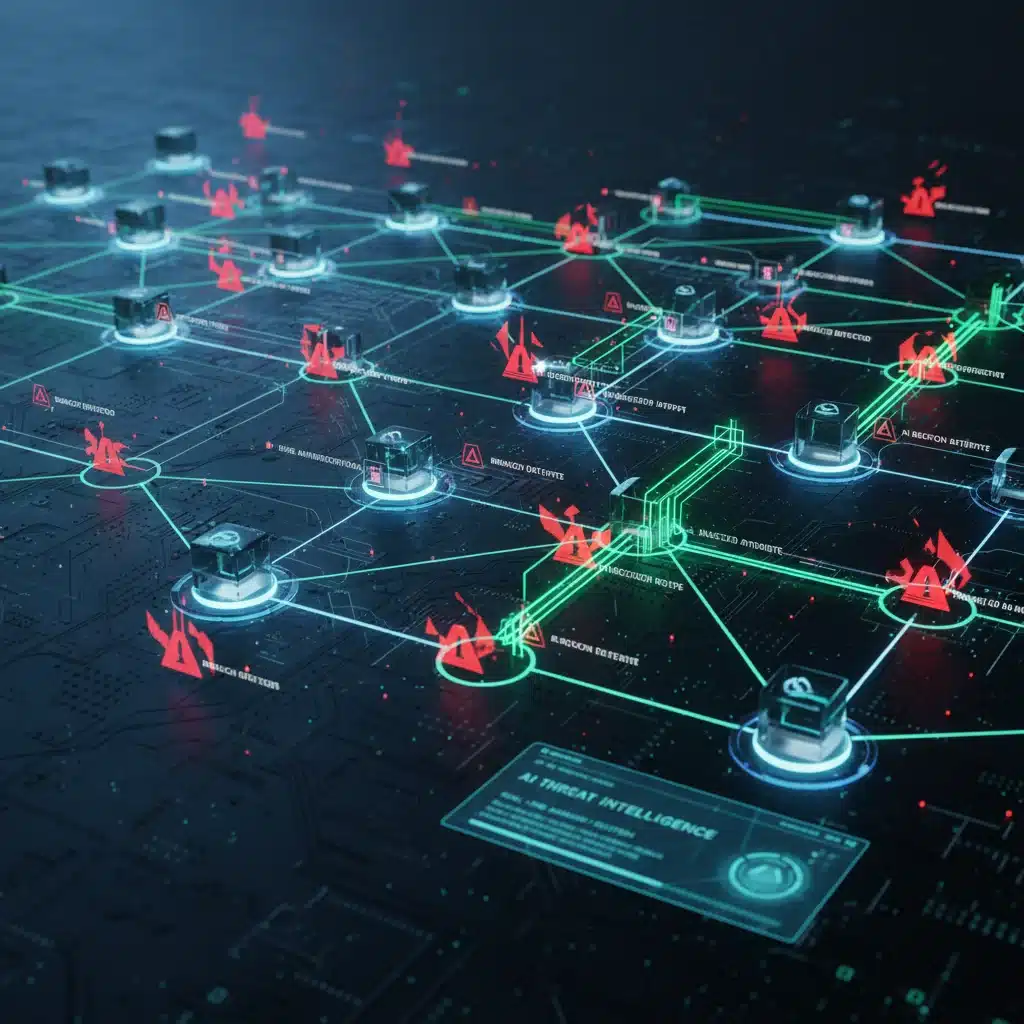
AI algorithms can establish a baseline of normal network behaviour, user activities, and transaction patterns. Any deviation from this baseline, no matter how minor, can be flagged as a potential threat. This includes unusual login attempts, abnormal transaction volumes, uncharacteristic data access patterns, or sudden spikes in network traffic. Unlike traditional rule-based systems, AI can detect never-before-seen threats (zero-days) by identifying anomalous behaviour rather than relying on known signatures.
2. Predictive Threat Intelligence
AI can analyse global threat intelligence feeds, historical attack data, and emerging attack vectors to predict future threats. By understanding attacker methodologies and trends, AI systems can proactively harden defences, patch potential vulnerabilities, and prepare for anticipated attack types before they even materialise. This shift from reactive to proactive security is critical for staying ahead of cybercriminals.
3. Enhanced Fraud Prevention
For e-commerce, payment fraud is a constant concern. AI excels at identifying fraudulent transactions by analysing hundreds of data points in milliseconds – including geographic location, purchase history, device fingerprints, IP addresses, and behavioural biometrics. This allows for real-time blocking of fraudulent transactions while minimising false positives, ensuring legitimate customers have a seamless experience. AI can also detect sophisticated bot-driven fraud that mimics human purchasing patterns.
4. Automated Incident Response
Once a threat is detected, every second counts. AI-powered security orchestration, automation, and response (SOAR) platforms can automatically initiate containment measures, such as isolating affected systems, blocking malicious IP addresses, revoking compromised credentials, and triggering alerts to human security teams. This significantly reduces the time from detection to response, mitigating the impact of an attack and preventing its lateral movement across the network.
5. User and Entity Behaviour Analytics (UEBA)
UEBA leverages AI to monitor and analyse user behaviour and entity (e.g., servers, applications) activity. By building profiles of typical behaviour, AI can detect insider threats – whether malicious or accidental – by flagging deviations from established norms. For example, an employee accessing sensitive customer data outside their usual working hours or from an unusual location would trigger an alert. This is crucial for protecting against compromised accounts and internal data exfiltration.
6. Vulnerability Management and Patch Prioritisation
AI can continuously scan e-commerce infrastructure for vulnerabilities, prioritising them based on their exploitability, potential impact, and relevance to the specific business context. This helps security teams focus their efforts on the most critical patches and configurations, rather than being overwhelmed by a flood of alerts.
Achieving 95% Breach Prevention: A Realistic Goal with AI
The claim of preventing 95% of breaches might seem ambitious, but it is increasingly within reach for US e-commerce businesses that fully embrace advanced e-commerce cybersecurity AI. This high level of prevention is achievable through a multi-layered defence strategy where AI acts as the central intelligence hub, continuously learning and adapting.
Key Components for High-Efficacy AI Implementation:
- Comprehensive Data Ingestion: AI systems need access to all relevant data sources – network logs, endpoint data, application logs, cloud logs, threat intelligence feeds, user behaviour data, and transaction records. The more data AI can analyse, the more accurate its threat detection capabilities will be.
- Advanced Machine Learning Models: Utilising a combination of supervised, unsupervised, and reinforcement learning models allows AI to detect known threats, identify novel attacks, and continuously improve its performance over time.
- Integration with Existing Security Infrastructure: AI should not operate in a silo. It must seamlessly integrate with existing Security Information and Event Management (SIEM) systems, firewalls, intrusion detection/prevention systems (IDS/IPS), and endpoint detection and response (EDR) solutions to create a unified and intelligent security ecosystem.
- Human-AI Collaboration: While AI automates much of the heavy lifting, human oversight and expertise remain indispensable. Security analysts are needed to investigate complex alerts, fine-tune AI models, respond to high-severity incidents, and strategise long-term security posture improvements. AI empowers human teams by reducing alert fatigue and allowing them to focus on strategic tasks.
- Continuous Learning and Adaptation: The threat landscape is dynamic. AI models must be continuously trained and updated with new data and threat intelligence to remain effective against evolving attack techniques. This requires a robust MLOps (Machine Learning Operations) pipeline for security.
- Zero Trust Architecture: Implementing AI within a Zero Trust framework (never trust, always verify) significantly enhances security. AI can continuously verify user identities, device health, and access privileges, ensuring that only authorised entities can access resources, regardless of their location within or outside the network.
Challenges and Considerations for AI Adoption
While the benefits are clear, implementing advanced e-commerce cybersecurity AI is not without its challenges:
1. Data Quality and Volume
AI models are only as good as the data they are trained on. Poor quality, incomplete, or biased data can lead to inaccurate detections or missed threats. E-commerce businesses must ensure robust data collection, cleansing, and labelling processes.
2. False Positives and Alert Fatigue
Initially, AI systems might generate a higher number of false positives. Tuning these systems to reduce alert fatigue while maintaining high detection rates requires expertise and iterative refinement. Overly aggressive AI can also disrupt legitimate business operations.
3. Talent Gap
There’s a significant shortage of cybersecurity professionals with expertise in AI and machine learning. Businesses may struggle to find or train staff capable of deploying, managing, and optimising AI-driven security solutions.
4. Cost of Implementation
Investing in advanced AI security platforms, infrastructure, and skilled personnel can be substantial. However, these costs must be weighed against the potentially far greater costs of a data breach.
5. Explainability and Transparency (XAI)
Understanding why an AI made a particular decision can be challenging (the ‘black box’ problem). For critical security decisions, explainable AI (XAI) is becoming important to provide transparency and build trust in the system’s recommendations.
The Future of E-commerce Security: A Proactive AI-Driven Shield
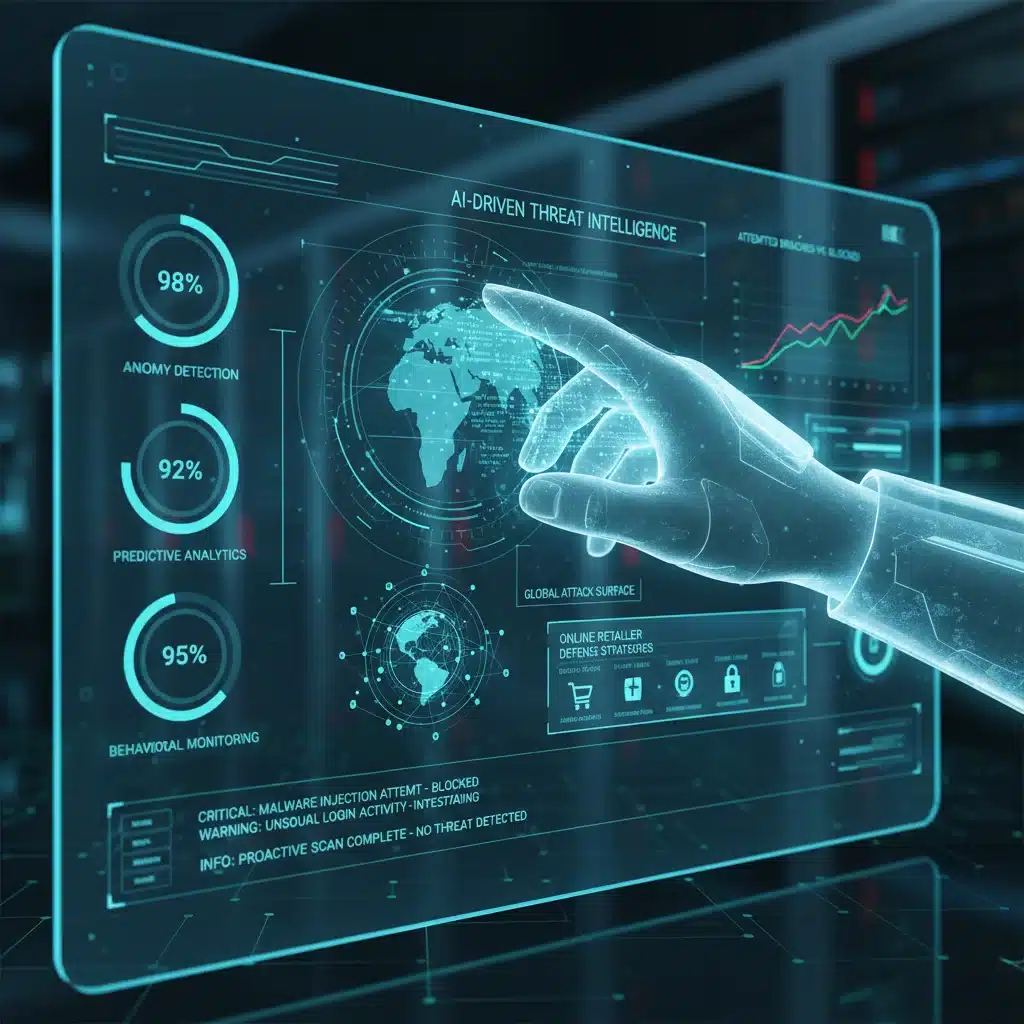
By 2026, e-commerce businesses that fail to adopt advanced AI-driven cybersecurity will find themselves increasingly vulnerable. The traditional perimeter defence model is insufficient against the polymorphic and highly adaptive threats of the future. The shift must be towards an intelligent, adaptive, and proactive security posture, where AI is not just a tool but the core intelligence driving defence mechanisms.
The ability of e-commerce cybersecurity AI to detect subtle anomalies, predict future attacks, automate responses, and continuously learn from new data provides an unparalleled advantage. For US e-commerce companies aiming to protect their customers, their data, and their brand reputation, investing in these advanced AI detection capabilities is no longer optional; it is a fundamental requirement for survival and prosperity in the digital age. By embracing these technologies, businesses can realistically aim for a future where over 95% of breaches are prevented, ensuring a more secure and trustworthy online shopping experience for everyone.
Strategic Recommendations for E-commerce Leaders:
- Assess Current Capabilities: Conduct a thorough audit of existing cybersecurity infrastructure and identify gaps.
- Develop an AI Roadmap: Plan for phased integration of AI tools, starting with critical areas like fraud detection and anomaly detection.
- Invest in Talent: Either hire AI-savvy security professionals or invest in upskilling existing teams.
- Prioritise Data Governance: Establish robust policies for data collection, storage, and usage to feed AI models effectively.
- Foster a Security Culture: Ensure that cybersecurity is a priority across the entire organisation, from the C-suite to every employee.
- Partner with Experts: Consider collaborating with cybersecurity vendors specialising in AI-driven solutions to leverage their expertise and technology.
The journey to enhanced security is continuous, but with advanced AI as the guiding force, US e-commerce businesses can look forward to a much safer 2026 and beyond.