Personalisation at Scale: Leveraging New Tech for a 30% Increase in US E-commerce Customer Engagement by 2026
Personalisation at Scale: Leveraging New Tech for a 30% Increase in US E-commerce Customer Engagement by 2026
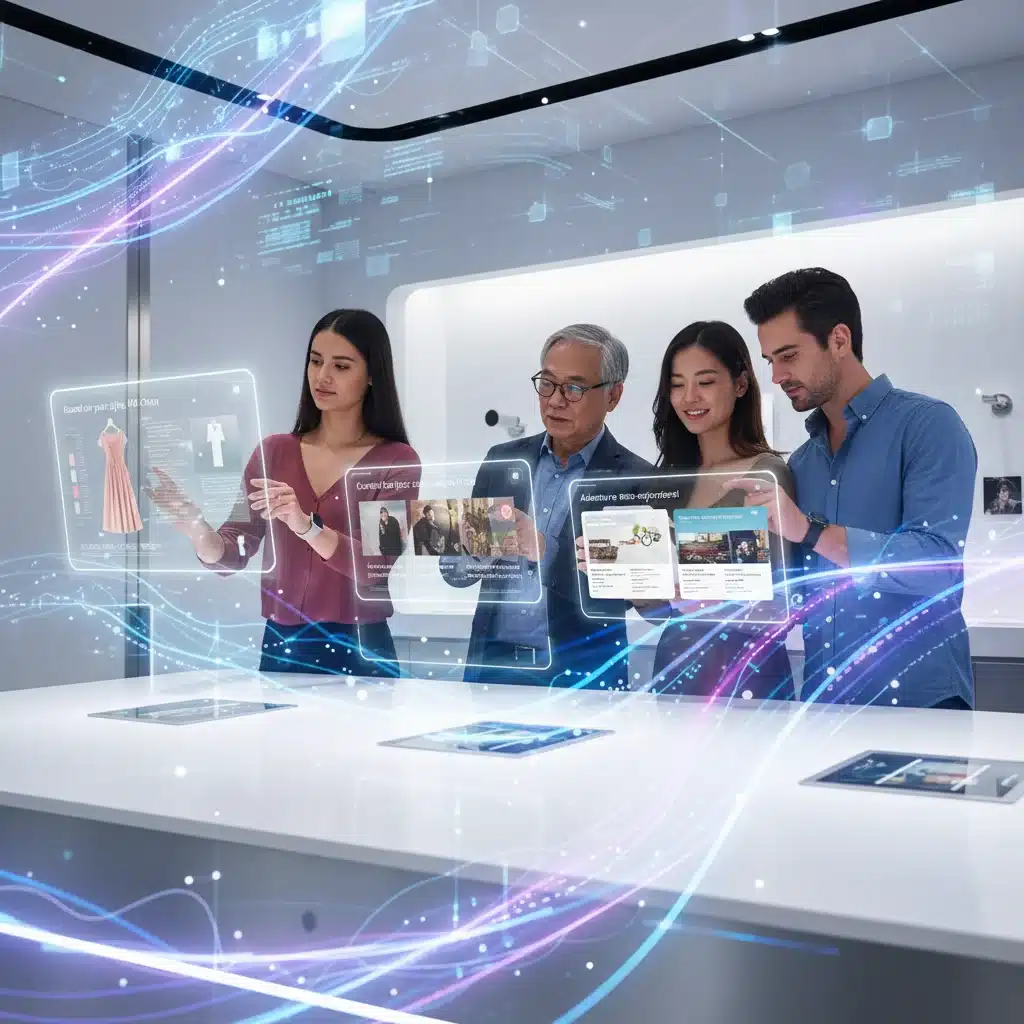
The e-commerce landscape in the United States is undergoing a profound transformation, driven by an insatiable consumer demand for tailored experiences. In an era where generic interactions are quickly dismissed, the ability to deliver relevant, individualised content and product recommendations has become the cornerstone of successful online retail. This burgeoning emphasis on E-commerce Personalisation Tech is not merely a trend; it’s a strategic imperative poised to redefine customer engagement and drive substantial growth. Industry analysts predict that by 2026, the strategic deployment of advanced personalisation technologies will lead to a remarkable 30% increase in US e-commerce customer engagement. This isn’t just about making customers feel special; it’s about creating deeply resonant, frictionless shopping journeys that foster loyalty, boost conversions, and significantly impact the bottom line.
The journey towards achieving true personalisation at scale is multifaceted, encompassing a blend of sophisticated technologies, robust data strategies, and a deep understanding of consumer psychology. At its core, E-commerce Personalisation Tech leverages artificial intelligence (AI), machine learning (ML), and advanced data analytics to decipher individual preferences, predict future behaviours, and dynamically adapt the online shopping environment. This article delves into the critical technologies and strategic approaches that are enabling retailers to move beyond rudimentary personalisation efforts and embrace a future where every customer interaction is unique, relevant, and highly engaging. We will explore the foundational elements of this technological revolution, examine the tangible benefits it offers, and outline the roadmap for businesses aiming to harness its full potential to meet and exceed the ambitious 30% engagement target by 2026.
The Evolution of Personalisation: From Basic Segmentation to Hyper-Individualisation
For years, e-commerce businesses have flirted with personalisation, often in the form of basic segmentation. This involved grouping customers based on broad demographics, purchase history, or geographic location. While a step in the right direction, this approach lacked the nuance required to truly capture individual intent and preference. The modern consumer, accustomed to highly personalised experiences across various digital platforms, now expects more. They anticipate that their favourite online stores will ‘know’ them, offering products and content that resonate with their unique tastes and needs.
The shift from broad segmentation to hyper-individualisation is powered by significant advancements in E-commerce Personalisation Tech. This new wave of technology moves beyond static profiles, instead creating dynamic, real-time understanding of each customer. Consider the difference: basic segmentation might recommend winter coats to all customers in cold climates. Hyper-individualisation, however, would recommend a specific style of sustainable, vegan winter coat to a customer who has previously purchased eco-friendly products and shown interest in similar styles, all while considering their browsing behaviour, preferred brands, and even social media activity. This level of detail transforms a generic suggestion into a highly relevant and compelling offer, significantly increasing the likelihood of engagement and conversion.
The driving force behind this evolution is the ability to collect, process, and interpret vast amounts of data at an unprecedented speed and scale. Every click, every view, every search query, and every purchase contributes to a rich tapestry of information about a customer. When this data is fed into intelligent algorithms, it unlocks insights that were previously unattainable, allowing retailers to craft truly bespoke experiences. This is where the power of E-commerce Personalisation Tech truly shines, enabling businesses to move from a ‘one-to-many’ marketing approach to a ‘one-to-one’ customer relationship at scale.
Key Technologies Driving E-commerce Personalisation
Achieving the ambitious goal of a 30% increase in US e-commerce customer engagement by 2026 hinges on the strategic adoption and integration of several cutting-edge technologies. These tools work in concert to create a seamless, intelligent personalisation engine that learns and adapts with every customer interaction.
Artificial Intelligence (AI) and Machine Learning (ML)
At the heart of modern E-commerce Personalisation Tech are AI and ML. These technologies are crucial for processing complex datasets and identifying patterns that human analysts would miss. AI-powered algorithms can:
- Predictive Analytics: Forecast future purchase behaviour, identify customers at risk of churn, and anticipate product demand. This allows retailers to proactively engage customers with relevant offers before they even realise they need something.
- Recommendation Engines: Go beyond simple ‘customers who bought this also bought…’ to highly sophisticated, context-aware recommendations. These engines consider a multitude of factors, including real-time browsing, past purchases, reviews, social media activity, and even external factors like weather or current events.
- Dynamic Content Optimisation: Automatically adjust website layouts, product displays, and promotional messages based on individual user preferences and behaviour. This ensures that each visitor sees the most engaging version of your site.
- Natural Language Processing (NLP): Power intelligent chatbots and virtual assistants that can understand and respond to customer queries, providing personalised support and recommendations in real-time.
Big Data Analytics and Customer Data Platforms (CDPs)
The fuel for AI and ML is data, and lots of it. Big data analytics tools are essential for collecting, storing, and processing the enormous volumes of information generated by online interactions. However, raw data alone isn’t enough. This is where Customer Data Platforms (CDPs) come into play. A CDP unifies customer data from various sources – CRM, e-commerce platforms, marketing automation, social media, call centres – into a single, comprehensive customer profile. This ‘golden record’ provides a holistic view of each customer, enabling more accurate and effective personalisation strategies. Without a robust CDP, even the most advanced AI will struggle to deliver truly integrated and impactful personalised experiences across all touchpoints.
Real-time Data Processing and Event Streaming
Personalisation is most effective when it’s immediate and responsive. Real-time data processing and event streaming technologies allow businesses to capture and react to customer actions as they happen. This means if a customer views a product multiple times, adds it to their cart, or abandons a purchase, the system can instantly trigger a personalised email, a pop-up offer, or adjust the website content to re-engage them. The ability to act in the moment significantly enhances the relevance and impact of personalised interventions, directly contributing to higher engagement rates and reduced abandonment.
Augmented Reality (AR) and Virtual Reality (VR)
While still emerging, AR and VR are rapidly becoming integral components of advanced E-commerce Personalisation Tech. These immersive technologies allow customers to ‘try on’ clothes virtually, visualise furniture in their homes, or experience products in a simulated environment. This not only enhances the shopping experience but also reduces uncertainty and returns, leading to greater customer satisfaction and loyalty. Imagine a customer trying on a pair of glasses virtually, receiving real-time recommendations for complementary accessories based on their face shape and style preferences – that’s the power of AR in personalisation.
Strategic Implementation of E-commerce Personalisation Tech for Enhanced Engagement
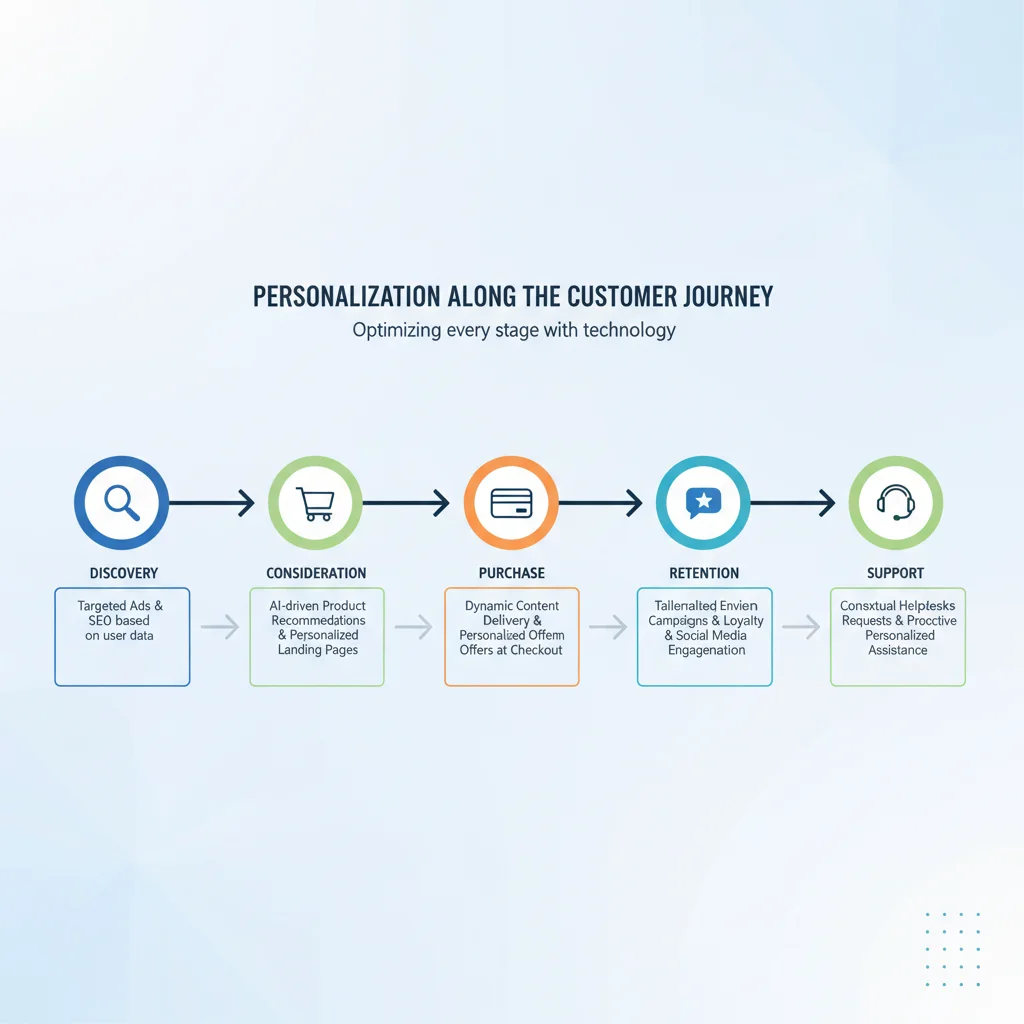
Simply adopting these technologies is not enough; their effective implementation requires a strategic approach focused on the entire customer journey. The goal is to create a continuous loop of learning and adaptation that constantly refines the personalised experience.
Personalised Product Recommendations Across All Touchpoints
Beyond the homepage, personalised product recommendations should permeate every aspect of the customer journey. This includes:
- Product Pages: Suggesting complementary items, alternative options, or upgrades.
- Shopping Cart: Offering last-minute add-ons or reassuring the customer with related products.
- Email Marketing: Sending personalised newsletters, abandoned cart reminders with relevant product suggestions, or post-purchase follow-ups.
- Mobile Apps: Delivering in-app notifications and exclusive offers based on location and past behaviour.
The key is consistency and relevance. Recommendations should evolve as the customer’s intent changes throughout their interaction with your brand.
Dynamic Website Content and User Interface (UI)
The website itself should be a dynamic entity that adapts to each visitor. This can involve:
- Homepage Layouts: Customising featured products, banners, and promotional areas based on browsing history and preferences.
- Search Results: Prioritising products that are more likely to appeal to the individual user.
- Navigation: Highlighting categories or filters that are most relevant to the current user’s interests.
- Language and Currency: Automatically adjusting based on geolocation, further enhancing the local and personal feel.
This dynamic adaptation creates a highly intuitive and efficient shopping experience, reducing friction and increasing the likelihood of conversion.
Hyper-Segmented Email and SMS Campaigns
Traditional mass email blasts are increasingly ineffective. E-commerce Personalisation Tech allows for hyper-segmentation, creating highly specific customer groups based on granular data points. This enables the delivery of highly targeted email and SMS campaigns that address individual needs and interests. Examples include:
- Birthday/Anniversary Offers: Automated, personalised discounts.
- Restock Alerts: Notifying customers when a previously viewed or purchased item is back in stock.
- Exclusive Access: Inviting loyal customers to early sales or new product launches based on their specific product categories of interest.
- Content Personalisation: Delivering blog posts, guides, or videos that align with their past purchases or browsing behaviour.
Personalised Customer Service and Support
Personalisation extends beyond the shopping interface to customer service. AI-powered chatbots can handle routine queries, providing instant, personalised responses. When human intervention is required, CDPs ensure that customer service representatives have a complete view of the customer’s history, preferences, and previous interactions. This allows them to offer tailored solutions, anticipate needs, and provide a truly personalised support experience, significantly enhancing customer satisfaction and loyalty.
Measuring Success: Metrics for Personalisation Engagement
To achieve and track the projected 30% increase in customer engagement, businesses must establish clear metrics and continuously monitor the performance of their E-commerce Personalisation Tech initiatives. Key performance indicators (KPIs) include:
- Conversion Rate: The percentage of website visitors who complete a desired action, such as making a purchase. Personalisation should lead to a noticeable uplift here.
- Average Order Value (AOV): Personalised recommendations for complementary products or upsells can significantly increase the total value of each transaction.
- Customer Lifetime Value (CLTV): By fostering loyalty and repeat purchases, personalisation directly contributes to a higher CLTV.
- Bounce Rate: A lower bounce rate indicates that visitors are finding the content and products more relevant and engaging, encouraging them to stay longer on the site.
- Time Spent on Site/Pages Viewed: Increased engagement often translates into more time spent exploring the website and viewing more product pages.
- Repeat Purchase Rate: A strong indicator of customer loyalty and satisfaction, which personalisation aims to boost.
- Email Open and Click-Through Rates: For personalised campaigns, these rates should be significantly higher than generic campaigns.
- Customer Satisfaction (CSAT) and Net Promoter Score (NPS): Ultimately, personalisation should lead to happier customers who are more likely to recommend the brand.
Regular A/B testing of different personalisation strategies is also crucial to identify what works best for specific customer segments and continuously optimise the approach. This iterative process of testing, learning, and refining is fundamental to maximising the impact of E-commerce Personalisation Tech.
Challenges and Considerations in Implementing Personalisation at Scale
While the benefits of E-commerce Personalisation Tech are undeniable, implementing it at scale comes with its own set of challenges that businesses must address:
Data Privacy and Security
With the increasing collection of personal data, ensuring robust data privacy and security is paramount. Compliance with regulations like GDPR and CCPA, as well as building customer trust through transparent data practices, is non-negotiable. Businesses must clearly communicate how data is collected and used, giving customers control over their information.
Data Silos and Integration Complexities
Many organisations struggle with fragmented data spread across various systems. Integrating these disparate data sources into a unified Customer Data Platform (CDP) is a significant undertaking but essential for effective personalisation. Without a single source of truth, personalisation efforts will be incomplete and inconsistent.
Technological Investment and Expertise
Implementing advanced AI, ML, and real-time data processing systems requires substantial investment in technology and skilled personnel. Businesses need data scientists, AI engineers, and personalisation strategists to build, manage, and optimise these systems. For smaller businesses, leveraging third-party personalisation platforms can be a more viable option.

Ethical Considerations and Avoiding ‘Creepiness’
There’s a fine line between helpful personalisation and intrusive ‘creepiness’. Overly aggressive or poorly executed personalisation can alienate customers. Businesses must focus on providing value and enhancing the user experience rather than making customers feel like they are being constantly monitored. Opt-in preferences, clear value propositions, and respecting user boundaries are crucial.
Maintaining Brand Consistency
While personalisation tailors content, it’s vital to maintain a consistent brand voice and aesthetic across all personalised experiences. The brand identity should remain recognisable and cohesive, even as the content itself adapts to individual users.
The Future of E-commerce: A Personalised Odyssey
The trajectory of US e-commerce is clearly set towards an intensely personalised future. The projected 30% increase in customer engagement by 2026 is not an arbitrary number but a reflection of the transformative power of E-commerce Personalisation Tech. As AI and machine learning continue to advance, and as businesses become more adept at harnessing the power of big data, the level of personalisation achievable will only deepen.
Imagine a future where your online shopping experience is as intuitive and understanding as a conversation with a trusted personal shopper. Where products anticipate your needs before you even articulate them, and where the entire digital storefront morphs to reflect your individual style and preferences. This is the promise of advanced personalisation, and it’s a future that is rapidly becoming a reality.
For e-commerce businesses, the mandate is clear: embrace these new technologies not as an option, but as a fundamental pillar of your growth strategy. Invest in robust data infrastructure, cultivate a data-driven culture, and continuously innovate your personalisation tactics. Those who lead the charge in adopting and refining their E-commerce Personalisation Tech will be the ones that capture the lion’s share of customer loyalty and market dominance in the coming years. The race to 30% enhanced engagement is on, and personalisation is the vehicle to get there.
Conclusion
The landscape of US e-commerce is evolving at an unprecedented pace, with customer expectations for personalised experiences reaching new heights. The strategic integration of advanced E-commerce Personalisation Tech – including AI, machine learning, big data analytics, CDPs, and real-time processing – is not just an advantage; it’s a necessity for survival and growth. By leveraging these powerful tools, businesses can move beyond generic interactions to create truly hyper-individualised shopping journeys that resonate deeply with each customer.
The goal of a 30% increase in US e-commerce customer engagement by 2026 is ambitious yet entirely achievable for those willing to invest in the right technologies and strategies. This involves not only implementing sophisticated recommendation engines and dynamic content delivery but also fostering a culture of continuous learning, data-driven decision-making, and unwavering focus on the customer. While challenges such as data privacy, integration complexities, and ethical considerations must be carefully navigated, the rewards – increased conversions, higher average order values, enhanced customer lifetime value, and unparalleled brand loyalty – far outweigh the obstacles.
Ultimately, the future of e-commerce belongs to those who master the art and science of personalisation at scale. By understanding individual customer needs and proactively tailoring every touchpoint, businesses can transform fleeting visits into lasting relationships, securing their position at the forefront of the digital retail revolution. The time to act is now, to build the personalised experiences that will define the next generation of e-commerce success.