Optimising US E-commerce Supply Chain for 2026: A 7-Step Guide to Reducing Shipping Delays

The landscape of e-commerce is in a perpetual state of evolution, driven by consumer expectations for speed, reliability, and transparency. For businesses operating within the United States, the complexities of the US e-commerce supply chain are amplified by vast geographical distances, diverse regulatory environments, and an increasingly competitive market. As we look towards 2026, the imperative to optimise this critical backbone of online retail has never been more urgent. The goal is not merely to keep pace but to proactively build resilience, enhance efficiency, and, crucially, significantly reduce shipping delays, especially during the notoriously challenging peak seasons.
Shipping delays are more than just an inconvenience; they are a direct threat to customer satisfaction, brand reputation, and ultimately, profitability. A recent study indicated that over 70% of online shoppers consider fast shipping a key factor in their purchasing decisions, and a significant portion will abandon a cart or switch retailers due to perceived slow delivery times. During peak seasons like Black Friday or the holiday rush, these delays can escalate into logistical nightmares, leading to lost sales, increased customer service inquiries, and a tarnished brand image. Therefore, implementing a robust strategy to streamline your e-commerce supply chain is not an option but a necessity for sustained success.
This comprehensive guide is designed to equip US e-commerce businesses with a practical, seven-step framework for optimising their e-commerce supply chain for 2026. Our focus is on actionable strategies that target a measurable reduction in shipping delays – aiming for a significant 15% improvement during peak seasons. By delving into everything from data analytics and inventory management to warehouse automation and last-mile delivery partnerships, we will explore how a holistic approach can transform your logistical operations from a potential bottleneck into a powerful competitive advantage. Prepare to future-proof your business by building a more agile, responsive, and customer-centric e-commerce supply chain.
Understanding the Current State of the US E-commerce Supply Chain
Before embarking on an optimisation journey, it’s crucial to understand the current challenges and trends shaping the US e-commerce supply chain. The past few years have highlighted vulnerabilities, from port congestions and labour shortages to unexpected global events. These factors have underscored the need for greater resilience and adaptability. Consumer behaviour has also shifted dramatically, with an increased demand for same-day or next-day delivery, free shipping, and transparent tracking information. These heightened expectations place immense pressure on logistics networks.
Furthermore, the growth of e-commerce continues unabated, meaning that the volume of packages handled by the e-commerce supply chain is consistently increasing. This growth, coupled with the seasonal spikes characteristic of peak shopping periods, creates a perfect storm for potential delays. Businesses that fail to anticipate and mitigate these challenges risk not only falling behind competitors but also alienating their customer base. A deep dive into your current operational metrics – including average shipping times, fulfilment accuracy, return rates, and customer feedback on delivery – will provide the baseline data necessary to measure the impact of your optimisation efforts. Recognising these pain points is the first critical step towards building a more efficient and reliable e-commerce supply chain for 2026.
Step 1: Leverage Advanced Data Analytics and Predictive Modelling
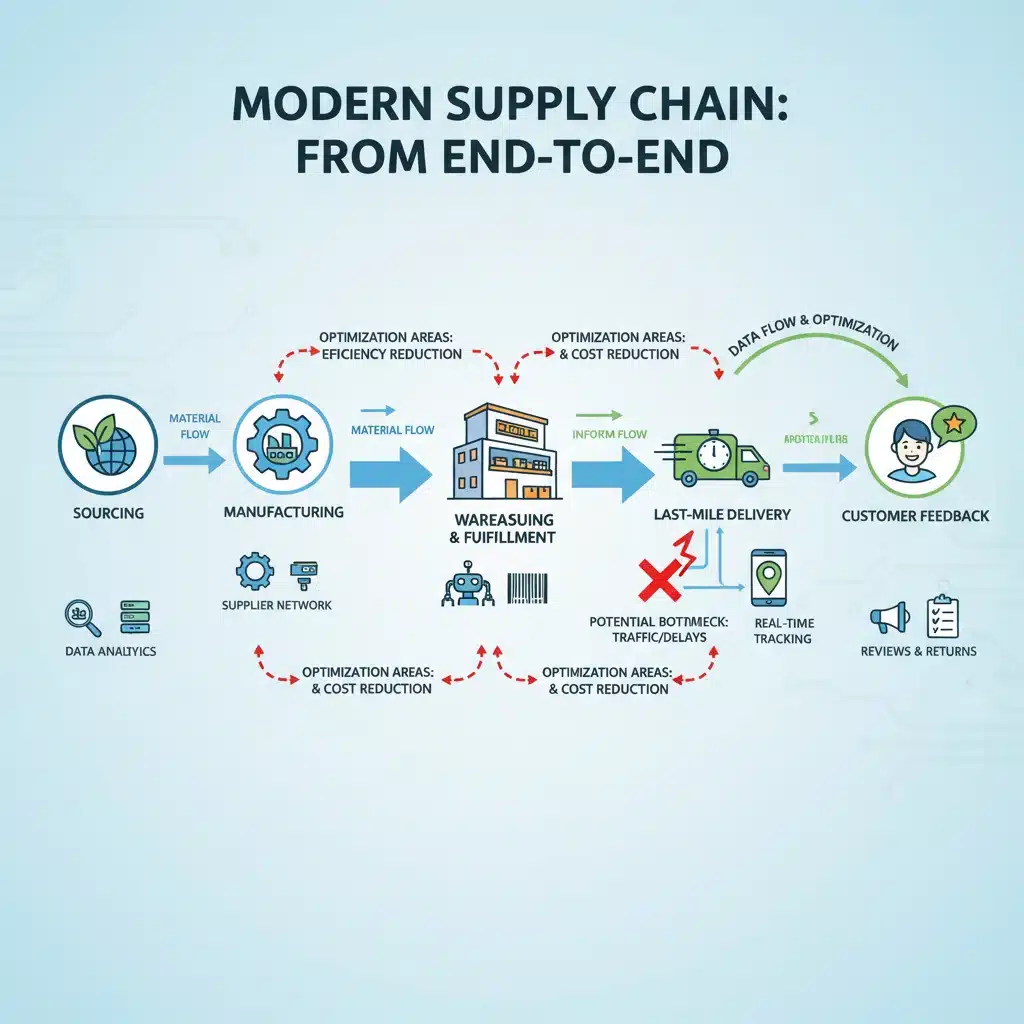
The foundation of an optimised e-commerce supply chain for 2026 lies in intelligent data utilisation. Gone are the days of reactive decision-making. Modern e-commerce demands proactive insights derived from comprehensive data analytics and predictive modelling. This involves collecting and analysing vast amounts of data across your entire operation – from sales trends and customer demographics to inventory levels, supplier performance, shipping routes, and historical delay patterns.
How to implement:
- Implement robust analytics platforms: Invest in or upgrade to analytics tools capable of integrating data from various sources (CRM, ERP, WMS, TMS). These platforms should offer real-time dashboards and reporting capabilities.
- Forecast demand with precision: Utilise AI and machine learning algorithms to predict future demand with greater accuracy. This includes forecasting seasonal peaks, promotional impacts, and even the effects of external factors like economic shifts or weather events. Accurate forecasting is paramount for optimising inventory levels and resource allocation within your e-commerce supply chain.
- Identify bottlenecks and inefficiencies: Data analytics can pinpoint specific areas where delays occur most frequently, whether it’s at the warehouse, during transit, or with a particular carrier. By understanding the root causes, you can develop targeted solutions.
- Optimise inventory placement: Predictive analytics can help determine the optimal geographic location for your inventory across multiple fulfilment centres, minimising transit times to key customer bases. This strategic placement is a game-changer for the US e-commerce supply chain.
- Monitor carrier performance: Continuously track and analyse carrier performance data, including on-time delivery rates, damage rates, and cost-effectiveness. This data is invaluable for negotiating better contracts and making informed decisions about your shipping partners.
By transforming raw data into actionable intelligence, businesses can move from guesswork to precision, making informed decisions that significantly reduce the likelihood of shipping delays and enhance the overall efficiency of their e-commerce supply chain.
Step 2: Enhance Inventory Management and Warehousing Strategies
Efficient inventory management and strategically optimised warehousing are central to reducing shipping delays. Holding too much inventory ties up capital and incurs storage costs, while holding too little leads to stockouts and missed sales opportunities. The goal is to strike a delicate balance, ensuring products are available when and where customers need them, especially within the vast US market.
Key strategies for 2026:
- Just-in-Time (JIT) principles with a twist: While pure JIT can be risky, adopting its core philosophy of minimising inventory holding while ensuring availability is crucial. This means close collaboration with suppliers and leveraging demand forecasts to time inventory replenishment precisely.
- Distributed Inventory Networks: Instead of a single central warehouse, consider a network of strategically located fulfilment centres across the US. This reduces the ‘last mile’ distance to customers, drastically cutting down transit times and shipping costs. This approach directly addresses the challenge of reducing shipping delays across the diverse US geography for your e-commerce supply chain.
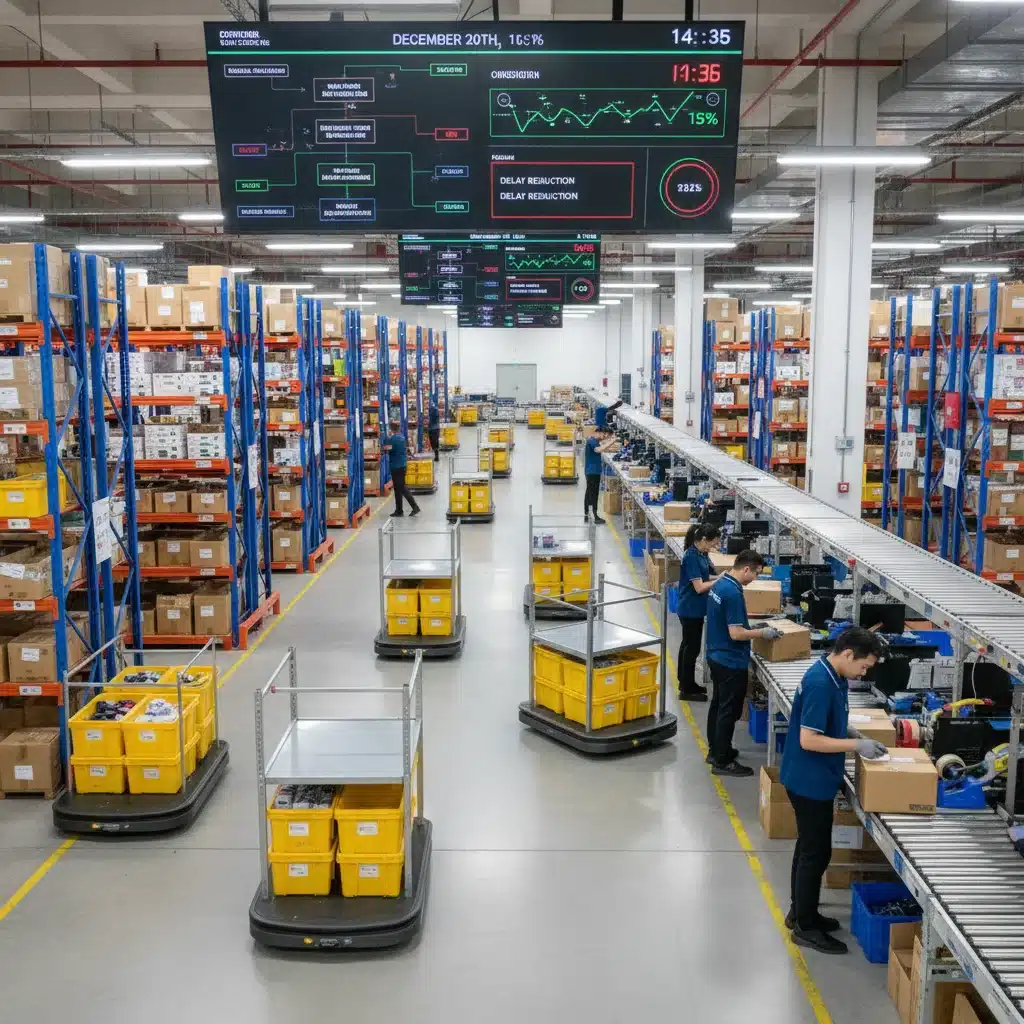
- Warehouse Automation and Robotics: Invest in automation technologies like automated guided vehicles (AGVs), robotic arms for picking and packing, and advanced sorting systems. These technologies significantly speed up order processing, reduce human error, and allow for 24/7 operations, particularly vital during peak seasons.
- Optimised Warehouse Layouts: Regularly review and optimise your warehouse layout for maximum efficiency. This includes slotting strategies (placing fast-moving items in easily accessible locations), efficient picking paths, and streamlined packing stations.
- Real-time Inventory Visibility: Implement a robust Warehouse Management System (WMS) that provides real-time visibility into inventory levels across all locations. This prevents overselling, reduces stockouts, and enables quick decision-making regarding order fulfilment.
- Cross-docking strategies: For certain fast-moving goods, explore cross-docking where products are directly transferred from inbound to outbound shipments with minimal or no storage time, further accelerating the flow within your e-commerce supply chain.
By refining inventory processes and modernising warehousing operations, businesses can create a more agile and responsive e-commerce supply chain capable of meeting the demands of 2026 and beyond.
Step 3: Diversify and Strengthen Carrier Relationships
Reliance on a single carrier, or even just a few, can be a major vulnerability in your e-commerce supply chain, especially during peak seasons or unexpected disruptions. Diversifying your carrier portfolio and fostering strong relationships with them is crucial for ensuring flexibility, redundancy, and competitive service levels.
Actionable steps:
- Multi-Carrier Strategy: Partner with a mix of national, regional, and even local carriers. Each carrier often excels in different areas – some are better for long-haul, others for last-mile, and some for specific package sizes or types. A multi-carrier approach allows you to choose the best option for each shipment, optimising for speed, cost, and reliability.
- Negotiate Favourable Contracts: Leverage your shipping volume to negotiate better rates and service level agreements (SLAs). Ensure your contracts include clauses for peak season capacity guarantees and penalties for delivery failures.
- Integrate Carrier APIs: Implement technology that integrates directly with multiple carrier APIs. This enables real-time rate shopping, automated label generation, and seamless tracking updates, streamlining the shipping process and reducing manual errors within your e-commerce supply chain.
- Pilot New Delivery Options: Explore newer delivery models such as drone delivery (where feasible), crowd-sourced delivery, or locker pick-up points. While not universally applicable yet, these could offer significant advantages in specific urban areas or for certain product types.
- Regular Performance Reviews: Conduct quarterly or semi-annual performance reviews with your carriers. Discuss their on-time delivery rates, handling of exceptions, communication, and overall service quality. Use this feedback to reinforce good performance and address areas needing improvement.
- Contingency Planning: Develop contingency plans with backup carriers in case a primary carrier experiences widespread delays or service interruptions. Having alternative options is vital for maintaining continuity in your e-commerce supply chain.
A well-managed network of carrier relationships provides the necessary agility to navigate the unpredictable nature of the US e-commerce supply chain, ensuring that customer orders reach their destinations efficiently, even under pressure.
Step 4: Optimise Last-Mile Delivery
The ‘last mile’ – the final leg of a product’s journey from a distribution centre to the customer’s doorstep – is often the most expensive and time-consuming part of the e-commerce supply chain. It’s also where the majority of shipping delays occur and where customer satisfaction is most directly impacted. Optimising this segment is critical for achieving a 15% reduction in peak season delays.
Strategies for last-mile excellence:
- Local Fulfilment Centres and Micro-Hubs: Complementing larger distribution centres, establishing smaller, urban micro-fulfilment centres or hubs can dramatically shorten delivery distances. These can be strategically placed in high-density areas to facilitate rapid deliveries.
- Route Optimisation Software: Implement advanced route optimisation software that considers traffic, delivery windows, vehicle capacity, and customer locations to create the most efficient delivery routes. This reduces fuel costs and delivery times.
- Leverage Gig Economy Delivery Services: Partner with local, on-demand delivery platforms, especially for urgent or same-day deliveries in metropolitan areas. These services can provide scalable capacity during peak times without the overhead of maintaining your own fleet.
- Customer Choice for Delivery Options: Offer customers a range of delivery options, including standard, express, scheduled delivery windows, and pick-up from local stores or locker points. This empowers customers and can reduce failed delivery attempts, which are a major cause of delays.
- Real-time Tracking and Communication: Provide customers with granular, real-time tracking information. Proactive communication about potential delays or successful deliveries manages expectations and improves the overall customer experience. Notifications via SMS or app alerts are highly effective.
- Proof of Delivery (POD) Solutions: Implement digital POD solutions that capture signatures, photos, or GPS coordinates upon delivery. This reduces disputes and provides clear evidence of successful delivery, streamlining customer service processes.
By meticulously refining the last-mile operations, businesses can significantly improve delivery speed and reliability, directly contributing to the goal of reducing shipping delays and enhancing customer loyalty within the competitive US e-commerce supply chain.
Step 5: Embrace Automation and AI Across the Supply Chain
Automation and Artificial Intelligence (AI) are no longer futuristic concepts; they are essential tools for a high-performing e-commerce supply chain in 2026. These technologies enable greater speed, accuracy, and scalability, all critical factors in mitigating shipping delays, particularly during periods of high demand.
Areas for automation and AI integration:
- Automated Order Processing: From the moment an order is placed, automation can trigger a series of actions – inventory allocation, warehouse picking instructions, shipping label generation, and customer notifications – all without human intervention, drastically speeding up the initial stages of fulfilment.
- Robotics in Warehousing: As mentioned in Step 2, robotics for picking, packing, and sorting can transform warehouse efficiency. Autonomous Mobile Robots (AMRs) and Automated Storage and Retrieval Systems (AS/RS) reduce manual labour, increase throughput, and operate continuously.
- AI for Demand Forecasting: AI algorithms can analyse complex datasets, identifying subtle patterns and external variables that human analysts might miss, leading to more accurate demand forecasts and optimal inventory levels.
- Predictive Maintenance: AI can monitor the health of machinery (e.g., conveyor belts, forklifts) in warehouses and predict potential breakdowns before they occur, allowing for preventative maintenance and avoiding costly operational halts.
- Automated Customer Service: AI-powered chatbots can handle routine customer inquiries about order status and delivery updates, freeing up human agents for more complex issues. This improves customer experience and reduces the strain on support teams during peak seasons.
- Dynamic Pricing and Route Optimisation: AI can continuously analyse market conditions, carrier availability, and traffic patterns to dynamically adjust shipping rates and optimise delivery routes in real-time.
- Fraud Detection: AI can quickly identify and flag potentially fraudulent orders, preventing costly chargebacks and ensuring legitimate orders are processed without delay.
Integrating automation and AI throughout your e-commerce supply chain creates a more resilient, responsive, and ultimately faster operation, directly supporting the goal of reducing shipping delays by 15% during peak seasons.
Step 6: Foster Strong Supplier Relationships and Transparency
The e-commerce supply chain begins long before a product reaches your warehouse. Strong, transparent relationships with your suppliers are critical for ensuring consistent product availability, quality, and timely inbound shipments. Delays at the supplier level inevitably ripple through the entire chain, impacting your ability to meet customer delivery expectations.
Building a resilient supplier network:
- Strategic Supplier Partnerships: Move beyond transactional relationships to strategic partnerships. Work closely with key suppliers, sharing demand forecasts and long-term business plans. This allows them to better anticipate your needs and allocate resources accordingly.
- Diversify Sourcing: Avoid over-reliance on a single supplier or geographic region for critical components or products. Diversifying your supplier base provides redundancy and reduces risk in case of disruptions (e.g., natural disasters, geopolitical issues).
- Implement Supplier Performance Metrics: Establish clear KPIs for your suppliers, such as on-time delivery rates, quality control, and responsiveness. Regularly review these metrics and provide feedback to drive continuous improvement.
- Real-time Visibility into Inbound Logistics: Work with suppliers to gain greater visibility into their production schedules and your inbound shipments. Technologies like Electronic Data Interchange (EDI) or shared portals can provide updates on order status, production milestones, and shipping manifests.
- Collaborative Planning, Forecasting, and Replenishment (CPFR): Adopt CPFR principles to collaboratively plan and forecast demand with your key suppliers. This shared understanding reduces uncertainties and improves the accuracy of inventory replenishment, preventing stockouts.
- Ethical Sourcing and Sustainability: Increasingly, consumers and regulations demand ethical and sustainable sourcing. Partnering with suppliers who share these values can enhance your brand reputation and mitigate risks associated with non-compliance.
By nurturing robust and transparent supplier relationships, you can build a more resilient and predictable upstream e-commerce supply chain, which is fundamental to preventing delays further down the line and ensuring product availability for your customers.
Step 7: Implement Continuous Improvement and Agility Frameworks
Optimising your e-commerce supply chain is not a one-time project; it’s an ongoing journey. The market, technology, and customer expectations are constantly changing, requiring a commitment to continuous improvement and an agile mindset. For 2026 and beyond, businesses must be prepared to adapt quickly and iteratively refine their operations.
Cultivating an agile supply chain:
- Establish a Dedicated Optimisation Team: Form a cross-functional team responsible for monitoring supply chain performance, identifying new opportunities for improvement, and implementing changes. This team should include representatives from logistics, operations, IT, and customer service.
- Regular Performance Audits: Conduct regular, comprehensive audits of your entire e-commerce supply chain. This includes reviewing processes, technology, and partnerships against established KPIs. Identify what’s working well and what needs adjustment.
- Pilot Programs and A/B Testing: Before rolling out major changes, consider implementing pilot programs or A/B testing new technologies, carriers, or processes. This allows you to evaluate their effectiveness and iron out kinks on a smaller scale.
- Feedback Loops: Create formal feedback loops with customers, carriers, and internal teams. Customer feedback on delivery experience is invaluable, as is input from warehouse staff and delivery drivers who are on the front lines.
- Invest in Employee Training and Development: Ensure your team is well-trained on new technologies and processes. A skilled workforce is essential for maximising the benefits of any optimisation effort.
- Stay Abreast of Industry Trends: Continuously research and evaluate emerging technologies (e.g., blockchain for supply chain transparency, advanced robotics, sustainable logistics solutions) and best practices in logistics and e-commerce supply chain management.
- Build Scenario Planning Capabilities: Develop robust scenario planning capabilities to anticipate and prepare for potential disruptions (e.g., economic downturns, port strikes, new regulations). Having pre-defined responses can significantly reduce the impact of unforeseen events.
By embedding a culture of continuous improvement and agility, your e-commerce business can ensure its e-commerce supply chain remains competitive, efficient, and resilient, consistently delivering on customer expectations and achieving the target of reducing shipping delays by 15% during peak seasons.
Measuring Success and Sustaining Momentum
Achieving a 15% reduction in shipping delays during peak seasons is an ambitious yet attainable goal. To ensure your efforts are successful and sustainable, it’s vital to establish clear metrics for success and continuously monitor your progress. Key performance indicators (KPIs) should include:
- On-Time Delivery Rate: The percentage of orders delivered within the promised timeframe.
- Average Transit Time: The average time it takes for an order to reach the customer.
- Order Fulfilment Cycle Time: The total time from order placement to customer receipt.
- Shipping Cost Per Order: Tracking this helps ensure efficiency doesn’t come at an unsustainable cost.
- Customer Satisfaction (CSAT) Scores related to delivery: Direct feedback from customers on their shipping experience.
- Peak Season Delay Percentage: A specific metric to track the reduction in delays during your busiest periods.
- Inventory Accuracy: A high percentage indicates efficient inventory management.
Regularly review these KPIs, ideally monthly or quarterly, and compare them against your baseline data and targets. Celebrate successes and use any shortfalls as opportunities for further refinement. The dynamic nature of the US e-commerce supply chain means that what works today might need adjustment tomorrow. Maintaining open lines of communication across all stakeholders – from suppliers and carriers to internal teams and customers – will foster a collaborative environment conducive to ongoing improvement.
Furthermore, consider conducting annual strategic reviews of your entire e-commerce supply chain. This allows for a higher-level assessment of emerging technologies, geopolitical shifts, new consumer trends, and competitive pressures that might necessitate a more significant pivot in your strategy. By committing to this cycle of planning, execution, measurement, and adaptation, your e-commerce business will not only meet its 2026 goals but also build a robust, future-proof e-commerce supply chain capable of thriving in an ever-changing market.
Conclusion: A Future-Ready E-commerce Supply Chain
Optimising your US e-commerce supply chain for 2026 is a strategic imperative that promises not just reduced shipping delays but also enhanced customer loyalty, improved operational efficiency, and a stronger competitive edge. By systematically implementing these seven steps – from leveraging advanced data analytics and modernising inventory management to diversifying carrier relationships, optimising last-mile delivery, embracing automation, fostering strong supplier partnerships, and committing to continuous improvement – businesses can transform their logistical operations.
The goal of reducing shipping delays by 15% during peak seasons is ambitious but entirely achievable with a focused, data-driven approach. This journey requires investment in technology, a willingness to adapt, and a commitment to collaboration across the entire ecosystem. As the e-commerce landscape continues to evolve, a flexible, resilient, and customer-centric e-commerce supply chain will be the hallmark of successful online retailers. Start planning and implementing these changes today to ensure your business is not just ready for 2026 but positioned to lead the market with unparalleled efficiency and customer satisfaction.