Real-time Inventory Management: Essential E-commerce Features for 2026 USA Success
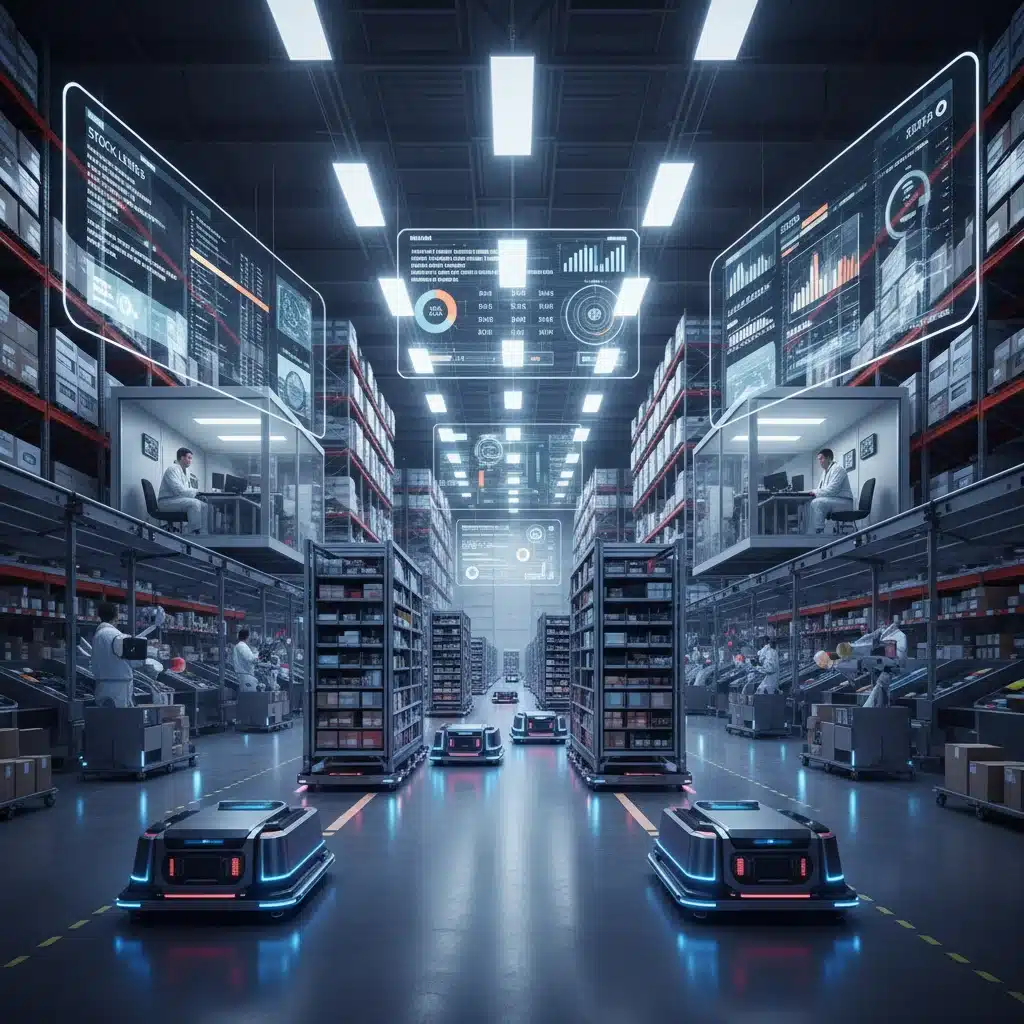
In the dynamic and hyper-competitive landscape of USA e-commerce, the ability to manage inventory effectively is not just an advantage; it’s a fundamental necessity for survival and growth. As we look towards 2026, the demands on online retailers are only intensifying, driven by ever-increasing customer expectations for speed, accuracy, and availability. The cornerstone of meeting these expectations lies in robust real-time inventory management systems. Without a sophisticated approach to tracking, forecasting, and optimizing stock, e-commerce businesses risk everything from lost sales and customer dissatisfaction to significant operational inefficiencies and financial losses.
The digital marketplace in the USA is evolving at an unprecedented pace. Consumers expect immediate gratification, often making purchase decisions based on product availability and swift delivery. This means that an outdated or manual inventory system can quickly become a bottleneck, leading to overselling products that are out of stock, missing opportunities to replenish popular items, and ultimately, damaging brand reputation. Therefore, understanding and implementing the right real-time inventory management features is paramount for any e-commerce business aiming for sustained success in the coming years.
This comprehensive guide will delve deep into the three must-have features of real-time inventory management systems that USA e-commerce businesses should prioritize for 2026. We will explore how these features provide practical solutions to common challenges, enhance operational efficiency, and ultimately drive profitability. From automated stock updates to intelligent demand forecasting and seamless multi-channel synchronization, we’ll break down the critical components that will empower your business to thrive.
The Imperative of Real-time Inventory Management in USA E-commerce
Before we dissect the specific features, let’s establish why real-time inventory management has become such a critical component of e-commerce strategy. The traditional approach to inventory, often involving periodic manual counts or delayed updates, is simply inadequate for the speed and scale of modern online retail. In a market where customer loyalty is fragile and competition is fierce, every second counts.
Consider the typical challenges faced by e-commerce businesses: stockouts leading to missed sales, overstocking resulting in high carrying costs and potential obsolescence, inaccurate inventory counts causing shipping delays and customer complaints, and the sheer complexity of managing multiple SKUs across various sales channels. Each of these problems can significantly erode profit margins and tarnish a brand’s image. Real-time inventory management directly addresses these issues by providing an immediate, accurate, and comprehensive view of stock levels and movement.
For USA e-commerce businesses, the stakes are even higher due to the sheer volume of transactions, the vast geographical distribution of customers, and the sophisticated logistical networks required to serve them. Compliance with various state and federal regulations, managing returns, and handling peak seasons like Black Friday and Cyber Monday, all necessitate an agile and responsive inventory system. A system that provides real-time inventory management capabilities ensures that businesses can react instantly to changes, optimize their supply chain, and maintain a competitive edge.
Furthermore, the rise of omnichannel retail means that customers might browse online, purchase via an app, and pick up in-store, or vice versa. This blurring of lines between physical and digital storefronts demands a unified view of inventory across all touchpoints. Without real-time inventory management, providing a consistent and satisfying customer experience across these diverse channels becomes an insurmountable challenge. Therefore, investing in advanced inventory solutions is not just an operational upgrade; it’s a strategic move towards future-proofing your e-commerce business.
Feature 1: Automated Stock Updates and Synchronization Across All Channels
The first and arguably most foundational feature for any modern real-time inventory management system is automated stock updates and seamless synchronization across all sales channels. In today’s multi-channel world, e-commerce businesses often sell through their own website, marketplaces like Amazon and eBay, social media platforms, and potentially physical retail locations. Each sale, return, or new shipment affects the overall stock level, and any delay in updating this information can lead to significant problems.
Imagine a scenario where a customer purchases a popular item on your website, but the system hasn’t yet registered a sale made moments earlier on Amazon. The result? An oversold item, a frustrated customer, and the operational headache of resolving the issue. Conversely, if an item is out of stock on one channel but available on another, you’re missing out on potential sales. Automated stock updates eliminate these discrepancies by instantly reflecting changes across all integrated platforms. This means that as soon as an item is sold, returned, or added to inventory, the stock count is adjusted everywhere, preventing overselling and ensuring accurate availability information for customers.
How Automated Stock Updates Drive Efficiency:
- Prevents Overselling and Underselling: The most direct benefit. By having an accurate, real-time count, businesses can confidently display available stock, preventing the embarrassing and costly situation of selling items they don’t have. It also ensures that available stock isn’t hidden due to delayed updates on certain channels.
- Enhances Customer Satisfaction: Customers appreciate transparency and accuracy. Knowing that the product they want is genuinely in stock and will be shipped promptly builds trust and reduces cart abandonment rates.
- Reduces Manual Errors and Labor: Manual inventory updates are prone to human error and consume valuable staff time. Automation frees up employees to focus on more strategic tasks, improving overall operational efficiency.
- Optimizes Fulfillment: With precise stock data, fulfillment teams can process orders more quickly and accurately, selecting the correct items from the right locations, leading to faster shipping times and fewer fulfillment errors.
- Supports Multi-location Inventory: For businesses with multiple warehouses or fulfillment centers across the USA, automated synchronization ensures that stock levels are consolidated and accurately represented, allowing for intelligent order routing and reduced shipping costs.
Implementing this feature requires robust integrations between your real-time inventory management system and all your sales channels, as well as your warehouse management system (WMS) or enterprise resource planning (ERP) software. The goal is to create a single source of truth for inventory data that is continuously updated and accessible across your entire ecosystem. For USA e-commerce businesses, this level of integration is no longer a luxury but a fundamental requirement for scaling operations and maintaining a competitive edge in 2026.
Feature 2: Advanced Demand Forecasting and Predictive Analytics
While knowing what you have in stock right now is crucial, predicting what you’ll need in the future is equally vital for sustainable e-commerce success. This is where advanced demand forecasting and predictive analytics come into play as a must-have feature for real-time inventory management systems. Traditional forecasting often relies on historical sales data alone, which can be insufficient in a rapidly changing market. Modern predictive analytics leverages a much broader range of data points and sophisticated algorithms to provide highly accurate forecasts.
A cutting-edge real-time inventory management system goes beyond simple historical averages. It incorporates factors such as seasonality, promotional campaigns, market trends, competitor activity, economic indicators, social media sentiment, and even weather patterns to anticipate future demand. For USA e-commerce, where consumer behavior can vary significantly by region and demographic, this granular level of insight is invaluable. Accurate forecasting helps businesses avoid both costly overstocking and revenue-losing stockouts, striking the perfect balance.

Benefits of Advanced Demand Forecasting:
- Optimized Stock Levels: By accurately predicting demand, businesses can order the right quantity of products at the right time. This minimizes carrying costs associated with excess inventory (storage, insurance, obsolescence) and prevents stockouts that lead to lost sales and customer frustration.
- Improved Cash Flow: Investing capital wisely in inventory is crucial. Accurate forecasting helps tie up less cash in slow-moving items and allocates more to high-demand products, improving cash flow and financial health.
- Enhanced Supplier Relationships: Providing suppliers with more accurate and stable demand forecasts can lead to better pricing, improved lead times, and stronger, more collaborative relationships. This is particularly important for USA businesses dealing with global supply chains.
- Proactive Supply Chain Management: Predictive analytics allows businesses to identify potential supply chain disruptions before they occur. For example, if a system predicts a surge in demand for a product that relies on a single, potentially unreliable supplier, the business can proactively seek alternative sources or increase safety stock.
- Strategic Decision Making: Beyond just inventory, demand forecasts inform marketing strategies, staffing levels for fulfillment, and even product development. Knowing what customers will want helps shape the entire business strategy.
The key to effective demand forecasting in a real-time inventory management system is its ability to continuously learn and adapt. Machine learning algorithms can analyze new sales data, market shifts, and external factors in real-time, refining predictions and improving accuracy over time. This iterative process ensures that forecasts remain relevant and reliable, even in volatile market conditions. For USA e-commerce businesses looking to stay ahead of the curve in 2026, investing in systems with robust predictive capabilities is a non-negotiable step.
Feature 3: Multi-channel Order and Inventory Synchronization with Centralized Management
The third essential feature for real-time inventory management is comprehensive multi-channel order and inventory synchronization, managed from a centralized platform. As mentioned earlier, e-commerce today is rarely confined to a single storefront. Businesses often operate across various online marketplaces, their own websites, and even brick-and-mortar stores. Managing inventory across these disparate channels manually is a recipe for disaster. A centralized system that synchronizes orders and inventory in real-time is the only way to maintain accuracy and efficiency.
This feature goes beyond just automated stock updates. It involves a single dashboard or interface where all orders, regardless of their origin (website, Amazon, Etsy, social media, etc.), are consolidated. As orders come in, the system automatically allocates inventory, updates stock levels across all channels, and initiates the fulfillment process. This creates a unified operational view, eliminating data silos and providing a holistic picture of your business’s inventory and sales performance.

Advantages of Centralized Multi-channel Synchronization:
- Unified Data View: All inventory data, sales orders, and customer information are available in one central location. This eliminates the need to log into multiple platforms, saving time and reducing the risk of errors.
- Consistent Customer Experience: By ensuring accurate stock availability across all channels, customers receive consistent information, regardless of where they interact with your brand. This builds trust and enhances their overall shopping experience.
- Streamlined Order Fulfillment: Orders from all channels flow into a single system, allowing for efficient processing, picking, packing, and shipping. This reduces fulfillment times and improves order accuracy, critical for customer satisfaction in the USA market.
- Optimized Inventory Allocation: A centralized system can intelligently allocate stock based on demand, location, or channel priority. For example, it can reserve inventory for high-value customers or prioritize fulfillment from the closest warehouse to minimize shipping costs.
- Better Reporting and Analytics: With all data consolidated, businesses gain access to powerful analytics that provide insights into sales performance across channels, popular products, inventory turnover rates, and more. This data is invaluable for making informed business decisions.
- Scalability: As your e-commerce business grows and expands to new channels, a centralized real-time inventory management system makes it easy to integrate new platforms without disrupting existing operations.
For USA e-commerce companies, managing a diverse portfolio of sales channels is common. From local marketplaces to international shipping options, the complexity can quickly become overwhelming. A robust real-time inventory management system with centralized multi-channel synchronization acts as the command center for your entire operation, ensuring that every piece of inventory is accounted for, every order is processed efficiently, and every customer interaction is based on accurate, up-to-the-minute information. This capability is absolutely essential for achieving operational excellence and sustained growth in 2026 and beyond.
Implementing Real-time Inventory Management: Practical Considerations for USA E-commerce
While the benefits of these features are clear, successful implementation of a real-time inventory management system requires careful planning and consideration, especially for the unique landscape of USA e-commerce. Here are some practical steps and factors to keep in mind:
1. Assess Your Current Needs and Future Growth:
Before investing in any system, conduct a thorough audit of your current inventory processes, pain points, and future growth projections. Consider the number of SKUs, sales volume, number of warehouses, and sales channels you currently operate on, and those you plan to add. This assessment will help you define the scope and specific requirements for your real-time inventory management solution.
2. Integration Capabilities are Key:
The effectiveness of a real-time inventory management system hinges on its ability to integrate seamlessly with your existing technology stack. This includes your e-commerce platform (Shopify, Magento, WooCommerce, etc.), ERP system, WMS, accounting software, and all sales channels. Look for solutions with robust APIs and pre-built connectors to minimize integration challenges and ensure data flows smoothly across your ecosystem.
3. Scalability and Flexibility:
E-commerce is constantly evolving. Choose a real-time inventory management system that can scale with your business. It should be able to handle increased transaction volumes, additional SKUs, and new sales channels without requiring a complete overhaul. Flexibility in customization and configuration is also important to adapt to your specific business rules and workflows.
4. Data Accuracy and Integrity:
Garbage in, garbage out. The accuracy of your real-time inventory management system is only as good as the data it receives. Establish clear processes for data entry, barcoding, cycle counting, and discrepancy resolution. Regular audits and quality checks are essential to maintain data integrity and ensure reliable inventory information.
5. Training and Change Management:
Implementing a new system involves a significant change for your team. Provide comprehensive training to all users, from warehouse staff to customer service representatives. Clearly communicate the benefits of the new real-time inventory management system and address any concerns to ensure smooth adoption and maximize its potential.
6. Vendor Support and Reliability:
Choose a vendor with a proven track record, excellent customer support, and a commitment to continuous improvement. A reliable partner will provide ongoing assistance, updates, and security patches, ensuring your real-time inventory management system remains operational and effective.
7. Security and Compliance:
Data security is paramount. Ensure that the chosen real-time inventory management system complies with relevant data protection regulations and industry best practices. This is particularly important for USA businesses handling sensitive customer and financial information.
The Future of Inventory Management: Beyond 2026
As we move beyond 2026, real-time inventory management systems will continue to evolve, integrating even more advanced technologies. Expect to see greater adoption of Artificial Intelligence (AI) for hyper-personalized demand forecasting, leveraging deep learning to analyze nuanced customer behaviors and external factors with even greater precision. The Internet of Things (IoT) will play an increasingly significant role, with smart shelves and automated sensors providing even more granular, real-time data on stock levels and movement within warehouses and retail spaces.
Furthermore, blockchain technology may emerge as a solution for enhanced supply chain transparency and traceability, providing an immutable record of product origin, movement, and authenticity. This could be particularly beneficial for industries with high-value goods or strict regulatory requirements. Robotics and automation within warehouses will also become more sophisticated, working in seamless conjunction with real-time inventory management systems to optimize picking, packing, and sorting processes, further reducing human error and increasing efficiency.
The concept of ‘dark stores’ and micro-fulfillment centers, strategically located closer to urban centers, will also become more prevalent. These require extremely precise real-time inventory management to ensure rapid order fulfillment and last-mile delivery, catering to the ever-growing demand for instant gratification. The ability of these systems to integrate with dynamic routing algorithms and delivery networks will be crucial.
Ultimately, the goal remains the same: to create a fully autonomous, self-optimizing supply chain where inventory flows seamlessly from manufacturer to customer, driven by intelligent, real-time data. For USA e-commerce businesses, staying abreast of these technological advancements and continually upgrading their real-time inventory management capabilities will be key to maintaining leadership and adapting to the future of retail.
Conclusion: Your Path to E-commerce Excellence in 2026
In conclusion, the landscape of USA e-commerce is relentlessly competitive and constantly shifting. To not only survive but thrive in 2026, businesses must embrace the power of real-time inventory management. The three features discussed – automated stock updates and synchronization, advanced demand forecasting, and multi-channel order/inventory synchronization with centralized management – are not merely enhancements; they are critical pillars upon which successful online retail operations will be built.
By implementing a system that provides instant, accurate, and comprehensive visibility into your inventory, you empower your business to prevent costly stockouts and overstocking, enhance customer satisfaction through reliable product availability, streamline fulfillment processes, and make data-driven decisions that propel growth. The ability to react dynamically to market changes and customer demands is what will differentiate leading e-commerce players from their competitors.
Investing in a robust real-time inventory management solution is an investment in efficiency, profitability, and customer loyalty. It transforms inventory from a static asset into a dynamic, responsive component of your overall business strategy. For any USA e-commerce business looking to secure its position and expand its reach in the coming years, prioritizing these must-have features is not just advisable, but absolutely essential for achieving lasting success and operational excellence. Begin your journey today towards a smarter, more agile, and more profitable inventory future.