Navigating the Future: Building Retail Logistics Resilience by 2026
The landscape of global commerce is in a constant state of flux, and nowhere is this more evident than in the realm of digital retail. As we hurtle towards 2026, US digital retailers are grappling with an increasingly complex web of logistics challenges, from geopolitical instability and climate change impacts to evolving consumer expectations and technological advancements. The ability to build robust retail logistics resilience is no longer a competitive advantage; it is a fundamental requirement for survival and sustained growth.
This comprehensive guide delves into the critical strategies US digital retailers must adopt to fortify their supply chains against future disruptions. We will explore how proactive planning, technological innovation, and a customer-centric approach can transform vulnerabilities into strengths, ensuring seamless operations and unwavering customer satisfaction in the face of unprecedented challenges. Understanding and implementing these strategies for retail logistics resilience will be paramount for any digital enterprise aiming to thrive in the coming years.
The Evolving Landscape of Digital Retail Logistics
The past few years have served as a stark reminder of the fragility of global supply chains. From the Suez Canal blockage to the COVID-19 pandemic and subsequent labour shortages, digital retailers have faced a relentless barrage of disruptions. These events have accelerated the need for a paradigm shift in how supply chains are designed and managed. The traditional linear model is giving way to a more dynamic, agile, and resilient framework. By 2026, the pressures on retail logistics resilience will only intensify, driven by several key factors:
- Increased Consumer Expectations: Customers demand faster, cheaper, and more transparent deliveries. Same-day and next-day shipping are becoming the norm, placing immense pressure on last-mile delivery capabilities and inventory management.
- Geopolitical Volatility: Trade wars, sanctions, and regional conflicts can rapidly disrupt sourcing, manufacturing, and shipping routes, necessitating diversified strategies and contingency plans.
- Climate Change Impacts: Extreme weather events, such as hurricanes, floods, and wildfires, can severely impact transportation infrastructure, warehouse operations, and agricultural supply lines, directly affecting product availability and delivery timelines.
- Technological Acceleration: While technology offers solutions, it also introduces complexities. The rapid evolution of AI, IoT, blockchain, and automation requires continuous investment and adaptation to maintain a competitive edge in retail logistics resilience.
- Cybersecurity Threats: Digital supply chains are increasingly vulnerable to cyberattacks, which can cripple operations, compromise data, and erode customer trust. Robust cybersecurity measures are integral to maintaining operational continuity.
These factors collectively underscore the urgency for US digital retailers to proactively build and enhance their retail logistics resilience. It’s not about reacting to crises, but about anticipating and mitigating them before they escalate.
Pillars of Proactive Retail Logistics Resilience
Building a resilient supply chain for 2026 involves a multi-faceted approach, focusing on several key strategic pillars. Each pillar contributes to the overall strength and adaptability of the logistics network, ensuring that digital retailers can withstand shocks and maintain operational integrity.
1. Enhanced Visibility and Data Analytics
One of the most significant challenges in modern supply chains is the lack of end-to-end visibility. Many retailers operate with blind spots, unaware of potential disruptions until they manifest. By 2026, comprehensive visibility will be non-negotiable for retail logistics resilience.
- Real-time Tracking: Implementing advanced GPS, RFID, and IoT sensors to track inventory and shipments across the entire supply chain, from origin to the customer’s doorstep. This provides immediate insights into potential delays or issues.
- Predictive Analytics: Leveraging AI and machine learning to analyse historical data, current trends, and external factors (weather, geopolitical news, economic indicators) to predict potential disruptions before they occur. This allows for proactive adjustments to routes, inventory levels, and supplier engagement.
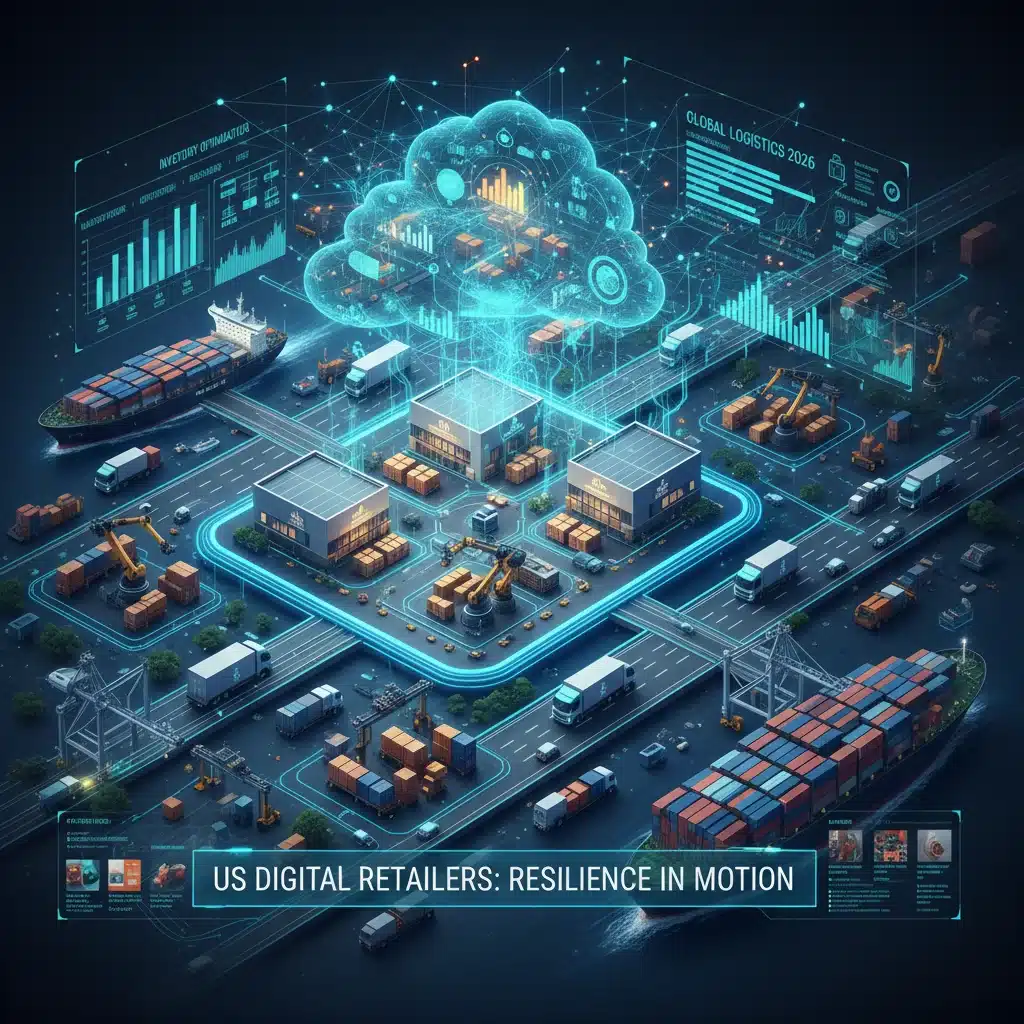
- Control Tower Solutions: Establishing a centralised ‘control tower’ that integrates data from various sources (suppliers, carriers, warehouses, sales) to provide a holistic view of the supply chain. This enables faster decision-making and coordinated responses to disruptions, significantly boosting retail logistics resilience.
- Data Sharing and Collaboration: Fostering an environment of transparent data sharing with key supply chain partners. This collaborative approach ensures that all stakeholders have access to the same critical information, leading to more synchronised and effective responses.
2. Diversification and Redundancy
Relying on a single source or a limited number of suppliers and transportation routes is a recipe for disaster in an unpredictable world. Diversification and redundancy are crucial for mitigating risks and enhancing retail logistics resilience.
- Multi-Sourcing Strategies: Identifying and onboarding multiple suppliers for critical components and products across different geographical regions. This reduces dependence on any single vendor or country, buffering against regional disruptions.
- Geographic Dispersion: Spreading inventory across multiple distribution centres and fulfilment nodes, rather than concentrating it in a few locations. This ensures that even if one facility is impacted, others can pick up the slack.
- Alternative Transportation Routes: Developing contingency plans for alternative shipping methods and routes. For example, having options for air freight when sea freight is delayed, or using different ports to avoid congestion.
- Safety Stock and Buffer Inventory: Maintaining strategic levels of safety stock for high-demand or critical items. While this can increase carrying costs, it provides a crucial buffer during unexpected supply chain interruptions, a cornerstone of retail logistics resilience.
3. Agility and Flexibility in Operations
An agile supply chain can quickly adapt to changing circumstances, whether it’s a sudden surge in demand or an unforeseen disruption. Flexibility in operations is key to maintaining momentum and customer satisfaction.
- Modular Supply Chain Design: Designing supply chains with modular components that can be easily reconfigured or scaled up/down as needed. This allows for rapid adjustments to production, warehousing, and distribution strategies.
- Dynamic Fulfilment Options: Implementing dynamic fulfilment strategies, such as dropshipping, ship-from-store, and micro-fulfilment centres, to offer flexible delivery options and reduce reliance on traditional large-scale distribution centres.
- Flexible Labour Models: Utilising flexible workforce solutions, including temporary staff and automation, to quickly scale labour up or down based on demand fluctuations.
- Rapid Response Protocols: Developing clear, pre-defined protocols for responding to various types of disruptions, including communication plans, alternative sourcing procedures, and crisis management teams. These protocols are vital for effective retail logistics resilience.

Leveraging Technology for Future-Proof Retail Logistics Resilience
Technology is not merely an enabler; it is the backbone of modern retail logistics resilience. US digital retailers must strategically invest in and integrate advanced technologies to build truly robust and adaptive supply chains by 2026.
1. Artificial Intelligence and Machine Learning (AI/ML)
AI and ML are transforming every aspect of the supply chain, offering unparalleled capabilities for optimisation and prediction.
- Demand Forecasting: AI algorithms can analyse vast datasets to predict demand with greater accuracy, accounting for seasonality, promotions, external events, and even social media sentiment. This enables more precise inventory planning and reduces stockouts or overstocking.
- Route Optimisation: ML-powered systems can dynamically optimise delivery routes in real-time, considering traffic, weather, delivery windows, and vehicle capacity. This enhances efficiency, reduces fuel costs, and improves delivery speed.
- Risk Management: AI can continuously monitor global events and supply chain data to identify potential risks, such as supplier insolvency, port congestion, or natural disasters, providing early warnings and recommended mitigation strategies to bolster retail logistics resilience.
- Automated Warehousing: AI-driven robotics and automation in warehouses can significantly increase throughput, reduce errors, and improve operational efficiency, especially during peak seasons.
2. Internet of Things (IoT)
IoT devices provide the real-time data that fuels AI and ML applications, offering granular visibility into every stage of the supply chain.
- Asset Tracking: IoT sensors attached to products, pallets, and vehicles provide real-time location and condition monitoring, ensuring product integrity and preventing loss or theft.
- Environmental Monitoring: For sensitive goods, IoT sensors can monitor temperature, humidity, and other environmental factors throughout transit and storage, ensuring compliance and quality control.
- Preventive Maintenance: IoT sensors on machinery and vehicles can predict potential failures, allowing for proactive maintenance and reducing unexpected downtime, crucial for maintaining retail logistics resilience.
3. Blockchain Technology
Blockchain offers a secure, transparent, and immutable ledger for supply chain transactions, enhancing trust and traceability.
- Enhanced Traceability: Blockchain can create an unalterable record of a product’s journey from raw material to consumer, improving transparency and facilitating recalls if necessary.
- Fraud Prevention: The secure nature of blockchain makes it difficult to tamper with records, reducing fraud and counterfeiting within the supply chain.
- Streamlined Payments: Smart contracts on a blockchain can automate payments upon delivery or completion of milestones, speeding up transactions and reducing administrative overhead.
4. Cloud-Based Supply Chain Management (SCM) Platforms
Cloud-based SCM solutions offer scalability, accessibility, and integration capabilities that are vital for modern retail logistics resilience.
- Integrated Systems: Cloud platforms can integrate various disparate systems (ERP, WMS, TMS, CRM) into a single, cohesive ecosystem, providing a unified view of operations.
- Scalability: Cloud infrastructure allows retailers to easily scale their SCM capabilities up or down based on business needs, without significant upfront investment in hardware.
- Collaboration: Cloud-based platforms facilitate seamless collaboration with suppliers, carriers, and other partners, enabling real-time information exchange and coordinated actions.
The Human Element: People and Partnerships
While technology is crucial, the human element remains indispensable. Building retail logistics resilience also hinges on strong leadership, skilled personnel, and robust partnerships.
1. Skilled Workforce and Talent Development
A resilient supply chain requires a workforce equipped with the right skills to manage complex technologies and adapt to rapid changes.
- Training and Upskilling: Investing in continuous training for employees in areas such as data analytics, AI tools, and advanced logistics management.
- Attracting Talent: Developing strategies to attract and retain talent in a competitive labour market, particularly for roles in logistics, technology, and data science.
- Cross-functional Teams: Fostering collaboration between different departments (e.g., procurement, sales, IT, logistics) to ensure a holistic approach to supply chain management and problem-solving.
2. Strategic Partnerships and Collaboration
No single retailer can achieve ultimate retail logistics resilience in isolation. Strong partnerships are essential.
- Supplier Relationships: Cultivating deep, collaborative relationships with key suppliers, moving beyond transactional interactions to strategic alliances. This includes sharing forecasts, collaborating on product development, and jointly developing contingency plans.
- Logistics Service Providers (LSPs): Partnering with agile and technologically advanced 3PLs and 4PLs that can offer flexible solutions, access to wider networks, and expertise in various logistics domains.
- Industry Collaboration: Participating in industry forums and initiatives to share best practices, collaborate on common challenges, and advocate for infrastructure improvements.
- Government and Regulatory Engagement: Staying abreast of and engaging with government policies and regulations that impact supply chains, ensuring compliance and advocating for favourable conditions.

Case Studies and Best Practices in Retail Logistics Resilience
Examining companies that have successfully navigated recent disruptions provides valuable insights into effective strategies for retail logistics resilience. While specific company names might be proprietary, the underlying principles are universal.
- Agile Inventory Management: A leading apparel retailer implemented an AI-driven inventory management system that allowed them to dynamically shift stock between stores and distribution centres based on real-time demand and local disruptions. This significantly reduced overstocking in some regions and stockouts in others during peak season.
- Regional Hub Strategy: A major electronics e-tailer invested in a network of smaller, regionally dispersed micro-fulfilment centres. This reduced reliance on large central warehouses and allowed them to maintain faster delivery times even when one hub faced operational issues due to severe weather.
- Supplier Ecosystem Development: A home goods digital brand actively worked with its key international suppliers to help them adopt digital tools and improve their own resilience. This involved co-investing in technology and sharing best practices, creating a stronger, more interconnected supply chain.
- Blockchain for Perishables: A gourmet food delivery service implemented blockchain to track fresh produce from farm to customer. This not only ensured transparency and food safety but also allowed them to quickly identify and isolate contaminated batches, preventing widespread issues and maintaining consumer trust in their retail logistics resilience.
The Road Ahead: Preparing for 2026 and Beyond
The journey towards optimal retail logistics resilience is continuous. It requires ongoing assessment, adaptation, and investment. For US digital retailers, the next few years will be critical in solidifying their supply chain strategies.
- Regular Risk Assessments: Conducting frequent and thorough risk assessments to identify emerging threats and vulnerabilities within the supply chain. This should include scenario planning for various types of disruptions.
- Continuous Improvement: Adopting a culture of continuous improvement, where supply chain processes are constantly reviewed, refined, and optimised based on performance data and feedback.
- Sustainability Integration: Integrating sustainability goals into supply chain strategies. Resilient supply chains are often sustainable ones, as they prioritise efficiency, waste reduction, and ethical sourcing, which can also mitigate long-term risks.
- Customer-Centricity: Always keeping the customer at the forefront of supply chain decisions. A resilient supply chain ultimately serves to maintain customer satisfaction and loyalty, even during challenging times.
The imperative to build robust retail logistics resilience by 2026 is clear. Those US digital retailers who proactively embrace these strategies will not only survive the inevitable disruptions but will emerge stronger, more efficient, and better positioned for long-term success in the dynamic world of e-commerce. The investment in visibility, diversification, agility, technology, and strategic partnerships is an investment in the future of digital retail itself.
Conclusion: A Resilient Future for Digital Retail
The challenges facing US digital retailers as we approach 2026 are substantial, yet surmountable. By focusing on building comprehensive retail logistics resilience, businesses can transform potential threats into opportunities for innovation and competitive advantage. The strategies outlined—from enhancing visibility and diversifying operations to leveraging cutting-edge technologies like AI, IoT, and blockchain, and fostering strong human capital and partnerships—form a robust framework for navigating the complexities of modern commerce. The future of digital retail belongs to those who are prepared, agile, and committed to continuous improvement in their supply chain operations. Embracing these principles for retail logistics resilience will not only safeguard against future disruptions but will also pave the way for a more efficient, sustainable, and customer-centric future for the entire digital retail ecosystem.