Navigating US Data Privacy Laws: E-commerce Compliance by June 2026

The digital landscape is constantly evolving, and with it, the regulatory framework governing how businesses handle personal data. For e-commerce businesses operating in the United States, the period leading up to June 2026 marks a critical juncture. A patchwork of new and evolving state-level data privacy laws is creating a complex compliance environment that demands proactive attention. Failing to adapt can result in significant financial penalties, reputational damage, and a loss of customer trust. This comprehensive guide will walk you through the essential steps to ensure your e-commerce business is well-prepared to navigate these new US data privacy laws.
The urgency stems from the increasing number of states enacting their own comprehensive data privacy legislation, often inspired by groundbreaking laws like the California Consumer Privacy Act (CCPA) and Europe’s General Data Protection Regulation (GDPR). While there isn’t a single federal data privacy law comparable to GDPR, the cumulative effect of these state laws creates a de facto national standard that e-commerce businesses must address. By June 2026, several key provisions and new state laws will be fully in effect, making it imperative for businesses to review, revise, and reinforce their data handling practices.
Our focus today is on providing actionable insights into three key compliance steps that will form the backbone of your strategy. These steps are designed to be foundational, addressing the core requirements across various US data privacy laws, thereby streamlining your compliance efforts. Understanding and implementing these steps will not only help you meet legal obligations but also build a stronger, more trustworthy relationship with your customers.
Understanding the Evolving US Data Privacy Landscape
Before diving into the compliance steps, it’s crucial to grasp the scope and nature of the US data privacy landscape. Unlike the European Union’s unified GDPR, the United States has adopted a sectoral approach, meaning different laws apply to different types of data or industries (e.g., HIPAA for health information, GLBA for financial institutions). However, the recent trend has been towards comprehensive state-level privacy laws that grant consumers significant rights over their personal data and impose strict obligations on businesses. By June 2026, several more states are expected to have their laws either fully implemented or with key provisions taking effect, adding layers of complexity for businesses that operate nationally.
Key State Data Privacy Laws to Watch
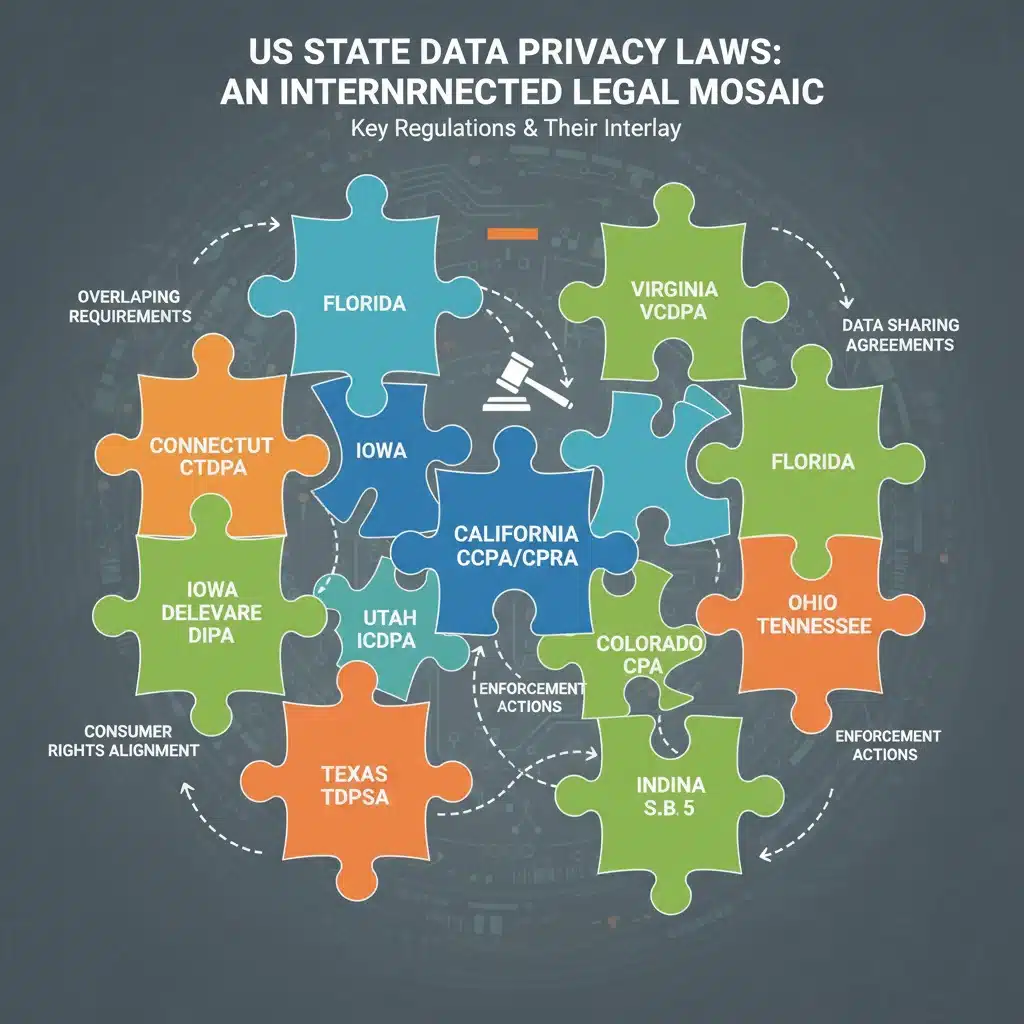
While an exhaustive list is beyond the scope of this article, here are some of the most prominent state laws impacting e-commerce:
- California Consumer Privacy Act (CCPA) / California Privacy Rights Act (CPRA): Often considered the gold standard in the US, the CPRA expanded upon the CCPA, granting consumers more rights, establishing the California Privacy Protection Agency (CPPA), and imposing stricter requirements on businesses. It covers rights like access, deletion, correction, and opt-out of sale or sharing of personal information.
- Virginia Consumer Data Protection Act (VCDPA): Similar to CCPA in spirit, VCDPA applies to businesses that conduct business in Virginia or produce products/services targeted to Virginia residents and either control or process personal data of 100,000+ consumers, or control or process personal data of 25,000+ consumers and derive over 50% of gross revenue from the sale of personal data.
- Colorado Privacy Act (CPA): Effective July 1, 2023, the CPA grants Colorado consumers rights similar to those in California and Virginia, including the right to opt out of targeted advertising and the sale of personal data.
- Utah Consumer Privacy Act (UCPA): Effective December 31, 2023, the UCPA is considered more business-friendly, with narrower definitions and a higher threshold for applicability.
- Connecticut Data Privacy Act (CTDPA): Effective July 1, 2023, the CTDPA is comprehensive and includes provisions for universal opt-out mechanisms.
Many other states, such as Iowa, Indiana, Montana, Tennessee, and more, have also passed or are in the process of passing similar legislation. The common thread among these laws is the empowerment of consumers with rights over their data and the imposition of accountability on businesses for how they collect, use, store, and share that data. For an e-commerce business, this means understanding which laws apply based on where your customers reside and ensuring your practices meet the highest common denominator of these regulations.
Why June 2026 is a Crucial Deadline
The period leading up to June 2026 is not a single deadline but rather a continuous rollout of new laws and enforcement mechanisms. Many businesses are still grappling with the complexities introduced by earlier laws, and the continuous addition of new state regulations means that a robust, adaptable compliance framework is essential. By setting June 2026 as a strategic target, businesses can aim to have a mature and comprehensive data privacy program in place, mitigating risks associated with the full enforcement of these diverse laws.
Now, let’s delve into the three key compliance steps that will help your e-commerce business navigate these new US data privacy laws effectively.
Step 1: Conduct a Thorough Data Inventory and Mapping
The first and arguably most critical step in achieving compliance with US data privacy laws is to gain a complete understanding of the data your e-commerce business collects, processes, stores, and shares. This involves a comprehensive data inventory and mapping exercise.
What is Data Inventory and Mapping?
Data inventory is the process of identifying all personal data collected by your business. This includes customer names, addresses, email addresses, payment information, browsing history, purchase history, IP addresses, device identifiers, and any other information that can directly or indirectly identify an individual. It also extends to employee data, vendor data, and any other personal information your business handles.
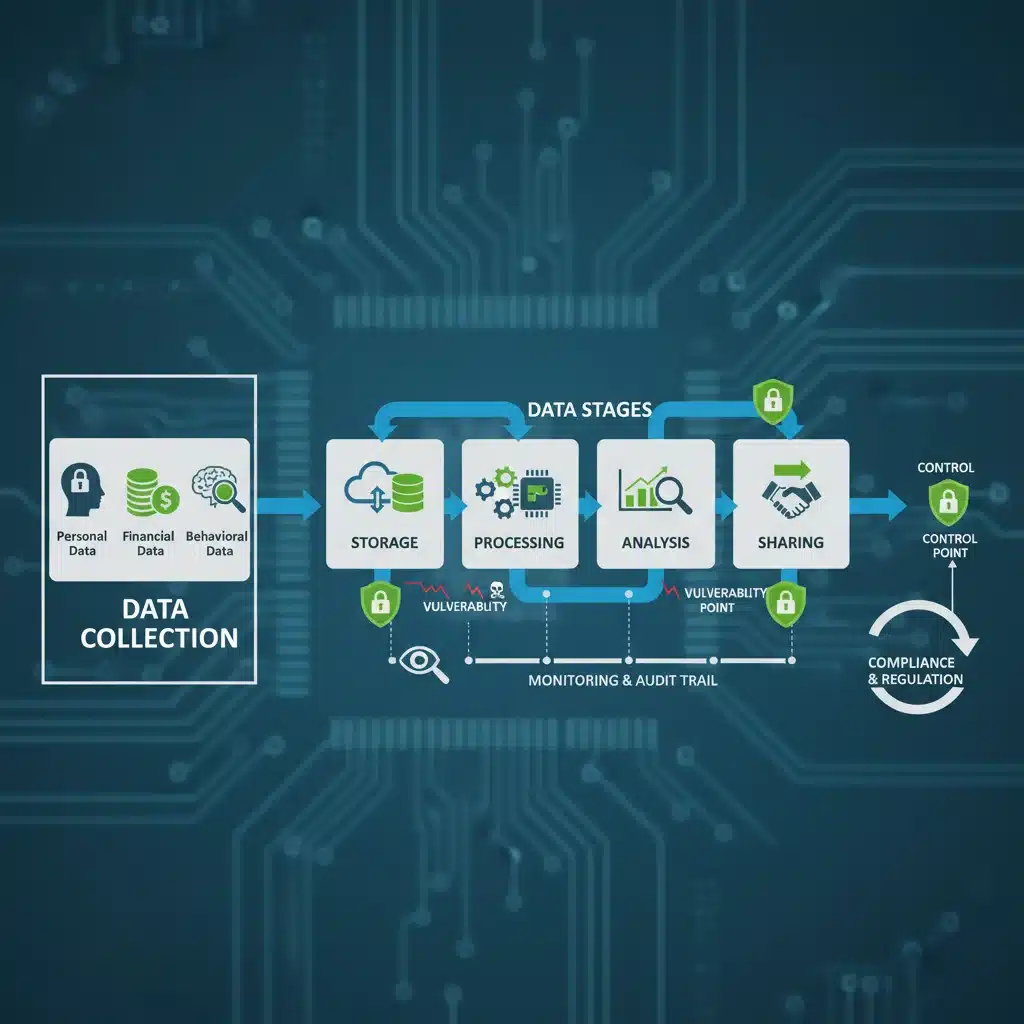
Data mapping takes the inventory a step further by documenting the flow of this data throughout your organization. This means tracking:
- Where data is collected: (e.g., website forms, cookies, third-party integrations, customer service interactions).
- How data is used: (e.g., order fulfillment, marketing, analytics, personalization, customer support).
- Where data is stored: (e.g., databases, cloud services, CRM systems, physical files).
- Who has access to the data: (e.g., internal departments, third-party vendors, marketing partners).
- How data is shared: (e.g., with payment processors, shipping carriers, advertising networks, analytics providers).
- How long data is retained: (e.g., data retention policies and schedules).
- How data is secured: (e.g., encryption, access controls, physical security).
Why is this Step Crucial for E-commerce?
For e-commerce businesses, personal data is the lifeblood of operations. From processing transactions to personalizing shopping experiences and targeted advertising, data is central. Without a clear picture of your data ecosystem, it’s impossible to:
- Identify applicable laws: Knowing where your customers reside and what data you collect from them helps determine which state laws apply.
- Assess risk: Pinpoint areas where data might be vulnerable or where processing activities might not align with privacy principles.
- Respond to Data Subject Requests (DSRs): Consumers have rights to access, delete, and correct their data. You can’t fulfill these requests efficiently if you don’t know where the data is.
- Update privacy policies: An accurate data map ensures your privacy policy genuinely reflects your data practices.
- Manage third-party risks: E-commerce often relies heavily on third-party vendors (e.g., payment gateways, shipping providers, marketing platforms). Data mapping helps you understand what data is shared with them and ensures they also comply.
- Implement data minimization: Only collect data that is necessary for a specific purpose, a key privacy principle. Data mapping helps identify superfluous data collection.
Practical Steps for Data Inventory and Mapping:
- Form a cross-functional team: Involve representatives from IT, legal, marketing, customer service, and product development.
- Use questionnaires and interviews: Survey different departments to understand their data handling practices.
- Categorize data: Classify data by type (e.g., personally identifiable information, sensitive personal information), purpose, and legal basis for processing.
- Document data flows: Create visual diagrams or flowcharts to illustrate how data moves through your systems.
- Identify data owners and custodians: Assign responsibility for managing specific datasets.
- Review data retention policies: Ensure data is not kept longer than necessary and is securely disposed of.
- Regularly update: Data environments are dynamic. Make data inventory and mapping an ongoing process, not a one-time event.
Investing in specialized tools for data discovery and mapping can significantly streamline this process, especially for larger e-commerce businesses with complex IT infrastructures. This foundational step provides the clarity needed to proceed with the next stages of compliance with confidence.
Step 2: Implement Robust Consumer Rights Management Mechanisms
A cornerstone of modern US data privacy laws is the empowerment of consumers with significant rights over their personal data. For e-commerce businesses, this translates into a mandatory requirement to implement effective mechanisms for managing and responding to these "Data Subject Requests" (DSRs).
Understanding Consumer Rights
While the exact terminology and scope may vary slightly by state law, the core consumer rights typically include:
- Right to Know/Access: Consumers can request to know what personal data a business has collected about them, the categories of sources from which it was collected, the business or commercial purpose for collecting, selling, or sharing it, and the categories of third parties to whom it was disclosed.
- Right to Deletion: Consumers can request that a business delete personal data collected from them, subject to certain exceptions (e.g., completing a transaction, detecting security incidents).
- Right to Correction/Rectification: Consumers can request that inaccurate personal data about them be corrected.
- Right to Opt-Out of Sale/Sharing: Consumers have the right to opt out of the sale or sharing of their personal data for targeted advertising purposes.
- Right to Limit Use and Disclosure of Sensitive Personal Information: In some states, consumers can limit the use and disclosure of sensitive personal data (e.g., health information, racial or ethnic origin, precise geolocation).
- Right to Non-Discrimination: Businesses cannot discriminate against consumers for exercising their privacy rights.
Designing Effective DSR Mechanisms for E-commerce
E-commerce businesses must provide clear, accessible, and user-friendly methods for consumers to exercise these rights. This typically involves:
- Dedicated Privacy Portal/Webform: The most common and recommended approach is to create a dedicated section on your website (e.g., a "Privacy Center" or "Your Privacy Rights" page) with a clear webform for submitting DSRs. This centralizes requests and ensures all necessary information is collected.
- Toll-Free Phone Number: Many laws, particularly CCPA/CPRA, require a toll-free phone number as an alternative method for submitting requests. Ensure this number is clearly advertised in your privacy policy.
- "Do Not Sell or Share My Personal Information" Link: This prominent link must be on your website’s homepage and in your privacy policy, allowing users to easily opt out of the sale or sharing of their data. This often leads to a preference center where users can manage their consent settings.
- Universal Opt-Out Mechanisms: Some laws, like the CTDPA and CPRA, mandate recognition of universal opt-out signals (e.g., Global Privacy Control – GPC). Your website should be configured to detect and honor these signals.
- Clear Verification Process: Before fulfilling a DSR, you must reasonably verify the identity of the person making the request. This is crucial to prevent unauthorized access or deletion of personal data. The verification process should be proportionate to the sensitivity of the data and the risk of harm.
- Defined Response Timelines: Each state law specifies strict timelines for acknowledging and responding to DSRs (e.g., 45 days, with a possible 45-day extension). Your internal processes must be streamlined to meet these deadlines.
- Internal Procedures and Training: Develop clear internal policies and train relevant staff (e.g., customer service, IT, legal) on how to receive, verify, process, and respond to DSRs.
Challenges and Solutions for E-commerce
- Volume of Requests: High customer volumes can lead to a large number of DSRs. Automating parts of the DSR fulfillment process using privacy management platforms can be highly beneficial.
- Data Fragmentation: If your data inventory (Step 1) revealed data spread across many systems, fulfilling DSRs can be challenging. A robust data map is essential here.
- Third-Party Data Sharing: When a consumer requests deletion, you must also notify any third parties with whom you’ve shared their data to delete it. This requires clear contractual agreements and communication channels with your vendors.
- Exceptions to Rights: Understand the legal exceptions to deletion or access requests. For example, you may need to retain certain data for transactional records, legal obligations, or security purposes.
Effective DSR management is not just a legal requirement; it’s a critical component of building customer trust. Transparency and responsiveness in handling privacy requests demonstrate your commitment to respecting consumer rights.
Step 3: Revamp Your Privacy Policy and Consent Management
The final key step for e-commerce compliance with new US data privacy laws by June 2026 involves a thorough overhaul of your privacy policy and the implementation of robust consent management practices. These elements are the public face of your data privacy commitment and the operational backbone for respecting user choices.
Modernizing Your Privacy Policy
Your privacy policy is more than just a legal document; it’s a communication tool. It must accurately reflect your data practices (informed by your data inventory and mapping) and clearly inform consumers of their rights. Key updates for e-commerce privacy policies include:
- Clarity and Readability: Avoid overly technical jargon. Use plain language that is easy for the average consumer to understand. Structure it with clear headings and a table of contents.
- Comprehensive Data Disclosure: Clearly articulate:
- What personal data you collect (categories and specific examples).
- The sources from which data is collected (e.g., directly from users, cookies, third parties).
- The business and commercial purposes for collecting, using, selling, or sharing data.
- The categories of third parties with whom data is shared or sold.
- Your data retention periods.
- Explicit Consumer Rights Section: Dedicate a clear section to explain consumers’ rights under applicable state laws (e.g., right to know, delete, correct, opt-out). Provide clear instructions on how to exercise these rights, including links to your privacy portal and contact information.
- "Do Not Sell or Share" Information: Provide clear instructions and a link for consumers to opt out of the sale or sharing of their personal information for targeted advertising.
- Sensitive Personal Information: If you collect sensitive personal information, clearly state the types of data collected, the purposes, and any mechanisms for consumers to limit its use and disclosure.
- Cookie Policy Integration: While often a separate document, ensure your privacy policy clearly references and links to your cookie policy, explaining how you use cookies and other tracking technologies.
- Date of Last Update: Always include the date your privacy policy was last updated to show transparency and ongoing review.
Implementing Robust Consent Management
Consent is a critical legal basis for processing personal data, especially for marketing activities, non-essential cookies, and the sale/sharing of data. E-commerce businesses must move beyond passive consent (e.g., "by using this site, you agree") to active, granular consent mechanisms.
Key aspects of consent management include:
- Cookie Consent Banners: Implement a robust cookie consent management platform (CMP) that allows users to:
- Accept all cookies.
- Reject all non-essential cookies.
- Customize their cookie preferences (e.g., accept analytics but reject advertising cookies).
- Clearly understand the purpose of each cookie category.
- Opt-in for Marketing Communications: Obtain explicit, affirmative consent (opt-in) before sending marketing emails, SMS, or other promotional communications. This means a clear checkbox that is not pre-ticked.
- Granular Consent: Where possible, provide options for users to consent to different types of data processing separately. For example, consent for order processing might be separate from consent for personalized recommendations.
- Record Keeping: Maintain detailed records of consent, including when and how it was obtained, what information was presented to the user, and what choices they made. This is crucial for demonstrating compliance.
- Easy Withdrawal of Consent: Make it as easy for users to withdraw consent as it was to give it. This means clear unsubscribe links in emails, and accessible preference centers on your website.
- Periodic Review: Regularly review your consent mechanisms to ensure they remain compliant with evolving legal requirements and best practices.
Integrating Consent with E-commerce Operations
For e-commerce, consent management needs to be seamlessly integrated into the customer journey:
- Checkout Process: Clearly separate essential data collection for order fulfillment from optional data collection for marketing.
- Account Creation: Provide clear options for marketing preferences during account creation.
- Website Functionality: Ensure that disabling non-essential cookies does not break core website functionality.
- Third-Party Integrations: Verify that all third-party tools and integrations (e.g., analytics, advertising platforms) respect and integrate with your consent management system.
By revamping your privacy policy and implementing robust consent management, your e-commerce business not only demonstrates compliance but also fosters transparency and builds trust with your customer base, which is invaluable in today’s privacy-conscious market.
Beyond the Three Steps: Ongoing Compliance and Best Practices
While the three steps outlined above – data inventory and mapping, consumer rights management, and privacy policy/consent – form the bedrock of your compliance strategy, navigating US data privacy laws is an ongoing journey. The landscape is dynamic, with new legislation continually emerging and enforcement actions shaping interpretations. To maintain compliance and build a privacy-first e-commerce operation, consider these additional best practices:
Regular Compliance Audits and Updates
Data privacy is not a "set it and forget it" task. Conduct regular internal audits of your data practices, DSR processes, and privacy policy. Stay informed about new state laws and amendments, and proactively update your compliance framework. Consider engaging legal counsel specializing in data privacy to perform periodic reviews and ensure you remain aligned with the latest requirements.
Vendor Due Diligence and Data Processing Agreements (DPAs)
E-commerce businesses often rely on a multitude of third-party vendors for everything from payment processing and shipping to marketing automation and analytics. Each vendor that processes personal data on your behalf represents a potential compliance risk. It is crucial to:
- Conduct thorough due diligence: Vet potential vendors for their data security and privacy practices.
- Execute Data Processing Agreements (DPAs): Ensure you have robust DPAs in place with all vendors. These agreements should clearly define the roles and responsibilities of each party, outline data protection measures, and specify how DSRs and data breaches will be handled.
- Monitor Vendor Compliance: Don’t just sign the DPA and forget it. Periodically review your vendors’ compliance with their contractual obligations and relevant privacy laws.
Data Security Measures
While often discussed separately, data security is inextricably linked to data privacy. Most privacy laws implicitly or explicitly require businesses to implement reasonable security measures to protect personal data from unauthorized access, use, disclosure, alteration, or destruction. For e-commerce, this means:
- Encryption: Encrypt sensitive data both in transit and at rest.
- Access Controls: Implement strong access controls, ensuring only authorized personnel can access personal data.
- Regular Security Audits: Conduct penetration testing and vulnerability assessments.
- Incident Response Plan: Develop and regularly test a comprehensive data breach incident response plan.
- Employee Training: Train all employees on data security best practices and their role in protecting personal data.
Privacy by Design and Default
Integrate privacy considerations into the design and development of all your e-commerce products, services, and systems from the outset. This "Privacy by Design" approach means:
- Data Minimization: Only collect the personal data that is absolutely necessary for a specific purpose.
- Purpose Limitation: Use personal data only for the purposes for which it was collected and consented to.
- Security by Design: Build security into your systems from the ground up.
- Default Privacy Settings: Set the most privacy-protective options as the default for users.
Employee Training and Awareness
Your employees are your first line of defense against privacy breaches and non-compliance. Regular and comprehensive training is essential. This training should cover:
- The importance of data privacy.
- Relevant company policies and procedures.
- How to identify and respond to DSRs.
- How to handle personal data securely.
- What to do in case of a suspected data breach.
Documentation and Accountability
Maintain thorough documentation of all your privacy practices, policies, procedures, and decisions. This includes your data inventory and mapping, DSR records, consent records, vendor agreements, and audit reports. In the event of an inquiry from regulators, robust documentation demonstrates your commitment to accountability and compliance.
Conclusion: Proactive Compliance for Sustainable E-commerce Growth
The evolving landscape of US data privacy laws presents both challenges and opportunities for e-commerce businesses. While the compliance burden can seem daunting, a proactive and strategic approach is vital. By focusing on the three key steps – conducting a thorough data inventory and mapping, implementing robust consumer rights management mechanisms, and revamping your privacy policy and consent management – you lay a strong foundation for compliance by June 2026.
Beyond these foundational steps, embracing ongoing audits, diligent vendor management, strong data security, privacy by design principles, and continuous employee training will solidify your position as a trustworthy and compliant e-commerce entity. Navigating these new US data privacy laws is not just about avoiding penalties; it’s about building lasting customer trust, enhancing your brand reputation, and fostering sustainable growth in a privacy-conscious digital world. Start your compliance journey today to ensure your e-commerce business is well-prepared for the future of data privacy.