US E-commerce Data Privacy: Q1 2026 Compliance Updates

The digital storefront of today’s e-commerce landscape is a bustling hub of innovation, convenience, and, increasingly, complex regulatory challenges. For businesses operating within the United States, understanding and adapting to the ever-evolving domain of e-commerce data privacy is not merely a best practice; it’s an absolute imperative. As we approach Q1 2026, a series of critical updates are poised to reshape how online retailers collect, process, store, and share consumer data. Failing to prepare for these shifts can lead to significant financial penalties, irreparable damage to brand reputation, and a loss of consumer trust. This comprehensive guide will dissect three pivotal updates in US e-commerce data privacy for Q1 2026, offering actionable insights and strategies to ensure your business remains compliant and thrives in this dynamic environment.
The Shifting Sands of US E-commerce Data Privacy: Why Q1 2026 Matters
The United States, unlike the European Union with its unified GDPR, has historically adopted a patchwork approach to data privacy. This fragmented landscape, characterized by state-specific laws like the California Consumer Privacy Act (CCPA) and its successor, the California Privacy Rights Act (CPRA), along with similar statutes in Virginia (VCDPA), Colorado (CPA), Utah (UCPA), and Connecticut (CTDPA), creates a significant compliance burden for e-commerce businesses. Q1 2026 is shaping up to be a critical juncture due to several factors: the maturation and full enforcement of newer state laws, the potential for new federal initiatives, and the increasing sophistication of consumer expectations regarding their digital rights. Businesses that proactively address these changes will not only mitigate risk but also build stronger, more trustworthy relationships with their customer base, a crucial differentiator in a competitive market.
The emphasis on e-commerce data privacy is not just a legal one; it’s a fundamental aspect of modern business ethics. Consumers are more aware than ever of the value of their personal information and are increasingly demanding transparency and control. A recent survey indicated that a significant percentage of consumers would cease doing business with a company that experienced a data breach or mishandled their personal data. This consumer sentiment underscores the necessity for robust privacy frameworks that go beyond mere legal checkboxes and genuinely prioritize data protection. The upcoming changes in Q1 2026 will further solidify this trend, making proactive adaptation a cornerstone of sustainable e-commerce growth.
Critical Update 1: Enhanced Consumer Data Rights and Opt-Out Mechanisms
One of the most significant trends in US e-commerce data privacy is the expansion of consumer rights, particularly concerning their ability to control how their data is collected, used, and shared. Q1 2026 will see a bolstering of these rights, moving beyond simple ‘do not sell’ options to more granular control over various data processing activities. This includes, but is not limited to, the right to access, correct, delete, and restrict the processing of personal data. E-commerce businesses must prepare to implement more sophisticated mechanisms to honor these requests promptly and efficiently.
Key Implications for E-commerce:
- Granular Consent Management: Websites will likely need to offer more detailed consent options beyond simple cookie banners. Consumers might be able to opt-out of specific data uses (e.g., targeted advertising, analytics) while consenting to others. This requires a robust Consent Management Platform (CMP) that can handle complex preferences.
- Streamlined Data Subject Access Requests (DSARs): The process for consumers to request access to or deletion of their data must be frictionless and easily discoverable. Businesses should review their DSAR portals and workflows to ensure they meet heightened accessibility and response time requirements. Failure to respond within specified timeframes can lead to non-compliance fines.
- Universal Opt-Out Signals: While not universally mandated yet, the trend towards recognizing universal opt-out signals (like Global Privacy Control, GPC) is gaining momentum. E-commerce platforms should begin assessing their technical capabilities to detect and honor such signals, which could become a de facto standard for e-commerce data privacy.
- Right to Correction: Beyond deletion, consumers are increasingly gaining the right to correct inaccurate personal data held by businesses. This necessitates internal processes for data validation and amendment upon consumer request.
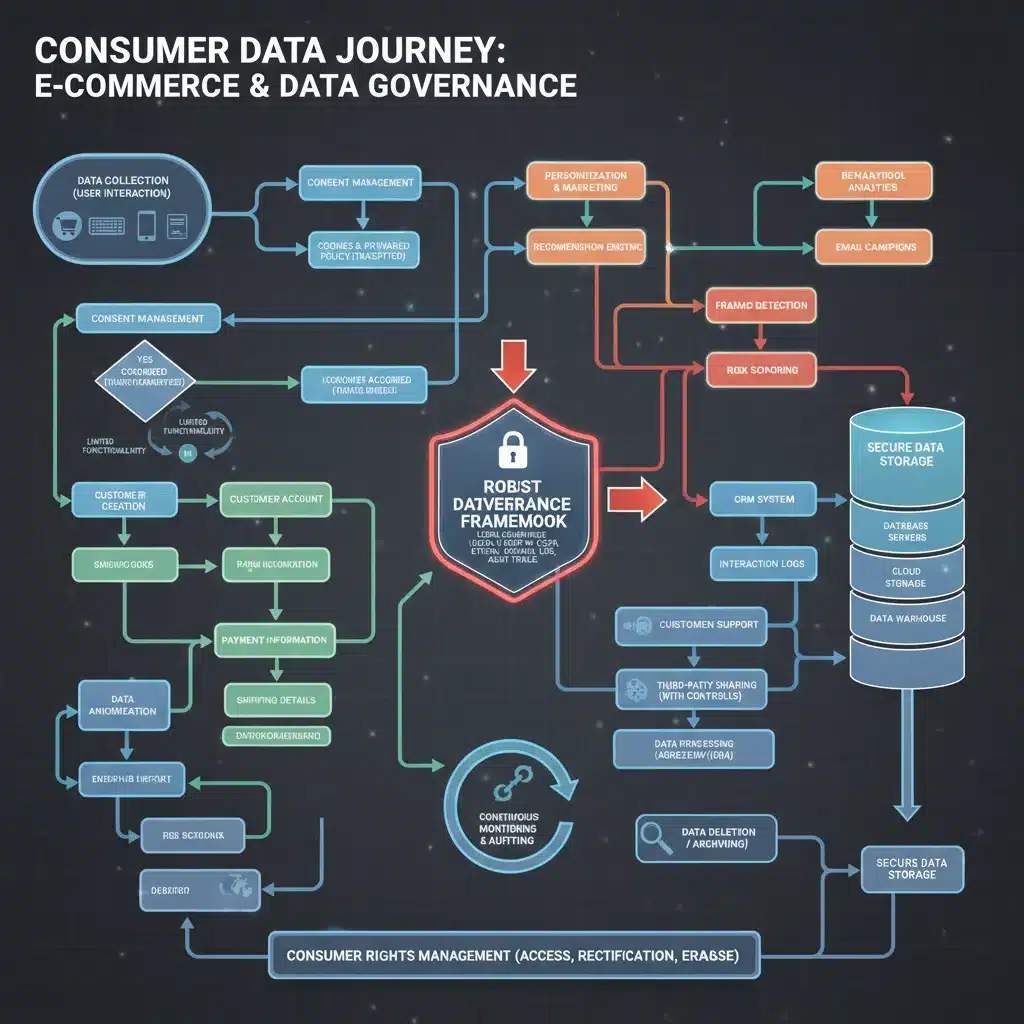
To prepare for these enhanced rights, e-commerce businesses should conduct a thorough audit of their current data collection practices and privacy policies. Map out all data flows, identify where consumer data is stored, and who has access to it. This data mapping exercise is crucial for understanding the scope of your obligations and for building effective response mechanisms for DSARs and consent management. Investing in privacy-enhancing technologies and training staff on new procedures will be paramount.
Critical Update 2: Stricter Data Security and Breach Notification Requirements
The second major area of focus for Q1 2026 in e-commerce data privacy revolves around data security and the protocols surrounding data breaches. With cyber threats becoming more sophisticated, regulatory bodies are pushing for more stringent security measures and faster, more transparent breach notification processes. The goal is to minimize harm to consumers when incidents occur and hold businesses more accountable for protecting the data entrusted to them.
Key Implications for E-commerce:
- Mandatory Data Security Assessments: Some jurisdictions may introduce requirements for regular, independent data security assessments or certifications. E-commerce businesses should already be implementing robust security frameworks (e.g., ISO 27001, NIST) but may need to demonstrate compliance more formally.
- Enhanced Encryption Standards: Expect increased scrutiny on the encryption of data both in transit and at rest. Outdated encryption protocols will no longer suffice. Businesses should review and upgrade their encryption practices, especially for sensitive customer information like payment details and personal identifiers.
- Expedited Breach Notification Timelines: The window for notifying affected individuals and regulatory bodies about a data breach is likely to shrink in some areas. Current state laws vary, but the trend is towards shorter notification periods (e.g., 72 hours or even less in some cases). E-commerce businesses must have incident response plans that allow for rapid detection, assessment, and communication.
- Content of Breach Notifications: The information required in breach notifications may become more prescriptive, demanding greater detail about the nature of the breach, the types of data compromised, and specific steps consumers can take to protect themselves. Generic notifications will be insufficient.
- Vendor Security Vetting: As e-commerce relies heavily on third-party vendors (payment processors, cloud providers, marketing platforms), businesses will face increased responsibility for ensuring their vendors also adhere to high data security standards. Due diligence and contractual agreements with robust data protection clauses will be essential.
To meet these heightened security and notification requirements, e-commerce businesses should establish a comprehensive incident response plan, conduct regular penetration testing and vulnerability assessments, and invest in advanced threat detection systems. Employee training on data security best practices is also critical, as human error remains a significant factor in many data breaches. Furthermore, review all third-party contracts to ensure they align with your increased obligations regarding e-commerce data privacy and security.
Critical Update 3: Evolution of Cross-Context Behavioral Advertising Regulations
The third significant update for Q1 2026 concerns the evolving regulatory stance on cross-context behavioral advertising (CCBA). This refers to the practice of targeting advertisements to consumers based on their activity across different websites, applications, or services that are not operated by the same entity. While highly effective for marketers, CCBA has been a focal point of privacy concerns due to its intrusive nature and the potential for extensive data aggregation without explicit consumer understanding or consent. Regulators are increasingly looking to restrict or require explicit opt-in for such practices.
Key Implications for E-commerce:
- Stricter Definitions of ‘Selling’ and ‘Sharing’: Laws like the CPRA have broadened the definition of ‘selling’ to include ‘sharing’ data for cross-context behavioral advertising, even without monetary exchange. This means many common marketing practices, previously considered benign, will now fall under stricter regulations.
- Opt-In Requirements for Sensitive Data: While CCBA itself may fall under expanded opt-out rights, the use of ‘sensitive personal information’ (e.g., precise geolocation, health data, racial or ethnic origin) for any advertising purpose, including CCBA, will likely require explicit opt-in consent. E-commerce businesses dealing with such data must adjust their consent mechanisms accordingly.
- Impact on Ad Tech Ecosystem: The entire ad technology ecosystem, including demand-side platforms (DSPs), supply-side platforms (SSPs), and data management platforms (DMPs), will need to adapt. E-commerce businesses relying on these partners must ensure their providers are also compliant with new CCBA regulations.
- Alternative Advertising Strategies: Businesses may need to explore alternative advertising strategies that are less reliant on extensive cross-context tracking, such as contextual advertising, first-party data strategies, or privacy-preserving advertising techniques.
- Auditing Marketing Pixels and Tags: A thorough audit of all marketing pixels, tags, and SDKs embedded on e-commerce websites and apps is essential. Identify which ones facilitate CCBA and assess their compliance with new regulations.
To navigate these changes, e-commerce businesses should prioritize building robust first-party data strategies. Collecting data directly from customers with clear consent for specific uses can reduce reliance on third-party data and mitigate CCBA risks. Re-evaluate your entire digital marketing strategy, focusing on transparency and consumer choice. This may involve re-negotiating contracts with ad tech vendors and exploring new partnerships with privacy-focused advertising platforms. Educating your marketing team on these evolving regulations is also crucial to ensure campaigns remain compliant.
Beyond Compliance: Building a Privacy-First E-commerce Strategy
While the regulatory updates for Q1 2026 present compliance challenges, they also offer an opportunity for e-commerce businesses to differentiate themselves by adopting a privacy-first approach. Moving beyond mere legal adherence to genuinely embedding privacy into your business operations can foster deeper customer trust and loyalty, which are invaluable assets in the digital age.
Key Pillars of a Privacy-First Approach:
- Transparency and Clarity: Ensure your privacy policy is not just legally sound but also easy for consumers to understand. Use plain language, clear headings, and provide examples. Be transparent about what data you collect, why, and how it’s used.
- Data Minimization: Collect only the data that is absolutely necessary for your stated purposes. Review your data collection forms and processes to eliminate superfluous data fields. Less data collected means less risk.
- Purpose Limitation: Use collected data only for the purposes for which it was originally collected and for which you have explicit consent or a legitimate basis. Avoid repurposing data without consumer knowledge and consent.
- Security by Design: Integrate security and privacy considerations into the design and development of all your e-commerce systems, products, and services from the outset, rather than as an afterthought.
- Regular Audits and Assessments: Conduct periodic internal and external audits of your data privacy practices, security measures, and compliance with relevant regulations. This helps identify vulnerabilities and areas for improvement before they become problems.
- Employee Training and Awareness: Your employees are your first line of defense. Regular training on data privacy best practices, security protocols, and how to handle DSARs is essential. Foster a culture where privacy is everyone’s responsibility.
- Proactive Communication: When privacy regulations change, or if a data incident occurs, communicate openly and honestly with your customers. Transparency builds trust, even in challenging situations.
- Leverage Privacy-Enhancing Technologies (PETs): Explore and integrate PETs that can help protect data while still enabling business functions. Examples include differential privacy, homomorphic encryption, and secure multi-party computation.
- Adopt a Global Mindset: Even if primarily operating in the US, understanding global privacy trends (like GDPR) can provide a blueprint for robust privacy practices that anticipate future US regulations.
By embracing these principles, e-commerce businesses can transform compliance from a burdensome obligation into a competitive advantage. Consumers are increasingly willing to pay a premium or choose brands that demonstrate a strong commitment to protecting their personal information. A privacy-first strategy is not just about avoiding fines; it’s about building a sustainable, ethical, and customer-centric business model for the future.
Implementation Roadmap for Q1 2026 E-commerce Data Privacy Compliance
The journey to full e-commerce data privacy compliance for Q1 2026 requires a structured approach. Here’s a suggested roadmap to guide your efforts:
Phase 1: Assessment and Discovery (Now – Q3 2025)
- Form a Cross-Functional Privacy Team: Include representatives from legal, IT, marketing, and customer service.
- Conduct a Data Audit: Map all personal data collected, stored, processed, and shared. Identify data categories, data subjects, processing purposes, and retention periods.
- Review Current Privacy Policies and Terms of Service: Identify gaps against anticipated Q1 2026 requirements.
- Evaluate Existing Consent Mechanisms: Assess cookie banners, privacy notices, and opt-out options for compliance with enhanced consumer rights.
- Audit Third-Party Vendors: Review data processing agreements (DPAs) with all vendors who handle customer data.
- Assess Current Security Posture: Conduct vulnerability scans, penetration tests, and review incident response plans.
Phase 2: Strategy and Planning (Q4 2025)
- Develop a Detailed Compliance Plan: Outline specific actions, responsible parties, and deadlines for each identified gap.
- Budget Allocation: Secure necessary resources for technology upgrades, legal counsel, and training.
- Technology Selection: Research and select appropriate Consent Management Platforms (CMPs), DSAR automation tools, and enhanced security solutions.
- Policy Updates: Draft revised privacy policies, internal data handling procedures, and breach notification protocols.
- Vendor Contract Review: Begin renegotiating DPAs with vendors to reflect new obligations and liabilities.
Phase 3: Implementation and Training (Q1 2026 Onwards)
- Deploy New Technologies: Implement CMPs, DSAR tools, and security enhancements.
- Update Website and Apps: Integrate new consent mechanisms, privacy notices, and consumer rights portals.
- Employee Training: Conduct mandatory training for all staff on new policies, procedures, and their roles in data privacy.
- Test and Validate: Thoroughly test all new systems and processes to ensure they function as intended and meet compliance standards.
- Monitor and Adapt: Continuously monitor regulatory developments and adjust your e-commerce data privacy practices as needed.
Conclusion: The Future of E-commerce Data Privacy is Proactive
The landscape of US e-commerce data privacy is in a constant state of flux, and Q1 2026 marks another significant milestone in its evolution. The three critical updates – enhanced consumer data rights, stricter data security and breach notification, and evolving regulations on cross-context behavioral advertising – demand immediate attention and proactive strategic planning from all e-commerce businesses. Ignoring these shifts is not an option; the risks of non-compliance are simply too high, encompassing not only financial penalties but also severe reputational damage and erosion of customer trust. By adopting a privacy-first mindset, investing in appropriate technologies, and fostering a culture of data protection, e-commerce businesses can not only meet their legal obligations but also build stronger, more resilient, and customer-centric operations that are well-positioned for long-term success in the digital marketplace. The future of e-commerce data privacy belongs to those who are prepared to lead with transparency, respect, and unwavering commitment to consumer trust.