
Navigating US E-commerce Data Privacy: A Critical Update for Early 2026
The digital storefront of today’s e-commerce is built on data. From personalised recommendations to streamlined checkout processes, customer data fuels the engine of online retail. However, with this reliance comes a significant responsibility: safeguarding that data. The landscape of e-commerce data privacy in the United States is continuously evolving, and businesses are on the cusp of another pivotal shift. As we approach early 2026, a new wave of regulations is expected to solidify, bringing with it heightened scrutiny and stricter compliance requirements for all US e-commerce entities. Understanding these impending changes is not just about avoiding penalties; it’s about building and maintaining customer trust, which is the bedrock of sustainable online business.
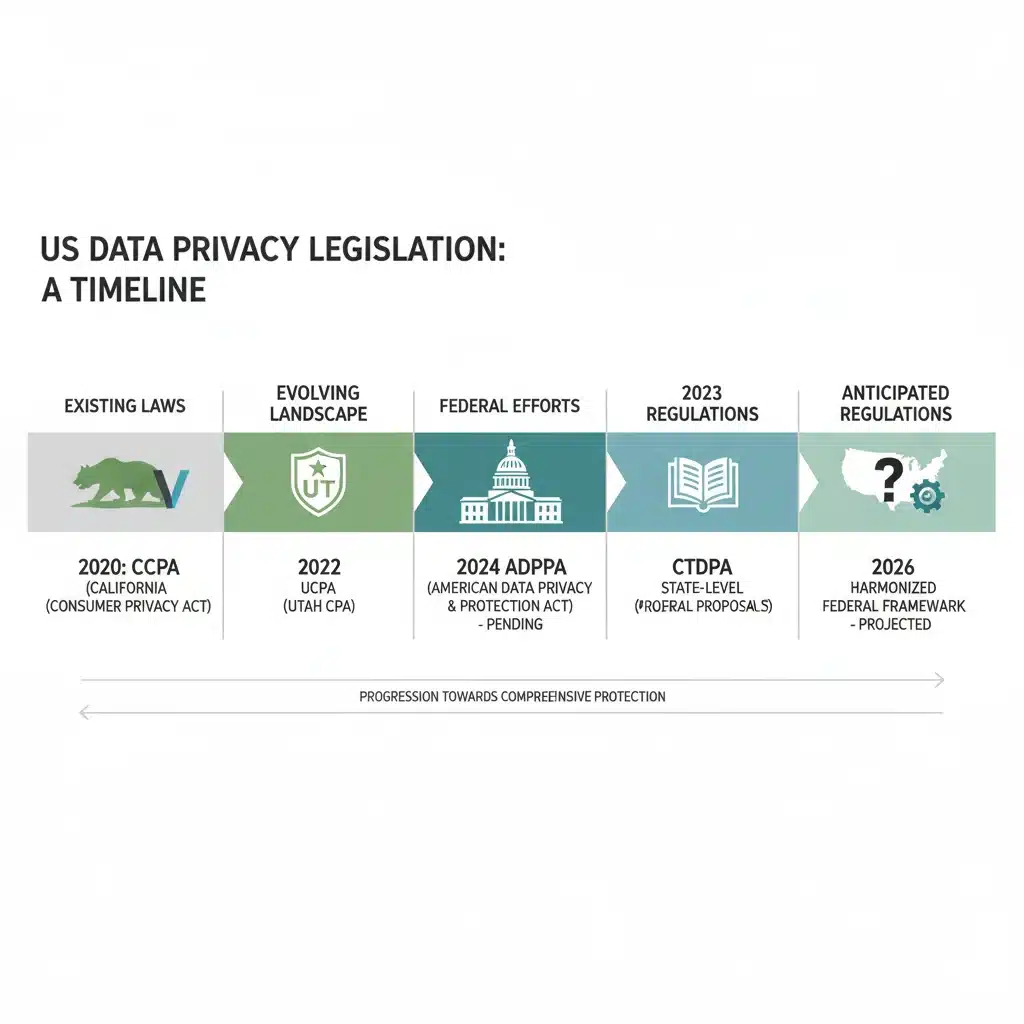
For years, the US has grappled with a patchwork of state-specific privacy laws, most notably the California Consumer Privacy Act (CCPA) and its successor, the California Privacy Rights Act (CPRA), alongside others like Virginia’s CDPA and Colorado’s CPA. While these laws have laid crucial groundwork, the fragmented nature has presented significant challenges for e-commerce businesses operating nationwide. The anticipated early 2026 updates aim to bring a greater degree of harmonisation, or at least a clearer framework, that will impact how personal data is collected, processed, stored, and shared across the entire e-commerce ecosystem. This comprehensive guide will delve into what these changes mean for your business, offering actionable insights to ensure you are not just compliant, but also strategically positioned for future success in a privacy-first world.
The Evolving Landscape of US E-commerce Data Privacy
Before we dive into the specifics of the early 2026 regulatory outlook, it’s essential to grasp the trajectory of data privacy within the US. Unlike the European Union’s comprehensive General Data Protection Regulation (GDPR), the United States has historically adopted a sector-specific and state-by-state approach. This has led to a complex web of regulations that e-commerce businesses must navigate.
A Brief History of US Data Privacy Legislation Impacting E-commerce
- HIPAA (Health Insurance Portability and Accountability Act): While primarily focused on health information, it set a precedent for protecting sensitive data.
- COPPA (Children’s Online Privacy Protection Act): Directly impacts e-commerce businesses targeting or collecting data from children under 13, requiring parental consent.
- CAN-SPAM Act: Regulates commercial email, setting rules for content, unsubscribe options, and sender identification, crucial for e-commerce marketing.
- State-Level Laws (CCPA/CPRA, CDPA, CPA, UCPA, CTDPA): These comprehensive privacy laws, starting with California’s CCPA in 2020, introduced concepts like the right to know, delete, and opt-out of the sale of personal information. They significantly expanded the scope of e-commerce data privacy obligations.
The proliferation of these state laws has created a compliance headache. An e-commerce business selling nationwide cannot simply comply with one state’s law; they must consider the requirements of every state where they have customers or process data. This fragmentation is a key driver for the push towards more unified or at least more clearly defined federal or inter-state guidelines, which are expected to crystalise by early 2026.
What to Expect: Key Themes of the Early 2026 Data Privacy Regulations
While the exact legislative text is still being debated and refined, several key themes are emerging that will undoubtedly shape the future of e-commerce data privacy. Businesses should start preparing for these foundational shifts now.
1. Enhanced Consumer Rights and Control
Expect a strengthening and potential standardisation of consumer rights seen in existing state laws. This will likely include:
- Right to Access: Consumers will have a clearer, more streamlined right to request and receive copies of the personal data an e-commerce business holds about them.
- Right to Deletion: The ability for consumers to request the deletion of their personal data will become more robust, with fewer exceptions for businesses.
- Right to Opt-Out: Beyond opting out of the ‘sale’ of data, this could expand to include opting out of targeted advertising, profiling, and sharing data for cross-context behavioural advertising.
- Right to Correction: Consumers will likely gain a more explicit right to correct inaccurate personal data held by e-commerce companies.
- Right to Data Portability: The ability to receive their data in a portable, easily usable format might become more widespread, enabling consumers to transfer their data to other services.
These rights empower consumers and place a greater onus on e-commerce businesses to be transparent and responsive. Implementing robust data subject access request (DSAR) mechanisms will be paramount.
2. Broader Definitions of ‘Personal Data’ and ‘Sensitive Personal Information’
The scope of what constitutes ‘personal data’ is likely to broaden, encompassing more identifiers and online activities. Furthermore, ‘sensitive personal information’ (e.g., precise geolocation, health data, racial or ethnic origin, sexual orientation) will likely receive even greater protection, requiring explicit opt-in consent for processing or use. E-commerce businesses must meticulously audit the types of data they collect to identify and appropriately handle sensitive information.
3. Increased Transparency Requirements
Transparency will be non-negotiable. E-commerce businesses will need to provide clear, conspicuous, and easily understandable privacy policies that detail:
- What data is collected.
- Why it is collected (specific purposes).
- How it is used and shared (including third parties).
- How consumers can exercise their privacy rights.
- The retention period for different types of data.
Vague or overly legalistic privacy policies will no longer suffice. The goal is to ensure consumers can make informed decisions about their e-commerce data privacy.
4. Data Minimisation and Purpose Limitation
These core privacy principles, central to GDPR, are expected to gain more traction in US regulations. Businesses will be encouraged, and potentially required, to:
- Collect only the data necessary for a specific, stated purpose.
- Use data only for the purposes for which it was collected, unless new consent is obtained.
- Retain data only for as long as necessary to fulfil the stated purpose.
This means a fundamental shift in data collection practices, moving away from ‘collect everything just in case’ to a more deliberate and purpose-driven approach to e-commerce data privacy.
5. Stronger Data Security Obligations
While not strictly a privacy regulation, data security is intrinsically linked to data privacy. Expect heightened requirements for implementing reasonable security measures to protect personal data from unauthorised access, disclosure, alteration, and destruction. This could include specific technical and organisational measures, regular security audits, and more stringent breach notification requirements.
6. Accountability and Enforcement
The enforcement mechanisms are likely to become more robust, potentially involving new or expanded regulatory bodies, increased fines, and even private rights of action for consumers. The cost of non-compliance will undoubtedly rise, making proactive preparation a financial imperative for all e-commerce businesses.
Actionable Steps for E-commerce Businesses Ahead of Early 2026
The good news is that many of the preparatory steps for these anticipated regulations build upon existing best practices and compliance efforts for current state laws. Starting now will give your business a significant advantage.
1. Conduct a Comprehensive Data Audit (Data Mapping)
This is the foundational step. You cannot protect what you don’t understand. A thorough data audit involves:
- Identifying all personal data collected: What data points do you gather from customers, website visitors, employees, and third parties?
- Locating where data is stored: On your servers, cloud services, third-party vendor platforms?
- Understanding how data flows: Who has access? How is it transferred between systems and vendors?
- Determining the purpose of collection: Why are you collecting each piece of data? Is it truly necessary?
- Assessing data retention policies: How long is data kept, and is it justified?
This data mapping exercise is crucial for establishing a clear picture of your current e-commerce data privacy posture and identifying areas of risk or non-compliance.
2. Update Your Privacy Policy and Website Disclosures
Based on your data audit, revise your privacy policy to be clear, concise, and comprehensive. Ensure it explicitly addresses:
- The categories of personal data collected.
- The purposes for collection and processing.
- Any third parties with whom data is shared.
- How consumers can exercise their rights (access, deletion, opt-out, correction).
- Your data retention practices.
Consider implementing a layered privacy notice, providing a short, easy-to-read summary with links to a more detailed policy. Make sure cookie consent banners are compliant and provide granular control over cookie preferences, especially for non-essential cookies. This is a critical component of transparent e-commerce data privacy.
3. Strengthen Consent Management Mechanisms
For certain types of data processing, especially sensitive personal information or targeted advertising, explicit opt-in consent may become a universal requirement. Review your current consent mechanisms:
- Are they clear and unambiguous?
- Is consent freely given, specific, informed, and revocable?
- Do you maintain records of consent?
Invest in a robust Consent Management Platform (CMP) if you haven’t already, to manage and document user consents effectively across your e-commerce platforms.
4. Enhance Data Subject Access Request (DSAR) Processes
With enhanced consumer rights, your ability to efficiently handle DSARs will be tested. Develop clear internal procedures for:
- Receiving and authenticating DSARs.
- Locating and retrieving requested data across all systems.
- Redacting third-party data where necessary.
- Responding to requests within specified timelines (e.g., 30 or 45 days).
- Documenting each request and response.
Automating parts of this process can save significant time and resources while ensuring compliance with e-commerce data privacy mandates.
5. Review and Secure Third-Party Vendor Agreements
Many e-commerce businesses rely on third-party vendors for analytics, advertising, payment processing, shipping, and more. Each of these vendors represents a potential point of data vulnerability and a shared responsibility for compliance. Ensure your contracts with all third-party processors include:
- Clear data processing agreements (DPAs) outlining responsibilities.
- Clauses mandating appropriate security measures.
- Restrictions on how vendors can use or share the data they receive from you.
- Audit rights to verify compliance.
You are ultimately responsible for the data you collect, even when it’s processed by others. Diligent vendor management is key to comprehensive e-commerce data privacy.

6. Implement and Regularly Update Data Security Measures
While privacy is about what data is collected and how it’s used, security is about protecting that data. Ensure your e-commerce platform and associated systems employ robust security measures:
- Encryption: For data in transit and at rest.
- Access Controls: Strong passwords, multi-factor authentication, and least-privilege access.
- Regular Audits and Penetration Testing: Identify and fix vulnerabilities proactively.
- Incident Response Plan: A clear plan for detecting, responding to, and recovering from data breaches.
- Employee Training: Educate all staff on data security best practices and privacy policies.
A strong security posture is a fundamental pillar of effective e-commerce data privacy.
7. Appoint a Data Protection Officer (DPO) or Privacy Lead
Depending on the size and complexity of your operations, it may be beneficial or even mandatory to appoint a dedicated individual or team responsible for data privacy compliance. This DPO or privacy lead can oversee data audits, policy implementation, DSAR handling, and staff training, ensuring continuous adherence to e-commerce data privacy regulations.
8. Stay Informed and Seek Legal Counsel
The regulatory landscape is dynamic. Continuously monitor legislative developments at both federal and state levels. Given the complexity and potential penalties, consulting with legal counsel specialising in data privacy is highly recommended. They can provide tailored advice for your specific business operations and help interpret the nuances of new regulations.
The Business Benefits of Proactive E-commerce Data Privacy Compliance
While compliance might seem like an onerous task, viewing it purely as a burden misses the strategic advantages. Proactive e-commerce data privacy management can:
1. Build and Enhance Customer Trust
In an era of frequent data breaches and privacy concerns, consumers are increasingly discerning about where they shop online. Businesses that transparently demonstrate a commitment to protecting customer data will differentiate themselves and foster greater loyalty. Trust translates directly into repeat business and positive word-of-mouth.
2. Reduce Legal and Financial Risks
Avoiding hefty fines, legal battles, and reputational damage from privacy violations is a clear financial benefit. The cost of proactive compliance is almost always less than the cost of a data breach or regulatory penalty.
3. Improve Data Quality and Efficiency
The principle of data minimisation forces businesses to critically evaluate what data they truly need. This often leads to cleaner, more relevant data sets, which can improve the accuracy of analytics, reduce storage costs, and streamline data management processes.
4. Foster a Culture of Responsibility
Implementing strong privacy practices encourages a more responsible and ethical approach to data handling throughout the organisation. This can lead to better internal processes, improved employee awareness, and a more resilient business overall.
5. Gain a Competitive Advantage
As privacy becomes a more significant concern for consumers, businesses that are ahead of the curve in compliance can use their strong privacy posture as a marketing advantage, attracting customers who prioritise the security of their personal information.
Conclusion: Embracing the Future of E-commerce Data Privacy
The approaching 2026 data privacy regulations represent a significant milestone for US e-commerce. While the specifics are still being finalised, the direction is clear: greater consumer control, increased transparency, and heightened accountability for businesses. Ignoring these trends is not an option; it poses existential risks to online enterprises.
Instead, consider this period of regulatory evolution as an opportunity. By proactively auditing data practices, updating policies, strengthening security, and empowering consumers with control over their personal information, e-commerce businesses can transform compliance challenges into strategic advantages. Building a robust e-commerce data privacy framework now will not only ensure legal adherence but will also reinforce customer trust, enhance brand reputation, and lay a solid foundation for sustainable growth in the ever-changing digital marketplace. Start your preparations today to navigate the future of online retail with confidence and integrity.