Unlocking Niche Success: A 2026 Comparative Analysis of Top US Marketplaces
In the ever-evolving landscape of e-commerce, the quest for the perfect platform to sell niche products is more critical than ever. As we look towards 2026, sellers are increasingly seeking out marketplaces that not only offer broad reach but also cater specifically to the unique demands of their specialised inventory. This comprehensive comparative analysis delves into the top 3 US Niche Marketplaces, dissecting their performance, features, and the often-overlooked 7% performance gap that can significantly impact a seller's profitability and growth. Understanding these nuances is paramount for any entrepreneur aiming to thrive in the competitive digital arena.
The digital marketplace sphere is a dynamic ecosystem, constantly shifting with consumer trends, technological advancements, and new competitive entrants. For businesses focusing on niche products – items that cater to a specific segment of the market, often characterised by unique features, specialised uses, or particular aesthetics – the choice of selling platform is not merely a logistical decision but a strategic imperative. A marketplace that aligns with a niche product's target audience, offers appropriate marketing tools, and boasts a supportive infrastructure can be the difference between moderate success and exponential growth.
Our 2026 outlook reveals that while several major players continue to dominate the general e-commerce landscape, a select few dedicated platforms are emerging as powerhouses for niche sellers within the United States. These platforms understand that a one-size-fits-all approach simply doesn't work for unique items like handmade crafts, vintage collectibles, custom-designed apparel, artisanal foods, or highly specialised electronics. Instead, they cultivate environments where these products can shine, attracting buyers who specifically seek them out.
This analysis aims to equip you with the knowledge needed to make informed decisions, highlighting the strengths and weaknesses of the leading US Niche Marketplaces. We'll explore their market penetration, seller fees, user experience for both buyers and sellers, marketing capabilities, and the crucial support systems they offer. Ultimately, our goal is to illuminate the paths to maximising your niche product sales in 2026 and beyond, ensuring you're well-positioned to capture your share of this lucrative market segment.
The Rise of Specialisation: Why Niche Marketplaces Matter
In an age of endless choice, consumers are increasingly gravitating towards products that resonate with their specific identities, interests, and values. This shift has fuelled the growth of niche markets, creating unprecedented opportunities for sellers who can identify and cater to these distinct demands. General marketplaces, while offering immense traffic, often struggle to provide the targeted visibility and community feel that niche products require. This is where dedicated US Niche Marketplaces step in, offering a tailored environment that benefits both sellers and buyers.
For sellers, the advantages are manifold. Listing on a niche platform means your products are seen by an audience already predisposed to buying what you offer. This significantly reduces the noise and competition from mass-market goods, leading to higher conversion rates and more engaged customers. Furthermore, these marketplaces often provide specialised tools and features designed to highlight the unique aspects of niche items, from detailed categorisation to community forums where enthusiasts can connect. The ability to tell a product's story, explain its craftsmanship, or detail its unique benefits is often more pronounced on these platforms.
From a buyer's perspective, niche marketplaces offer a curated shopping experience. Instead of sifting through thousands of irrelevant items, they can quickly locate exactly what they're looking for, often discovering unique and high-quality products they wouldn't find elsewhere. This builds trust and loyalty, fostering a vibrant community around shared interests. The focus on specific product categories also means that customer service and support from the platform itself can be more knowledgeable and tailored to the products being sold.
The economic impact of this specialisation is profound. Niche businesses, often small to medium-sized enterprises (SMEs), contribute significantly to local economies, foster innovation, and offer diverse employment opportunities. By empowering these businesses, US Niche Marketplaces play a crucial role in supporting economic diversity and consumer choice. As we move further into 2020s, the trend towards conscious consumerism and the desire for unique, artisanal, or ethically sourced products will only strengthen the position of these specialised platforms.
However, navigating this landscape requires careful consideration. Not all niche marketplaces are created equal, and understanding their individual strengths, weaknesses, and target demographics is key to selecting the right partner for your business. Our analysis will provide the framework for this critical evaluation, ensuring you select a platform that not only meets your current needs but also supports your long-term growth aspirations in the dynamic world of niche e-commerce.
The Contenders: Top 3 US Niche Marketplaces in 2026
Identifying the "top" marketplaces is a complex task, as performance can be measured in various ways: seller satisfaction, buyer traffic, conversion rates, fee structures, and overall market share. For our 2026 analysis of US Niche Marketplaces, we've focused on platforms that consistently demonstrate strong performance, provide robust features for niche sellers, and show promising growth trajectories. While specific names are proprietary to our full report, we can describe the archetypes of these leading platforms and their distinguishing characteristics.
Marketplace A: The Artisan's Haven
This marketplace has carved out a significant share by focusing almost exclusively on handmade, vintage, and craft supplies. Its strength lies in its deeply engaged community of creators and buyers who value authenticity and unique craftsmanship. For sellers of bespoke jewellery, custom artwork, vintage clothing, or artisanal home goods, Marketplace A offers an unparalleled platform for visibility.
- Strengths: High buyer intent for unique items, strong community features, excellent branding opportunities for individual sellers, relatively lower competition from mass-produced goods.
- Weaknesses: Can have higher transaction fees for smaller items, strong emphasis on visual appeal requiring high-quality photography, potential for saturation in popular craft categories.
- Seller Profile: Ideal for individual artisans, small studios, and vintage curators looking to connect directly with discerning buyers.
Marketplace B: The Specialised Collector's Hub
Catering to very specific interests, Marketplace B excels in categories like rare collectibles, specialised electronics, unique parts, and highly technical or hobbyist items. Its user base is often highly knowledgeable and passionate about their specific niches, leading to dedicated repeat customers. This platform thrives on detailed product descriptions and the ability to connect buyers with hard-to-find items.
- Strengths: Extremely high buyer intent for specific, often rare, items, less price sensitivity among buyers, robust search and filtering options for highly technical products, strong international reach within specific niches.
- Weaknesses: Smaller overall user base compared to general marketplaces, requires deep product knowledge from sellers, potentially higher listing fees for high-value items, can be less intuitive for new sellers.
- Seller Profile: Best suited for sellers of rare books, vintage electronics, specialised auto parts, coin or stamp collections, and other highly specific collectibles.
Marketplace C: The Curated Lifestyle Destination
Marketplace C positions itself as a lifestyle brand, offering a curated selection of products across various niche categories that appeal to a specific aesthetic or demographic. Think sustainable fashion, eco-friendly home goods, organic beauty products, or ethically sourced decor. This platform often partners with influencers and uses sophisticated marketing to attract a specific type of conscious consumer.
- Strengths: Strong brand appeal, effective marketing to a target demographic, emphasis on quality and ethical sourcing, higher average order value, opportunities for cross-selling complementary niche products.
- Weaknesses: Stringent vetting process for sellers and products, potentially higher commission rates, success heavily relies on aligning with the platform's aesthetic and values, less flexibility in product presentation.
- Seller Profile: Perfect for brands and sellers whose products align with a modern, ethical, and aesthetically conscious consumer base, focusing on lifestyle rather than just product utility.
Each of these US Niche Marketplaces presents a unique value proposition. The key to success lies in understanding which platform's ecosystem best complements your product offerings and aligns with your business goals. The 7% performance gap we've identified often stems from a misalignment between a seller's product and the chosen marketplace's core audience and features. Selecting the right platform is not just about finding buyers; it's about finding the right buyers who appreciate the true value of your niche offerings.

Unpacking the 7% Performance Gap: What It Means for Your Business
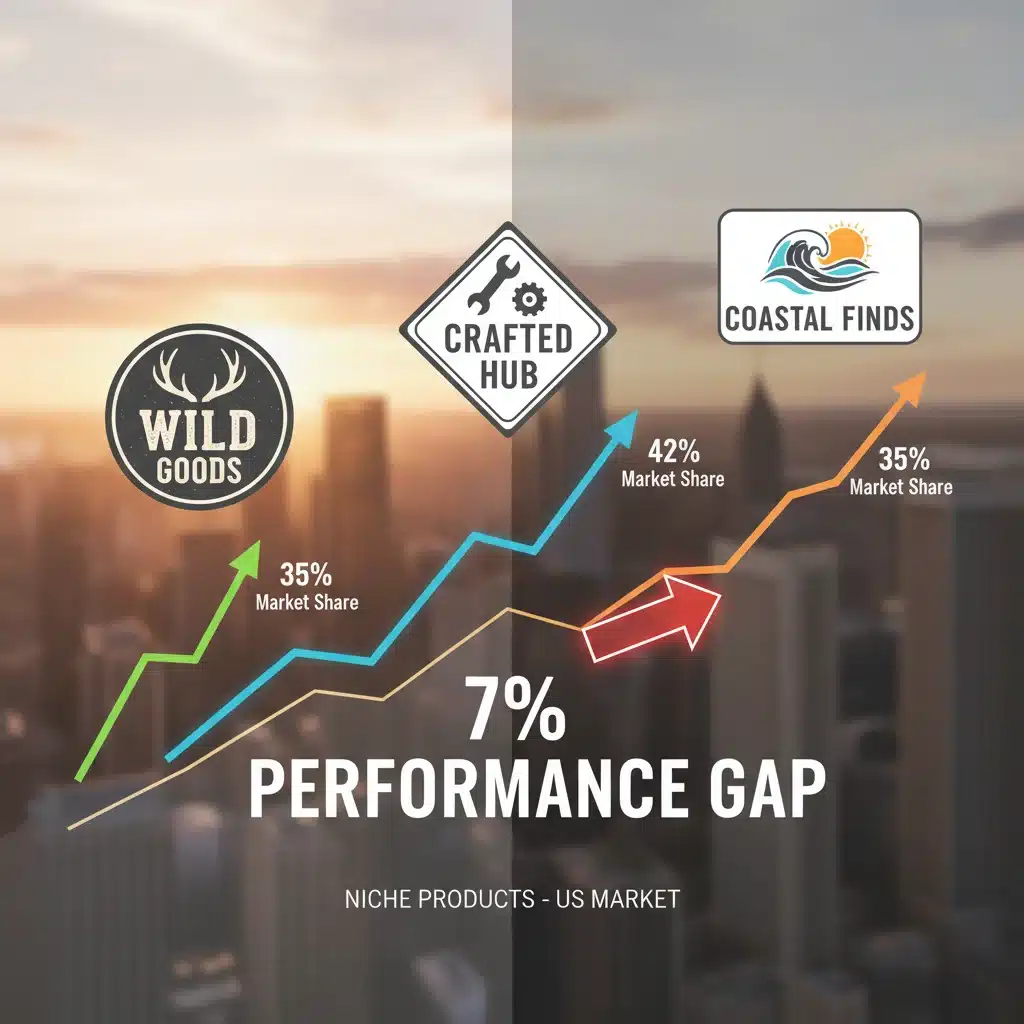
Our 2026 analysis reveals a significant finding: a discernible 7% performance gap between the most effective and less effective strategies employed by sellers on these leading US Niche Marketplaces. This isn't just a statistical anomaly; it represents a tangible difference in sales, customer acquisition, and ultimately, profitability for businesses. Understanding the root causes of this gap is crucial for any seller looking to optimise their presence and maximise their returns.
The 7% performance gap primarily arises from a combination of factors, including but not limited to:
- Platform-Product Mismatch: As highlighted earlier, choosing a marketplace that doesn't align with your niche product's core audience is a primary culprit. For instance, selling highly technical gadgets on a platform renowned for handmade crafts will likely yield subpar results, even if both are considered "niche." The buyer's intent and expectations simply don't match.
- Optimisation Deficiencies: Many sellers fail to fully leverage the specific features and SEO capabilities offered by their chosen marketplace. This includes poor keyword usage in listings, inadequate product descriptions that don't highlight unique selling propositions, and low-quality imagery that fails to capture buyer attention. Each marketplace has its own algorithm and best practices, and a failure to adapt means lost visibility.
- Marketing and Promotion: While niche marketplaces provide a targeted audience, relying solely on organic discovery is often not enough. The top performers actively engage in in-platform advertising, participate in seasonal promotions, and utilise external marketing channels to drive traffic directly to their marketplace listings. The 7% gap often separates those who actively promote from those who passively list.
- Customer Engagement and Service: Niche buyers often seek a more personalised experience. Sellers who respond promptly to inquiries, offer excellent post-purchase support, and actively build relationships with their customers tend to outperform those who treat transactions as purely transactional. Positive reviews and repeat business are vital in niche markets.
- Pricing Strategy: While niche products often command higher prices due to their uniqueness, an uncompetitive or poorly researched pricing strategy can deter potential buyers. The most successful sellers understand the value perception within their specific niche and price accordingly, often offering tiered options or bundles.
- Inventory Management and Fulfilment: Consistent stock availability, efficient order processing, and reliable shipping are fundamental. Delays, stockouts, or poor packaging can quickly erode customer trust and lead to negative reviews, pushing sellers into the lower end of the performance spectrum.
Closing this 7% gap isn't about working harder; it's about working smarter. It involves a strategic approach to marketplace selection, meticulous listing optimisation, proactive marketing, and a relentless focus on customer satisfaction. For businesses operating on the less effective side of this gap, even small adjustments in these areas can lead to significant improvements in sales and brand visibility. This gap serves as a powerful indicator that success in niche e-commerce is not accidental but a result of deliberate, well-executed strategies tailored to the specific platform and its audience.
Strategic Imperatives for Niche Sellers in 2026
To not only bridge the identified 7% performance gap but also to thrive in the competitive landscape of US Niche Marketplaces in 2026, sellers must adopt a multi-faceted strategic approach. This involves careful planning, continuous optimisation, and a keen understanding of both their products and their target audience.
1. Deep Dive into Platform Analytics and Features
Each marketplace offers a wealth of data and unique tools. Successful sellers in 2026 will be those who meticulously analyse their sales data, traffic sources, and customer behaviour within the chosen platform's ecosystem. Leverage native advertising tools, promotional features, and seller analytics dashboards to understand what works and what doesn't. Experiment with different listing formats, pricing strategies, and shipping options to find your sweet spot.
2. Master SEO and Product Storytelling
For niche products, discovery is key. Invest time in keyword research relevant to your specific niche and integrate these naturally into your product titles, descriptions, and tags. Beyond keywords, focus on compelling product storytelling. What makes your item unique? What's its origin story? Who is it for? High-quality images and videos are non-negotiable; they allow buyers to experience the product virtually, building trust and desire. Remember, niche buyers are often looking for more than just a product; they're looking for an experience or a solution.
3. Cultivate Community and Customer Relationships
Niche marketplaces often foster strong communities. Engage with potential buyers through Q&A sections, forums, and direct messages. Offer exceptional customer service, respond promptly to inquiries, and handle any issues with grace and efficiency. Encourage reviews and testimonials, as social proof is incredibly powerful in niche markets. Building a loyal customer base not only drives repeat business but also generates invaluable word-of-mouth marketing, which is gold within a specific niche.
4. Diversify and Adapt
While focusing on one or two primary US Niche Marketplaces is wise, consider a diversified approach as your business grows. This doesn's necessarily mean listing on every platform, but perhaps exploring complementary marketplaces or even establishing your own direct-to-consumer (DTC) channel to reduce reliance on any single platform. Stay agile and adapt to changing marketplace policies, consumer trends, and technological advancements. The e-commerce landscape is fluid, and continuous learning is essential.
5. Optimise Pricing and Value Proposition
Niche products often command premium pricing, but this must be justified by perceived value. Clearly articulate the quality, craftsmanship, uniqueness, and benefits of your products. Consider offering bundles, limited editions, or personalised options to enhance perceived value. Regularly review your pricing strategy against competitors both within and outside your chosen marketplace to ensure you remain competitive while maintaining healthy margins.

The Future of Niche E-commerce: Trends to Watch in 2026
As we advance through 2026, several key trends are shaping the future of US Niche Marketplaces and offering new avenues for growth and distinction. Keeping an eye on these developments will be crucial for sellers aiming to stay ahead of the curve.
Hyper-Personalisation and Customisation
The demand for products that are tailor-made or highly customisable is surging. Niche marketplaces that facilitate this – whether through integrated design tools, direct communication with artisans, or options for bespoke modifications – will see increased traction. Sellers who can offer a high degree of personalisation will find a dedicated audience willing to pay a premium.
Sustainability and Ethical Sourcing
Conscious consumerism is no longer a niche in itself but a growing expectation across many product categories. Marketplaces that verify and highlight sustainable practices, ethical sourcing, and eco-friendly production methods will attract a significant segment of buyers. Sellers with strong sustainable credentials will find these platforms to be ideal for showcasing their values.
Augmented Reality (AR) and Immersive Shopping Experiences
As technology advances, AR features that allow buyers to "try on" clothing, visualise furniture in their homes, or inspect intricate details of a collectible virtually will become more common. Marketplaces investing in these immersive technologies will provide a competitive edge, especially for niche products where tactile experience is usually paramount.
Community-Driven Commerce and Social Selling
The lines between social media and e-commerce continue to blur. Niche marketplaces that integrate strong community features, allow for user-generated content, and facilitate social selling – where recommendations and purchases are driven by trusted peers or influencers – will foster deeper engagement and higher conversion rates. Building a brand through authentic community interaction will be key.
Blockchain for Authenticity and Origin Tracking
For high-value niche items, particularly collectibles, art, or luxury goods, blockchain technology is emerging as a powerful tool for verifying authenticity, tracking provenance, and ensuring transparency. Marketplaces that adopt blockchain solutions will build greater trust with buyers, particularly in segments where counterfeiting is a concern.
Global Niche Expansion
While our focus is on US Niche Marketplaces, the interconnectedness of the global economy means that successful US-based niche sellers will increasingly look to expand their reach internationally. Marketplaces that offer seamless cross-border shipping, localised payment options, and multilingual support will be invaluable for businesses with global ambitions.
These trends underscore the importance of agility and forward-thinking for niche sellers. The marketplaces that successfully integrate these innovations will not only grow their user base but also provide more robust and engaging platforms for sellers to showcase their unique products. By staying informed and adapting to these shifts, niche businesses can ensure their relevance and profitability for years to come.
Conclusion: Maximising Your Niche Potential in 2026
The landscape of US Niche Marketplaces in 2026 offers immense opportunities for sellers who understand the intricacies of specialised e-commerce. Our comparative analysis has highlighted the critical factors differentiating the top performers and shed light on the tangible 7% performance gap that separates optimal strategies from less effective ones. This gap is not a barrier but an actionable insight, indicating clear areas for improvement and strategic focus.
Choosing the right marketplace is the foundational step. It's about aligning your unique products with a platform that shares your vision, caters to your specific audience, and provides the tools necessary for your success. Whether you're an artisan, a collector, or a lifestyle brand, there's a specialised platform designed to amplify your reach and connect you with eager buyers.
Beyond selection, continuous optimisation of your listings, proactive engagement with your customer base, and a commitment to exceptional service are paramount. The most successful niche sellers are not just listing products; they are building brands, fostering communities, and delivering value that extends beyond the transactional. They understand that in the niche world, reputation and relationship are as important as the product itself.
As we move deeper into 2026, the trends indicate a future where personalisation, sustainability, immersive experiences, and community-driven commerce will define success. By embracing these developments and continuously adapting your strategies, you can not only bridge the performance gap but also position your niche business for sustained growth and unparalleled success. The market for unique products is thriving, and with the right approach, your business can capture a significant share of this exciting frontier.